

@the-second-opinion

The Top 10 Cutest Animated Children in Movie History
July 24, 2014 in Uncategorized
While Cult vs. Mainstream is still in progress, I’d say it’s a good time to pick up with my other trademark, the random top ten list. Normally “cute†is something I try to talk about in small doses, but I have my reasons here. For one, it’s about time I counterbalanced the case I made for chastity with my top ten evil children list, and what’s more, it’s actually a good way to get at why so many movie kids intended to be cute instead turn out annoying. Tailor-made cuteness won’t get you that far here. This is for genuinely lovable characters whose foremost quality happens to be “adorable.â€
Rules:
– The age limit is approximately 10 years old
– Only characters in movies with a theatrical release are eligible
– No character who spends a significant portion of the movie aged past childhood is eligable
– Serving as a caregiver/guardian or otherwise not being a child within the group is grounds for disqualification (e.g. Christopher Robin)
– No animated/CGI characters from live action movies are eligible
10. Vanellope Von Schweetz (Wreck it Ralph)

You’d think a character like this would be a lightning rod for hate all over the internet. She’s smug, she loves toilet humor, and she pours on “quirky†antics by the cartload, which are three ways to jump straight to the front of the line for labels reading “Strictly For Stupid Kids.†But the writers made it work. For one, we’re supposed to think that she’s a little bit obnoxious towards Ralph, the main character who stumbles into her game, and this is not in and of itself a reason he starts to like her. Only after we see that she willingly takes everything she dishes out and more on the chin do they start to become friends. Vanellope is high maintenance (no pun intended), but she’s not malicious. At worst, she’s mischievous (and perhaps a little bratty). But she’s also fun-loving, playful, and resilient, and she means it when she says she’s your buddy. She’s akin to the smart-aleck you’ve been friends with for years. She makes you think it’d be warranted to slap her upside the head half the time. But when things get rough, you want to give her a hug and tell her you’re glad she’s around.
9. Michael Darling (Peter Pan)

Did you know that the real life Michael was probably the inspiration for Peter Pan more so than the real life Peter? I just thought that was interesting.
Anyway, this isn’t a frontrunner that people often cite, so you might say that he didn’t make the biggest impact. Then again, do you remember, say, what he carries with him throughout the movie or how he uses it to defeat a pirate at the end? How about the bittersweet moment when Wendy realizes he is forgetting his mother and they need to leave Neverland? Michael doesn’t affect the events of the story much, but I’m willing to bet that most everyone remembers him, down to the color of his PJs. We see in passing that he’s bright, imaginative, and sensitive, and he loves every last adventure they have in Neverland, even being captured. He brings the key amount of childhood innocence to the story, and it wouldn’t be the same without him.
8. Boo (Monsters Inc.)

Now granted, she was pretty aggressive in her cutesiness. But the fact that it worked so well for so many people is a terrific example of how less can be more. Boo perplexes and terrifies the monsters in her closet with her antics, blowing raspberries, playing impromptu games of hide and seek, and showing off dozens of little girl facial expressions. But most of it is seen almost in passing while someone else is in the spotlight, so instead of playing like a character who’s always in your face, she instead comes across as a very playful, very human little tyke with a plucky spirit. She packs a little more character than you’d expect into her limited screen time and won a pretty fair number of fans for it, even if a couple of her antics really are just playing to the audience.
7. Penny (The Rescuers)

Yes, she’s another “adorably†clueless little moppet with pigtails and a sugar-coated speaking voice who’s always nice to everyone. But at least this one owns it. Penny is an orphan who wants to believe that she’s special enough to be adopted, but she winds up captured by a scheming witch of a woman and forced to search for the world’s largest diamond. The movie spends more time than it needs to trying to make us feel for her, but it also takes the time to think out each scene, so you really can enjoy some of her sweetness.
For one, much of what she does is actually more understated than it could have been. Only once or twice is there a pause to take in how cute she is, and though she’s a bit inane, she’s usually more restrained than the characters playing off of her. She comes off a bit cloying but not too overplayed, so her antics really can be cute. And we also see that she’s actually very brave and determined, holding herself together in her dire situation and even attempting to sneak past her captor’s pet crocodiles. She’s an example of how a tailor-made cute little girl can at least be done well.
6. Agnes (Despicable Me)

It seems we have learned a thing or two over time on how to do this. Agnes has all the “precious†moments you could ask for from a little girl, with one important addition: A sense of irony.
Adopted with her older sisters by Gru, the criminal mastermind using them as pawns in his scheme to steal the moon, Agnes doesn’t notice that something’s amiss in his evil lair and just enjoys her new surroundings. Like her sisters, Gru finds her incredibly annoying and doesn’t think she’s cute. But we do. She’s a total innocent who loves everything little girls are expected to love at her age, from unicorns to Gru’s strange dog, and she’s so energetic about it that even the movie thinks it’s funny. (“He’s so fluffy, I’m gonna die!†She grunts, shaking her new unicorn.) Yes it’s the only reason she’s there, but how could you not love someone this innocent, harmless, and adorably funny? Even Gru changes his mind before long.
5. (Tie) Ducky and Littlefoot (The Land Before Time)

On one hand, I did sort of want to keep the non-human beings off this list. But on the other hand, this is the first entry that doesn’t really make me feel the need to justify myself, even a little bit. Who wouldn’t find these two lost baby dinosaurs banding together endearing? We have Littlefoot, who’s seen more hardship that any child should, doing his best to lead his friends to The Great Valley with his kind nature, and Ducky, the bouncy and affectionate little girl who manages to boost his spirit when he needs it. Their three friends are good too, of course, but they don’t have the charming personalities that these two show throughout the journey, helping everyone persevere through the many rough spots.
4. Lilo (Lilo and Stich)

She makes it look effortless. Lilo is lovable just by being who she is, that being an odd and eccentric little girl with strange tastes, who’s just a bit alienated from everyone but her pet alien. She’s superstitious (ask her why she goes diving to feed Pudge the fish peanut butter sandwiches), stubborn, affectionate (especially towards her strange pets and dolls), fearless, and an Elvis fan. And she’s just about the only one who could have made Stitch, the alien, feel like he had a family. After all, how could he not fall for her?
3. Jumbo Jr./Dumbo (Dumbo)

With an endless number of cute little animals lining up to steal our hearts, which one turns out to be the most lovable of them all? A baby elephant with oversized ears. Who knew?
Dumbo never speaks, but his sweetheart personality comes through in spades, so much that his plight of being taken from his mother after she tries to protect him is enough to pierce you right through the heart. He’s at a loss on what to do, with no friends until the halfway point and no say in anything that happens to him. And when a quick-witted mouse resolves to help him, he never complains and he never gives up, even when it seems to do more harm than good. Dumbo is a vulnerable child through and through, and he’s absolutely precious on that front. But he’s also a true hero for what he overcomes, which is enough to melt the iciest of hearts.
2. Ponyo (Ponyo)

It’s common to say that such kids are cute. It’s not unheard of to say that some of them aren’t cloying. But Ponyo is far and away the most charismatic five year old I’ve ever seen. If you’ve only seen the design, you probably see her as your average chubby little tyke. But if you’ve seen the movie, you probably remember her as an overload of adorable.
I’m still not sure I have the recipe for this one figured out. After growing to love the boy named SÅsuke who takes care of her as a goldfish, she summons the power to turn herself into a little girl, fleeing the lair of her sorcerer father to be with him (a loose adaptation of The Little Mermaid). She knows nothing about life on land, but she’s so curious that she throws herself into it headfirst, as though trying to make up for lost time. And she’s jumps for joy every step of the way. She’s both surprised and fascinated by everything she comes across, and she never censors herself, exclaiming whatever comes to mind. She’s nothing but happy to be with SÅsuke, and it’s hard not to catch the feeling. She just sells you on the joy of it all.
1. Anne Marie (All Dogs Go to Heaven)

What can I say? They set out to create a great character, and they succeeded. Everything about Anne Marie works. The design isn’t cute in the usual ways, but there’s just something sincere about that face, and somehow, she carries some dignity in her tattered outfit. The lines she says work; we can tell that she’s loving, appreciative, and a bit naive from the way she embraces Charlie the dog, who’s a manipulator, if nicer than the captor her freed her from. But we can also tell that she’s not stupid. When Charlie isn’t careful to hide his selfishness, she notices, and when he asks her to do something that seems wrong, she refuses.
But perhaps it’s what she doesn’t say that works best of all. When Charlie pretends to be sick (and a martyr who doesn’t want her to worry) to lure her away from a potential new family, she doesn’t say that’d she’d rather live in the junkyard and make sure he’s alright. We know because she goes with him on the spot. She doesn’t say that she needs to do the right thing by returning the wallet Charlie stole or that she forgives him. She takes it back and continues to embrace him as her friend after she does. And she doesn’t say that she wants a family because she’s not sure she’s as special as the other children, or something along those lines. She says that she has only a picture in her mind of what it would be like as she looks over old photographs of a married coupled and inserts herself into them. We can see that what she wants is something she’s never had: To be loved.
Anne Marie’s is a true human spirit on display. She doesn’t overload on any particular quirk, unless you count sincerity, but she has true presence, and she earns every bit of sympathy and affection the movie asks for her and more. For that, I name her as the most adorable animated child in movie history.
Play us out Anne Marie! http /www.youtube.com/watch?v=A0EDP9Sf4kE
A Toast to Manic Expression! The 100th Opinion
July 24, 2014 in Uncategorized
That’s right! After hanging around for a year and a half, I’ve finally reached 100 blogs! …That is, on this website. There are a few others out there that were the warm up for my time here at manic expression. (And on the flipside, 56 of my big 100 here are about a certain television show I still can’t believe I got roped into sticking with.)
But though it may be a lopsided achievement, the fact still stands that manic expression is the only website to get 100 blogs out of me. You may well have noticed that I, The Second Opinion, haven’t always been the most consistent or the most notable presence on this website, which reflects the fact that my life (like my blogs) is something of a sampler platter for now. And yet, I’ve kept coming back over the months, because it really is a great community. I knew I could count on the people here to give my stuff a chance and to challenge me to please them, which always made it feel like I was getting somewhere. So in return, for the big event, I’ve decided to review ten of my favorite manic expression blog posts that I’ve read during my time here, all of which have made an impact on me.
(Note: Please understand that I am not the Outstanding Content of the Week committee. I am one random guy who’s only spent so much time reading the 2000+ blogs posted on this website. I realize that most, if not all of the regulars here have hit it out of the park at least once, and I’m probably neglecting more than one great post from a hard-working member here.)
A Look at Disney Sterling Holloway Spotlight by Moviefan12
Now Moviefan12 is one of the most familiar and frequent presences on this website, and we all know that we can count on his stuff for an affable look at the nostalgic and the cute. But where he really starts to impress me is in the fact that he actually has extensive knowledge on the entire body of what he reviews, even for a specialist. And he demonstrated that in spades during his month long look at Sterling Holloway, whose voice work at Disney as Kaa and Winnie The Pooh, it turns out, was barely the tip of the iceberg.
Now, I love Holloway’s work, but before Moviefan12 posted these articles, I didn’t realize quite how much. I’d only recently re-watched The Jungle Book (1967) and put together that he was both Kaa and Pooh bear, but I never knew that he was also Mr. Stork, all the way back in Dumbo (1941) and Roquefort in The Aristocats (1970). And it’d been years since I’d seen Peter and the Wolf (1946), which I fixed after reading the article on Holloway’s narration. But what’s more, I got to learn about projects I hadn’t even heard of, from The Cold Blooded Penguin (1945) to Susie the Little Blue Coupe (1952). I did mention that Moviefan12 is only a year and a half older than I am, right?
I also have to give him credit for being able to just say when he doesn’t like something, classic or otherwise, as he does a few times in his Holloway articles. And he doesn’t add an overkill of explanation or attempt to soften the blow. Granted, it’s often had me gearing up for a 5 paragraph rebuttal, but hey, that’s not really a bad thing. For there to be any integrity in our opinions, we must be able to say why we hold them. We must be able to consider pros and cons, and that’s something Moviefan12 is always able to do. (In fact, as the guy I just finished my first two crossover reviews with, it seems he’s able to get me to do it too.) So here’s to a look at Sterling Holloway well worth it for fans, as well as anyone curious about an actor who was probably a big part of their childhood.
Lights and I Shy by T-kun Unusual Wordsmith lll
Unfortunately, the only way to convey the full significance of this is by being totally honest about how terrible I can be. When T-kun Unusual Wordsmith lll made her manic expression debut last summer, posting poems almost every day, my gut reaction was, and I quote: “Great, another melodramatic amateur looking to shock the world with their deep clichés.†And on the occasions when I bothered to skim through her work, it was always in the mindset of an English major, picking out small grammatical mistakes and wondering if I’d seen this kind of thing before.
I was wrong. And thankfully, she gave me lots of chances to see that. Because as she kept uploading new titles, I started to notice how diverse the collection was getting. And in spite of myself, I started to read through them more frequently and grew interested in what each one was getting at. By the time she (rightfully) won Great Blogger of the Month #22 (by James Walsh), I had long since realized: This was someone who had something worth sharing, and she knew how to write it with passion. And how to write it well.
Over the months, I’ve really gotten into following her collection, for the different uses of structure, the range of subjects, and the images she builds. I’ve enjoyed watching the innovation at work, such as how she can fade into a vague, speculative delivery and then build her way back to the concrete. But most of all, I’ve enjoyed watching experience at work, because after nearly 200 posts, she only seems to keep topping herself. Today, I think manic expression is a better place for having both T-Kun the writer and T-Kun the community member; she’s been nothing but friendly and takes the time to give good feedback herself. (In fact, hers was the first suggestion I used in my own series about obscure movies that many haven’t seen.) So thank you again, T-Kun Unusual Wordsmith lll!
The two poems of hers I picked out are Lights, which has some of my favorite imagery, and I Shy which seemed like one of the more personal works in the bunch.
https://www.manic-expression.com/free-write-no-18/
https://www.manic-expression.com/free-write-no-39/
100 Greatest Movie Quotes by Les
Les? Actually, I don’t have many nice things to say about him.
I know, not fooling anyone. But count up all the counterpoints that came to mind just now, and you’ve probably praised him more than I could fit in this limited space. (And if no particular objections came to mind, well, thank you. I’m truly flattered that the first thing you’re reading upon visiting this website is my 100th blog post. You should stick around and check out more of the articles we have here. I recommend Les’ stuff.) One of the founding members of the website, still a front-running contributor, and possibly the most frequent commenter, this guy is helpful, supportive, kind, and always willing to consider what you give him. And if you think that’s easy, go ahead and try it. Seriously. The world will probably be a little better if you can manage.
But don’t go thinking that this is some sort of hipster who thinks everyone’s opinion is equal. Look through Les’s blogs, and you’ll find a very opinionated and knowledgeable man who wouldn’t need much excuse to scoff at the kids like myself putting their little pieces of insight on display. (So it’s all the more respectable that he instead takes each contributor seriously.) And with his experience and passion, he brings some of the most extensive, worthwhile looks at music, movies, shows, characters, and whatever else he happens to enjoy. Thankfully, I don’t need to describe how diverse his body of work is too much, because, come on, of course he’ll be showing up again before I’m done here.
This spot either had to go to his top 100 movie quotes or his look back at the songs from each decade still requested today, and ultimately, this one was just easier to pass off as one blog. It’s a great trip down memory lane, highlighting some of what we all love about so many different movies and demonstrating Les’ tastes very well just in how he ranks them.
http/www.manic-expression.com/apps/blog/show/24890901-100-great-movie-quotes-part-1-by-les-
http/www.manic-expression.com/apps/blog/show/24891182-100-great-movie-quotes-part-2-by-les-
WTF Asia 38: Attack the Gas Station (1999) by Ankai
If I had to guess, I’d imagine Ankai’s “WTF Asia†series to be sort of a thankless area of expertise. While there’s a demographic for cult and obscure movies in the USA, it usually only extends to so many Asian films, and the general public’s knowledge pretty much stops after Crouching Tiger, Hidden Dragon (2000). Heck, I’ve seen more Asian movies than most, and I still haven’t read his series much. But I took notice when he reviewed by far the funniest of all the movies I watched in my class on Korean films, which he nailed so well that I might want to read on and see what else he can tell me about.
Attack the Gast Station (1999), for those who probably never heard of it, is a satire/farce about four thugs who rob a gas station twice, the second time pulling a hair-brained scheme to take over the place and sell gas themselves when they find the cash register nearly empty. It’s mean, gleeful, uneven, and absolutely hilarious, though like the thugs it follows, you occasionally catch it in the middle of a good natured ambition. But for more information, you’ll have to read the review, which I promise is worth your time. Not only does Ankai describe the appeal and the character dynamics perfectly, he picks right up on the ties to the political and economic situation in South Korea, some of which I learned about in my aforementioned class and some I didn’t. I should also add that he answered my questions on the sequel, which I wasn’t sure if I should bother with. (It at least doesn’t sound like a total carbon copy.) It’s safe to say that if he can appreciate this hidden gem so well, Ankai’s just the guy to direct us towards what we’re missing over in Asia. If you need me later, I’ll be checking out his review of The Machine Girl (200.
The Mouse House Supports Classic Westerns Zorro Month: Walt Disney’s Zorro Review by DisneyOtoko and BigBlackHatMan
There’s nothing like a look back at my favorite live action show ever to come from Disney, created through a team up of the resident expert on Disney and the resident expert on westerns. What could make it more perfect? If you’re me, that’d be the fact that I never, ever thought I’d be getting such a review; I was under the impression that pretty much no one else still watched this.
This isn’t some simple fanboy-style list of pros and cons either. While they make their appreciation for Disney’s Zorro clear throughout, these two really knew how to give the show the kind of coverage it deserved. The stunts, the choreography, the actors, the music, the story arcs, the characters, and even the tone, reflecting the time in which the show was made, all get a knowledgeable summary here. BigBlackHatMan and DisneyOtoko both knew what they were talking about, and they took the time to write and structure the blog with a very thoughtful, professional approach. Still, once or twice, one of them cuts loose with caps-locked cheers of praise, just to make sure we know how great the show really is.
Even if you’ve watched it, this blog can give you a few helpful tips on the show. For example, I hadn’t seen Senor China Boy or the episode with the Joker himself, Cesar Romero, before I read this. And it’s always nice just to have your favorite aspects affirmed; extra points for the special shout-out to Sergeant Garcia. (While I’m at it, I have to note one of their other Zorro Month reviews for The Mask of Zorro.)
Stop the Hate #251 – Top 25 Greatest Movies Ever Made by James Walsh
I would have to have at least one “best/favorites†list on here. And while I don’t really agree with the notion that you can totally strip out favoritism and make an objective list of the “greatest†movies ever made, it’s hard to deny the merits of this one. It’s easily one of the most extensive, thoughtful, and distinct lists on the subject that I’ve ever read. Sometimes it simply takes the options we’d all expect to be there and reaffirms why they are loved and why they stand above their peers. Other times, it starts with a mildly surprising choice and gives us a look at why it’s underrated and why it deserves so much credit. But from start to finish, it’s a smart and thought-provoking look at what makes a film great.
What else can I say about a list of 25 very different movies and the excellent insight given on them? I’m willing to bet that none of you have seen all 25, so there’s probably at least one recommendation in there for you. Actually, I should say all 26, as there’s also an intriguing honorable mention at the end for Angels in America (2003), which is a bold addition; from the outside looking in, I don’t think a nod like this has been given to this movie before, and yet, as much as I’ve read up to find why it wouldn’t be, I’m still not sure it was unwarranted. So it’s one recommendation I’ll probably be taking very soon.
James Walsh is another one here that I haven’t read quite as much, though in this case, it’s mostly luck of the draw; looking back through his blogs, I think I’ve just been missing them by half a day or so. But with this type of stuff, he earns his stripes as the creator of this website. There’s a clear level of insight and passion for movies here, and it doesn’t take long before you’re convinced that it’s worth listening. Even I’ve seen enough to vouch for what a great series Stop the Hate is in general. (Entry #156, addressing the backlash to Superman Returns (2006) and comparing it to Man of Steel (2013), was one in particular that I appreciated, enough to mention here as well.)
Who is the Best Batman? By Les and Fusionater
A blog on choosing the best actor ever to play Batman? Sold.
This was a great idea, taking all the great on-screen portrayals – and one not-so great – and comparing them category by category, taking a number of aspects into account. (How many of you, when picking a favorite, have seriously considered which had the best victory over an iconic villain, for example?) Now, some of you may remember that the movies in the Dark Knight trilogy are all three among my all-time favorites, so I don’t have much patience for the notion that Christian Bale is not the best Batman. But Les and Fusionater did a great job breaking down what each contender brought to each category, so much that I was even able to appreciate why they preferred someone else when they did. Of course, it doesn’t hurt that they still ranked Bale pretty high overall, but in the end, even I had to admit, Kevin Conroy had a pretty definitive take on the character.
But enough about what I think, what do these two have to say on the caped crusader? Pretty much everything you could ask for. They give credit where it’s due, such as with Conroy’s many epic victories and Bale’s pitch perfect take on Bruce Wayne. They weigh and measure the mixed aspects, such as Adam West emphasizing the intelligence of Batman much more than the intimidation factor or Val Kilmer’s slightly cartoonish Batmobile. And, of course, they have a grand time beating down on Clooney and the movie he appeared in. Les cuts loose and shows us his inner fan in a great display of all the reasons that Batman is awesome (and why Schumacher’s version is a failure), and Fusionater keeps right in sync, using his own extensive knowledge for a great alternate, also enthusiastic perspective, closer to my own in a few regards. Altogether, it’s a fun read that any fan of the character can get into and a great reminder of all the joys that Batman has brought us over the years. (You two should seriously consider doing this kind of thing again. You just have it down. Hold on, you’re both already starting what, now…?)
My 13 Favorite Animated Films by The Creature
Props to The Creature. He really has a knack for thinking up interesting topics. (In fact, looking back through his stuff, there’s a number of entries I missed that I should probably take a look at.) But the one I got the most out of was probably this, the list of his favorite animated features.
For one, it’s a distinct and worthy list, which, to me, is exactly what makes a blog like this worth reading. Some choices need no explanation, like Toy Story (1996) and Fantasia (1940), and others, like The Secret of Kells (2009), Mary and Max (2009), and Akira (198 are unexpected but still very worthy picks. But the biggest surprise, and a major reason I found this one so interesting, was that I hadn’t even seen a good 1/3 of the movies listed here. And I’m the guy who was able to answer pbmiranda’s request for everyone’s list of their 100 favorite animated movies and add an honorable mention list.
The wide range on display means there’s something here for everyone, and The Creature’s casual delivery, with fun facts and a nice brief summary of what makes each movie great, amounts to a breezy and memorable read. It’s more than worth your time, and if you’re smart enough to take his recommendations, you’ll probably be thanking him for it soon. And it’s also just a great little spin on the joys of animated movies, which you know is always something worth reading.
http/www.manic-expression.com/apps/blog/show/32959048-my-13-favorite-animated-films
A Look at Disney Music Fridays # 100: Fantasia by Moviefan12, Les, Dawn_Heart, Ratin8ntor, and Infamous Jak
Now this is a crossover! 100 blogs is nice, don’t I know, but 100 in a continuous, once-per-week series is a pretty big achievement, and Moviefan12 pulled it off with Music Fridays. For this, several big names on the site came together to make sure each and every segment was an essential contribution. And what did they review? Fantasia (1940), Disney’s own daring ensemble project, giving it the coverage it deserved.
The first segment, Tchaikovsky’s Nutcracker Suite, went to Les, who goes to work with his extensive knowledge of music and paints a strong picture of the artistry that Disney put into this segment, demonstrating how their animation pairs itself with the music.
The Sorcerer’s Apprentice went to Moviefan12 himself, who names it as his favorite portion in addition to being the most famous, so you know he’s going to give it the love it deserves. This portion plays as an appreciative highlights reel, emphasizing why people are so fond of Apprentice.
The next part, Ratin8tor’s, is a look at Dance of the Hours. With his In Too Deep brand of strong analytical insight, he gives us an interesting look into what otherwise seem like strange artistic choices, making for a worthwhile spin on this offbeat segment.
Infamous Jak, getting a segment he found less memorable than the others in The Pastoral Symphony, still gets across what a big and well-versed fan he is in a very well-balanced review. This part includes some interesting trivia on the designs of the characters and how some of them were used again by Disney in much better-known renditions.
The final portion, A Night on Bald Mountain and Ava Maria went to Dawn_Heart… granted, I had to search around a bit to figure out who that was. But looking back through the work of a long-time member, who as far as I can tell, seems to have dropped out entirely, I’m honestly sort of sorry I missed her. Her writing had a sort of conversational charm that was infectious. You got the sense that she had a level of knowledge but preferred talking about these things as a fan, discussing what her subject made her feel and what about it makes people really go for it. Her portion of the collaboration was just that, mixing insight, some knowledgeable points, and an honest appreciation for the piece in a very affectionate tribute.
All in all, this was a very grand project that came together with the craftsmanship and enthusiasm such a blog deserves. (Also gotta love Moviefan12’s nostalgic little callback at the end to his past collaborations over the course of the series.)
What Makes a Man a Real Man by Les and James Walsh
Here, I believe, is a case of a bloggers using what they have to make the world a little bit better. A blog about what it really means to be strong, to be someone to admire, is something that millions would probably be better off for reading. I know I’ve had to spend time pondering my self-image against the image of a real man. I was on the wrestling team for a long time, where the stereotypical “macho†image was the only option. But I was also the little guy who preferred to look down rather than up for a lot longer. (Heck, the favorite movies list I posted included everything from A Nightmare on Elm Street and The Matrix Reloaded to Kiki’s Delivery Service and All Dogs Go To Heaven.) But reading this post, I always feel encouraged that I’m on the right path. The best thing to be really is yourself, however much or little machismo that includes. If you’re diligent and honorable, you should be proud, not ashamed.
The points that Les puts on his list are, each one, a testament to the maintaining the goodness and loyalty so often undervalued today. It points out ways to be respectable, not just build one’s ego, reminding us what true role models are like. I can only admire the morality and hope that it’s contagious.
James Walsh’s portion, meanwhile, points out aspects of the gender dynamic, such as stereotypes not without their basis, which can be awkward. But I praise him for not shying away from it. Many including myself have wondered about how to reconcile this before, and the truth is that there’s no easy answer. But he still concludes with a worthy point: It’s important to remember that goodness is not determined by gender.
So bravo for a very admirable and encouraging statement. It’s a rare to see something like this done well. (Failed attempts do happen: I’ll never forget my assistant coach’s unintentionally hilarious speech about how wrestling is the lone refuge from the “very feminine society†we live in.)
And with a final thank you for the jobs well done, the 100th entry concludes. Now it’s time for a new start, which brings me to an announcement: In attempt to go back to my roots a little bit, Movies You Haven’t Seen and Second Chances is being retooled into a series I call Cult vs. Mainstream, placing hit movies against obscure films from the same genre and time period in one-on-one matches. I’ll be keeping score as it goes, with each win counting as a point for its team, and we’ll see where the advantages lie. There won’t be as much background trivia in this series, which I felt was becoming mandatory and boring in Second Chances. I’m hoping this will be more fun. As always, feel free to suggest a movie or an entire face off if you’d like.
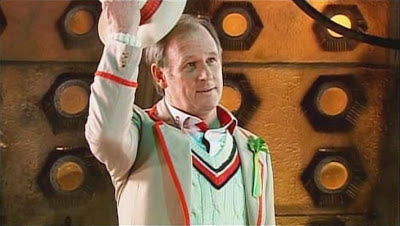
A Toast to Manic Expression! The 100th Opinion
July 24, 2014 in Uncategorized
That’s right! After hanging around for a year and a half, I’ve finally reached 100 blogs! …That is, on this website. There are a few others out there that were the warm up for my time here at manic expression. (And on the flipside, 56 of my big 100 here are about a certain television show I still can’t believe I got roped into sticking with.)
But though it may be a lopsided achievement, the fact still stands that manic expression is the only website to get 100 blogs out of me. You may well have noticed that I, The Second Opinion, haven’t always been the most consistent or the most notable presence on this website, which reflects the fact that my life (like my blogs) is something of a sampler platter for now. And yet, I’ve kept coming back over the months, because it really is a great community. I knew I could count on the people here to give my stuff a chance and to challenge me to please them, which always made it feel like I was getting somewhere. So in return, for the big event, I’ve decided to review ten of my favorite manic expression blog posts that I’ve read during my time here, all of which have made an impact on me.
(Note: Please understand that I am not the Outstanding Content of the Week committee. I am one random guy who’s only spent so much time reading the 2000+ blogs posted on this website. I realize that most, if not all of the regulars here have hit it out of the park at least once, and I’m probably neglecting more than one great post from a hard-working member here.)
A Look at Disney Sterling Holloway Spotlight by Moviefan12
Now Moviefan12 is one of the most familiar and frequent presences on this website, and we all know that we can count on his stuff for an affable look at the nostalgic and the cute. But where he really starts to impress me is in the fact that he actually has extensive knowledge on the entire body of what he reviews, even for a specialist. And he demonstrated that in spades during his month long look at Sterling Holloway, whose voice work at Disney as Kaa and Winnie The Pooh, it turns out, was barely the tip of the iceberg.
Now, I love Holloway’s work, but before Moviefan12 posted these articles, I didn’t realize quite how much. I’d only recently re-watched The Jungle Book (1967) and put together that he was both Kaa and Pooh bear, but I never knew that he was also Mr. Stork, all the way back in Dumbo (1941) and Roquefort in The Aristocats (1970). And it’d been years since I’d seen Peter and the Wolf (1946), which I fixed after reading the article on Holloway’s narration. But what’s more, I got to learn about projects I hadn’t even heard of, from The Cold Blooded Penguin (1945) to Susie the Little Blue Coupe (1952). I did mention that Moviefan12 is only a year and a half older than I am, right?
I also have to give him credit for being able to just say when he doesn’t like something, classic or otherwise, as he does a few times in his Holloway articles. And he doesn’t add an overkill of explanation or attempt to soften the blow. Granted, it’s often had me gearing up for a 5 paragraph rebuttal, but hey, that’s not really a bad thing. For there to be any integrity in our opinions, we must be able to say why we hold them. We must be able to consider pros and cons, and that’s something Moviefan12 is always able to do. (In fact, as the guy I just finished my first two crossover reviews with, it seems he’s able to get me to do it too.) So here’s to a look at Sterling Holloway well worth it for fans, as well as anyone curious about an actor who was probably a big part of their childhood.
Lights and I Shy by T-kun Unusual Wordsmith lll
Unfortunately, the only way to convey the full significance of this is by being totally honest about how terrible I can be. When T-kun Unusual Wordsmith lll made her manic expression debut last summer, posting poems almost every day, my gut reaction was, and I quote: “Great, another melodramatic amateur looking to shock the world with their deep clichés.†And on the occasions when I bothered to skim through her work, it was always in the mindset of an English major, picking out small grammatical mistakes and wondering if I’d seen this kind of thing before.
I was wrong. And thankfully, she gave me lots of chances to see that. Because as she kept uploading new titles, I started to notice how diverse the collection was getting. And in spite of myself, I started to read through them more frequently and grew interested in what each one was getting at. By the time she (rightfully) won Great Blogger of the Month #22 (by James Walsh), I had long since realized: This was someone who had something worth sharing, and she knew how to write it with passion. And how to write it well.
Over the months, I’ve really gotten into following her collection, for the different uses of structure, the range of subjects, and the images she builds. I’ve enjoyed watching the innovation at work, such as how she can fade into a vague, speculative delivery and then build her way back to the concrete. But most of all, I’ve enjoyed watching experience at work, because after nearly 200 posts, she only seems to keep topping herself. Today, I think manic expression is a better place for having both T-Kun the writer and T-Kun the community member; she’s been nothing but friendly and takes the time to give good feedback herself. (In fact, hers was the first suggestion I used in my own series about obscure movies that many haven’t seen.) So thank you again, T-Kun Unusual Wordsmith lll!
The two poems of hers I picked out are Lights, which has some of my favorite imagery, and I Shy which seemed like one of the more personal works in the bunch.
http/www.manic-expression.com/apps/blog/show/40835894-posted-by-q-free-write-no-12
http/www.manic-expression.com/apps/blog/show/40566749-free-write-no-10
100 Greatest Movie Quotes by Les
Les? Actually, I don’t have many nice things to say about him.
I know, not fooling anyone. But count up all the counterpoints that came to mind just now, and you’ve probably praised him more than I could fit in this limited space. (And if no particular objections came to mind, well, thank you. I’m truly flattered that the first thing you’re reading upon visiting this website is my 100th blog post. You should stick around and check out more of the articles we have here. I recommend Les’ stuff.) One of the founding members of the website, still a front-running contributor, and possibly the most frequent commenter, this guy is helpful, supportive, kind, and always willing to consider what you give him. And if you think that’s easy, go ahead and try it. Seriously. The world will probably be a little better if you can manage.
But don’t go thinking that this is some sort of hipster who thinks everyone’s opinion is equal. Look through Les’s blogs, and you’ll find a very opinionated and knowledgeable man who wouldn’t need much excuse to scoff at the kids like myself putting their little pieces of insight on display. (So it’s all the more respectable that he instead takes each contributor seriously.) And with his experience and passion, he brings some of the most extensive, worthwhile looks at music, movies, shows, characters, and whatever else he happens to enjoy. Thankfully, I don’t need to describe how diverse his body of work is too much, because, come on, of course he’ll be showing up again before I’m done here.
This spot either had to go to his top 100 movie quotes or his look back at the songs from each decade still requested today, and ultimately, this one was just easier to pass off as one blog. It’s a great trip down memory lane, highlighting some of what we all love about so many different movies and demonstrating Les’ tastes very well just in how he ranks them.
http/www.manic-expression.com/apps/blog/show/24890901-100-great-movie-quotes-part-1-by-les-
http/www.manic-expression.com/apps/blog/show/24891182-100-great-movie-quotes-part-2-by-les-
WTF Asia 38: Attack the Gas Station (1999) by Ankai
If I had to guess, I’d imagine Ankai’s “WTF Asia†series to be sort of a thankless area of expertise. While there’s a demographic for cult and obscure movies in the USA, it usually only extends to so many Asian films, and the general public’s knowledge pretty much stops after Crouching Tiger, Hidden Dragon (2000). Heck, I’ve seen more Asian movies than most, and I still haven’t read his series much. But I took notice when he reviewed by far the funniest of all the movies I watched in my class on Korean films, which he nailed so well that I might want to read on and see what else he can tell me about.
Attack the Gast Station (1999), for those who probably never heard of it, is a satire/farce about four thugs who rob a gas station twice, the second time pulling a hair-brained scheme to take over the place and sell gas themselves when they find the cash register nearly empty. It’s mean, gleeful, uneven, and absolutely hilarious, though like the thugs it follows, you occasionally catch it in the middle of a good natured ambition. But for more information, you’ll have to read the review, which I promise is worth your time. Not only does Ankai describe the appeal and the character dynamics perfectly, he picks right up on the ties to the political and economic situation in South Korea, some of which I learned about in my aforementioned class and some I didn’t. I should also add that he answered my questions on the sequel, which I wasn’t sure if I should bother with. (It at least doesn’t sound like a total carbon copy.) It’s safe to say that if he can appreciate this hidden gem so well, Ankai’s just the guy to direct us towards what we’re missing over in Asia. If you need me later, I’ll be checking out his review of The Machine Girl (200.
The Mouse House Supports Classic Westerns Zorro Month: Walt Disney’s Zorro Review by DisneyOtoko and BigBlackHatMan
There’s nothing like a look back at my favorite live action show ever to come from Disney, created through a team up of the resident expert on Disney and the resident expert on westerns. What could make it more perfect? If you’re me, that’d be the fact that I never, ever thought I’d be getting such a review; I was under the impression that pretty much no one else still watched this.
This isn’t some simple fanboy-style list of pros and cons either. While they make their appreciation for Disney’s Zorro clear throughout, these two really knew how to give the show the kind of coverage it deserved. The stunts, the choreography, the actors, the music, the story arcs, the characters, and even the tone, reflecting the time in which the show was made, all get a knowledgeable summary here. BigBlackHatMan and DisneyOtoko both knew what they were talking about, and they took the time to write and structure the blog with a very thoughtful, professional approach. Still, once or twice, one of them cuts loose with caps-locked cheers of praise, just to make sure we know how great the show really is.
Even if you’ve watched it, this blog can give you a few helpful tips on the show. For example, I hadn’t seen Senor China Boy or the episode with the Joker himself, Cesar Romero, before I read this. And it’s always nice just to have your favorite aspects affirmed; extra points for the special shout-out to Sergeant Garcia. (While I’m at it, I have to note one of their other Zorro Month reviews for The Mask of Zorro.)
Stop the Hate #251 – Top 25 Greatest Movies Ever Made by James Walsh
I would have to have at least one “best/favorites†list on here. And while I don’t really agree with the notion that you can totally strip out favoritism and make an objective list of the “greatest†movies ever made, it’s hard to deny the merits of this one. It’s easily one of the most extensive, thoughtful, and distinct lists on the subject that I’ve ever read. Sometimes it simply takes the options we’d all expect to be there and reaffirms why they are loved and why they stand above their peers. Other times, it starts with a mildly surprising choice and gives us a look at why it’s underrated and why it deserves so much credit. But from start to finish, it’s a smart and thought-provoking look at what makes a film great.
What else can I say about a list of 25 very different movies and the excellent insight given on them? I’m willing to bet that none of you have seen all 25, so there’s probably at least one recommendation in there for you. Actually, I should say all 26, as there’s also an intriguing honorable mention at the end for Angels in America (2003), which is a bold addition; from the outside looking in, I don’t think a nod like this has been given to this movie before, and yet, as much as I’ve read up to find why it wouldn’t be, I’m still not sure it was unwarranted. So it’s one recommendation I’ll probably be taking very soon.
James Walsh is another one here that I haven’t read quite as much, though in this case, it’s mostly luck of the draw; looking back through his blogs, I think I’ve just been missing them by half a day or so. But with this type of stuff, he earns his stripes as the creator of this website. There’s a clear level of insight and passion for movies here, and it doesn’t take long before you’re convinced that it’s worth listening. Even I’ve seen enough to vouch for what a great series Stop the Hate is in general. (Entry #156, addressing the backlash to Superman Returns (2006) and comparing it to Man of Steel (2013), was one in particular that I appreciated, enough to mention here as well.)
Who is the Best Batman? By Les and Fusionater
A blog on choosing the best actor ever to play Batman? Sold.
This was a great idea, taking all the great on-screen portrayals – and one not-so great – and comparing them category by category, taking a number of aspects into account. (How many of you, when picking a favorite, have seriously considered which had the best victory over an iconic villain, for example?) Now, some of you may remember that the movies in the Dark Knight trilogy are all three among my all-time favorites, so I don’t have much patience for the notion that Christian Bale is not the best Batman. But Les and Fusionater did a great job breaking down what each contender brought to each category, so much that I was even able to appreciate why they preferred someone else when they did. Of course, it doesn’t hurt that they still ranked Bale pretty high overall, but in the end, even I had to admit, Kevin Conroy had a pretty definitive take on the character.
But enough about what I think, what do these two have to say on the caped crusader? Pretty much everything you could ask for. They give credit where it’s due, such as with Conroy’s many epic victories and Bale’s pitch perfect take on Bruce Wayne. They weigh and measure the mixed aspects, such as Adam West emphasizing the intelligence of Batman much more than the intimidation factor or Val Kilmer’s slightly cartoonish Batmobile. And, of course, they have a grand time beating down on Clooney and the movie he appeared in. Les cuts loose and shows us his inner fan in a great display of all the reasons that Batman is awesome (and why Schumacher’s version is a failure), and Fusionater keeps right in sync, using his own extensive knowledge for a great alternate, also enthusiastic perspective, closer to my own in a few regards. Altogether, it’s a fun read that any fan of the character can get into and a great reminder of all the joys that Batman has brought us over the years. (You two should seriously consider doing this kind of thing again. You just have it down. Hold on, you’re both already starting what, now…?)
My 13 Favorite Animated Films by The Creature
Props to The Creature. He really has a knack for thinking up interesting topics. (In fact, looking back through his stuff, there’s a number of entries I missed that I should probably take a look at.) But the one I got the most out of was probably this, the list of his favorite animated features.
For one, it’s a distinct and worthy list, which, to me, is exactly what makes a blog like this worth reading. Some choices need no explanation, like Toy Story (1996) and Fantasia (1940), and others, like The Secret of Kells (2009), Mary and Max (2009), and Akira (198 are unexpected but still very worthy picks. But the biggest surprise, and a major reason I found this one so interesting, was that I hadn’t even seen a good 1/3 of the movies listed here. And I’m the guy who was able to answer pbmiranda’s request for everyone’s list of their 100 favorite animated movies and add an honorable mention list.
The wide range on display means there’s something here for everyone, and The Creature’s casual delivery, with fun facts and a nice brief summary of what makes each movie great, amounts to a breezy and memorable read. It’s more than worth your time, and if you’re smart enough to take his recommendations, you’ll probably be thanking him for it soon. And it’s also just a great little spin on the joys of animated movies, which you know is always something worth reading.
http/www.manic-expression.com/apps/blog/show/32959048-my-13-favorite-animated-films
A Look at Disney Music Fridays # 100: Fantasia by Moviefan12, Les, Dawn_Heart, Ratin8ntor, and Infamous Jak
Now this is a crossover! 100 blogs is nice, don’t I know, but 100 in a continuous, once-per-week series is a pretty big achievement, and Moviefan12 pulled it off with Music Fridays. For this, several big names on the site came together to make sure each and every segment was an essential contribution. And what did they review? Fantasia (1940), Disney’s own daring ensemble project, giving it the coverage it deserved.
The first segment, Tchaikovsky’s Nutcracker Suite, went to Les, who goes to work with his extensive knowledge of music and paints a strong picture of the artistry that Disney put into this segment, demonstrating how their animation pairs itself with the music.
The Sorcerer’s Apprentice went to Moviefan12 himself, who names it as his favorite portion in addition to being the most famous, so you know he’s going to give it the love it deserves. This portion plays as an appreciative highlights reel, emphasizing why people are so fond of Apprentice.
The next part, Ratin8tor’s, is a look at Dance of the Hours. With his In Too Deep brand of strong analytical insight, he gives us an interesting look into what otherwise seem like strange artistic choices, making for a worthwhile spin on this offbeat segment.
Infamous Jak, getting a segment he found less memorable than the others in The Pastoral Symphony, still gets across what a big and well-versed fan he is in a very well-balanced review. This part includes some interesting trivia on the designs of the characters and how some of them were used again by Disney in much better-known renditions.
The final portion, A Night on Bald Mountain and Ava Maria went to Dawn_Heart… granted, I had to search around a bit to figure out who that was. But looking back through the work of a long-time member, who as far as I can tell, seems to have dropped out entirely, I’m honestly sort of sorry I missed her. Her writing had a sort of conversational charm that was infectious. You got the sense that she had a level of knowledge but preferred talking about these things as a fan, discussing what her subject made her feel and what about it makes people really go for it. Her portion of the collaboration was just that, mixing insight, some knowledgeable points, and an honest appreciation for the piece in a very affectionate tribute.
All in all, this was a very grand project that came together with the craftsmanship and enthusiasm such a blog deserves. (Also gotta love Moviefan12’s nostalgic little callback at the end to his past collaborations over the course of the series.)
What Makes a Man a Real Man by Les and James Walsh
Here, I believe, is a case of a bloggers using what they have to make the world a little bit better. A blog about what it really means to be strong, to be someone to admire, is something that millions would probably be better off for reading. I know I’ve had to spend time pondering my self-image against the image of a real man. I was on the wrestling team for a long time, where the stereotypical “macho†image was the only option. But I was also the little guy who preferred to look down rather than up for a lot longer. (Heck, the favorite movies list I posted included everything from A Nightmare on Elm Street and The Matrix Reloaded to Kiki’s Delivery Service and All Dogs Go To Heaven.) But reading this post, I always feel encouraged that I’m on the right path. The best thing to be really is yourself, however much or little machismo that includes. If you’re diligent and honorable, you should be proud, not ashamed.
The points that Les puts on his list are, each one, a testament to the maintaining the goodness and loyalty so often undervalued today. It points out ways to be respectable, not just build one’s ego, reminding us what true role models are like. I can only admire the morality and hope that it’s contagious.
James Walsh’s portion, meanwhile, points out aspects of the gender dynamic, such as stereotypes not without their basis, which can be awkward. But I praise him for not shying away from it. Many including myself have wondered about how to reconcile this before, and the truth is that there’s no easy answer. But he still concludes with a worthy point: It’s important to remember that goodness is not determined by gender.
So bravo for a very admirable and encouraging statement. It’s a rare to see something like this done well. (Failed attempts do happen: I’ll never forget my assistant coach’s unintentionally hilarious speech about how wrestling is the lone refuge from the “very feminine society†we live in.)
And with a final thank you for the jobs well done, the 100th entry concludes. Now it’s time for a new start, which brings me to an announcement: In attempt to go back to my roots a little bit, Movies You Haven’t Seen and Second Chances is being retooled into a series I call Cult vs. Mainstream, placing hit movies against obscure films from the same genre and time period in one-on-one matches. I’ll be keeping score as it goes, with each win counting as a point for its team, and we’ll see where the advantages lie. There won’t be as much background trivia in this series, which I felt was becoming mandatory and boring in Second Chances. I’m hoping this will be more fun. As always, feel free to suggest a movie or an entire face off if you’d like.
Movies You Haven’t Seen and Second Chances: Dead Alive (1992)
July 24, 2014 in Uncategorized
Dead Alive (1992)

With the new year kicking off, it’s time to make a few changes and get this series going again. To start off appropriately, here’s a movie about a man who is born again (although perhaps not quite in the way you’re expecting).
Before their big breakthrough, many directors had to make a movie or three to get themselves off the ground, often demonstrating at least some of their powers to come. Before Jaws (1975), Stephen Spielberg had the simple and effective Duel (1971). Before climbing his way up to Spiderman (2002), Sam Raimi started with his cult legend The Evil Dead (1981). And before The Lord of the Rings: The Fellowship of the Ring (2002), Peter Jackson went to town with some campy black comedies, the third of which is widely considered the goriest movie of all time.
The movie: Dead Alive opens with a zoo official surrounded by a primitive tribe, demanding the release of a cursed “Sumatran Rat-Monkey.†With his trusty machine gun, the man and his hired help escape the tribe by jeep, but when he complains that the monkey bit him on the hand, the expressions of his aids change. They stop the jeep, restraining him.
“Singaia.†Says one of them, ominously. “You’ve got the bite!â€
He takes out a machete and lops off the bitten hand of the screaming man. Another one then notices the shoulder of his other arm.
“Singaia!†he deadpans with a point, just as surprised as the first time. The man with the machete repeats the motion. Their wide eyes then wander to his forehead, and with another very deliberate “Singaia!†in unison, well, the poor amputee probably would have preferred that been first.
If that sounds a bit too disturbing to laugh at, first of all, you’re probably not envisioning it right. But rest assured, that’s about as serious as the movie gets. Peter Jackson is not, nor was he ever, a shock-mongering lover of the crude and tasteless, pushing the envelope to gain attention. He was a shock-mongering lover the crude and tasteless pushing the envelope to see how much subversive fun he could spin. Like The Mask (1994), Beetlejuice (1988 ), and Little Shop of Horrors (1986), Dead Alive is a story about a true and sympathetic protagonist, with a conflict that just so happens to be infused with a near-Looney Tunes level of absurdity. Like those mentioned above, it’s alternately good-natured, harsh, and sort of sweet, but where they chose to center their zany action around morbidly silly spooks or the unhinged side of Jim Carrey, Dead Alive instead utilizes some of the strangest, goriest zombies ever put onscreen. It’s delightful.
We pick up the story with a meek and awkward man named Lionel, at the beck and call of his domineering mother, who likes to get his attention by breaking things and then scolding him for being too inattentive with her property. His entire life is spent attending to the chores she wishes him to do, and then doing them a second time. But he gets lucky when Paquita, the plucky local shop keeper, gets a prediction from her gypsy mother that Lionel is the man she will be happily married to. She found Lionel annoying at first, but upon realizing he’s the one, she pulls out all the stops to make him ask her out, even cleverly making use of the fact that English is her second language.
“No, no, you want to go to the zoo.†Lionel corrects her.
“Yes, please.†She smiles.
Unfortunately, the zoo they attend is none other than the one housing the monkey from the opening, which now spends it time tearing off and eating the limbs of its fellow primates. Of course, it’s no match for Lionel’s mother – who stalks her son on his date in hope of getting rid of Paquita – and before it can finish its attack through the bars of its cage, she throws it down and stomps its head in. But she doesn’t get away unbitten.
Soon she really does require what little time Lionel had to spare. Her wound shoots red pus, her skin peels away painlessly, and her ear falls into the custard at their next dinner party. (No points for guessing where they go with that.) And when she starts attempting to strangle and decapitate everyone who comes within reach of her, it’s all Lionel can do to hide her away, keeping her and the rest of the world safe from each other. And he’s not one to ask for help.
“Lionel, your mother’s toothbrush is the white one or the green one?†Paquita calls, packing for their trip to the hospital.
“Green!†he sputters, prying loose his mother’s grip on his throat for just a split second.
But things get out of hand when her victims rise and join the family, walking on what limbs they have left and straightening their partially-severed heads. Resilient Lionel fights a losing battle to keep them in his basement, and we’re treated to a number of unforgettable insanities, my favorite of which being an afternoon at the park spent parenting the product of the first zombie conception. But all of it is merely the warm up for when Lionel’s greedy uncle discovers his secret and blackmails him, using his mother’s house to throw what becomes one of the wildest, most action-packed, and of course, most grotesque dinner parties ever put to screen.
Dead Alive has all the horrific gore and splatter effects that cult horror aficionados could ask for and much, much more. It escalates to the point where severed limbs become useful accessories and animated intestines attack our heroes like pythons. And yet, I think I could name a few children’s movies meaner in spirit. It’s a movie in which the true villains get theirs, and the innocent victims really are a shame beyond anyone’s control. (A monkey carrying a curse like this was bound to spread it sooner or later, after all.) Sometimes it even plays like an affectionate meta-parody of horror movies, four years before Wes Craven got there with Scream (1996) and two before New Nightmare (1994). And the romance, through it all, remains entirely cute and convincing. After all, with everything Lionel and Paquita go through to be together, it’s not hard to believe that they’d stay happily wed for a long, long time.
The people involved: Peter Jackson, who is currently finishing his work on The Hobbit trilogy, needs little explanation on the fact that he is enjoying an acclaimed and successful career. But few of the others involved in this project have anything as enjoyable under their belts. The credits of stars Timothy Balme and Diana Peñalver are mostly in TV shows, most recently The Almighty Johnsons and El Cosmisario, respectively, although Peñalver did costar in Fotos (1996), a Spanish movie that didn’t go unnoticed. But playing Lionel’s mother Vera apparently won the late Elizabeth Moody the good graces of Jackson, who cast her in his next movie, Heavenly Creatures (1994) and in Fellowship of the Ring, though her scenes could only be included in the extended edition.
More interesting are the two additional writers on the project. One is Stephen Sinclair, who partnered with Jackson up through the second Lord of the Rings movie, and the other is Fran Walsh, who never stopped. Since meeting Jackson on the set of his film Bad Taste (1987), she has become his life partner in love and in filmmaking, from his cult classics to the six films in the Lord of the Rings/The Hobbit series. Walsh is notoriously private, a lifestyle that she and Jackson explain helps to preserve the normal family life of their two children, but those on the sets testify that she is no small voice in each production. She shares two of Jackson’s Oscar wins for The Lord of the Rings: The Return of the King and an additional shared win for the song Into the West.
Who would like it: Nobody with a weak stomach, to say the least. Cult movies like this are meant for a pretty specific audience, that being people who want to defy the enforcers of “good taste,†in a nutshell. Cynics of this type of filmmaking would say it’s for people with an urge to see images they’re “not supposed to,†and that’s not totally unwarranted, as many such movies do become borderline-pornographic in attempt to sell themselves (or not-so borderline, in some cases).
But the thing to appreciate about Dead Alive is that it seems to only channel the upside. This is a movie that knows everything onscreen is ludicrous and wants us to know it too. It’s so fun-loving, playfully subversive, and, as much as I usually hate the phrase, unpretentious that I can’t imagine what’s not to like, besides the gore. Really, I think anyone who appreciates a good horror movie/violent thriller, and a good comedy, could enjoy it.
The spotlight of shame; movies it could have replaced:
I’m sure there’s no shortage of horror-comedies that were successful while Dead Alive wasn’t for me to pick on, but the first that come to mind are Seed of Chucky (2004) and pretty much the entire Leprechaun series. It’s true that all you really need, sometimes, is a mascot…
Final score:Â 
Movies You Haven’t Seen and Second Chances: ‘Tis a Gift (1990)
July 24, 2014 in Uncategorized

Well, Christmas has come and gone, and can you guess what Santa brought me? That’s right, a better title. But I also looked into a few Christmas specials over to holidays, so to strike before the iron cools off completely, here is a review of a little made-for-TV holiday special that’s faded from the public consciousness just a little more than I can approve of.
In 1989, PBS began airing Shining Time Station, combining the stories of Thomas the Tank Engine and Friends with a story about family and friends reopening and old train station, where the children in the group would have little adventures. The stories of Thomas were told by a magical little man named Mr. Conductor, who lived in the signal house painted on the mural and befriended the kindred spirits in the group, keeping himself a secret from the rest. Some of it was destined to age, and its dependence on child actors might have been a weakness, but it carried some dignity. It clearly respected the hard work and tradition behind the railroad, and its writing, though hardly anything master class, could actually be very smart and sincere. On top of that, the adult actors – some veterans who’d seen their heyday, some little known performers ready to show what they could do, and just a few of them in the middle of distinguished careers – were all invested and created some colorful personalities. (One worth noting is the memorable swindler named Schemer, the career peak of actor Brian O’Connor, who was actually quite funny.) It netted a few awards during its three-season run before the terrible, studio-butchered movie Thomas and the Magic Railroad capped it off in 2000, tarnishing the series’ reputation just a bit.
But actually, Magic Railroad wasn’t the first movie created about Shining Time Station, and it certainly wasn’t the best. Ten years earlier, following the end of season one, the show aired ‘Tis a Gift, an hour-long holiday special that served as a sendoff to the original cast. And not only did it give every character their time to shine, it brought in veteran actor Lloyd Bridges and then-newcomer Rachel Miner to explore Christmas with the mature sincerity Shining Time Station made its name on.
The movie: The holidays are fast approaching, and Shining Time Station is busier than ever. Station manager Stacy Jones (Didi Conn, emerging as a genuinely sweet and mature mother figure) is working full tilt, managing the passengers and Christmas affairs and loving every minute of it. Her nephew Matt and his friend Tanya, impatient for Christmas to start, are decorating and writing letters to Santa that request he arrive sooner, while Mr. Conductor (Ringo Starr, playing an eccentric and fastidious guardian, in contrast to his equally wise and kindly but very human cousin, played by George Carlin, who would replace him after this) helps them get into the spirit with his typically sensible advice and some holiday stories about Thomas and friends. And Schemer is looking to win the part of Santa’s helper, in a holiday event run by the mayor, spreading rumors about the competition that only succeed in getting more people  to enter themselves into the running. Meanwhile, a bitter girl named Vickie (Miner) is left by her mother in the care of Stacy, and a passenger named Mr. Nicolas (Bridges) enters to wait for a train called The Northern Star. Stacy has never heard of it, and it’s not on the schedule, but he answers simply that he’ll take his chances, as it’s never been late before. When Vickie becomes standoffish, he talks to her and makes her smile in spite of herself.
This may sound like simple stuff, and it is. The special is not a self-righteous attempt to be the definitive take on the holiday, nor does it address the usual clichés about believing in Santa Claus or learning the “true meaning†of Christmas – at least not directly. Instead, what we get is a day-in-the-life story about everyone in the station, exploring what Christmas means to all of them and the different joys it can inspire. Matt and Tanya are a bit materialistic and grow short with Vickie at times, but instead of moralizing them, Stacy and Mr. Conductor are refreshingly receptive to their feelings, simply pointing them in the right direction with cheerful suggestions. And as the time passes, they come around bit by bit. The stories that Schemer creates to slander his competition are hilarious, simply for how far out he goes while honestly expecting them to work. Would you believe that accusing Stacy of being a Martian isn’t his most desperate attempt?
Then there are the stories of Thomas the tank engine, which were often a highlight of the show. They have a simple a distinct charm, and the seemingly life-sized models used for the characters and setting give it a sense of pictures in a grand storybook. Their movements are given enough weight to convey some of the size, power, and dignity of trains. They also make for decent character-driven stories, with each train given a distinct personality and capabilities; Thomas himself is an unusual lead, as he is not a prodigy, or an underdog, or a major source of insight, or even necessarily the nicest of his friends. He’s younger than most of the engines owned by Sir Topham Hatt and too small to pull the biggest trains. And at the same time, he’s cocky, self-impressed, and a little bit of a smart-aleck. But he’s also hard-working, determined, and dedicated to his friends, and at least on the jobs he’s built for, he’s probably his owner’s best guy. He’s unruly, but when the chips are down, he wants to do the right thing, and I wonder if series creator Rev. W. Awdry had any particular hunch that people would identify with him more than the others for that. His two Christmas stories in the special are a nice display of the noble side of him and his friends.
You could argue that the story is a bit of a plateau, but having all but forgotten it before my most recent viewing, I’m honestly surprised to find I sort of loved it. I loved the way Mr. Nicholas encourages Vickie, acting as our Santa Claus not with magic or special gifts, but with his ability to connect with others and make them want to spread both. I loved the way it addresses the people who spend Christmas alone and whether or not they get any presents. I loved the way it avoids perfectly square corners, never totally condemning or exalting anyone. And most of all, I loved the choice for the song Vickie sings to spread joy when it’s needed most.
Shining Time Station was more of its time than its truly classic peers, such as Sesame Street and Mr. Rogers’ Neighborhood, but it emerges mostly unscathed by the cynicism that continues to deconstruct its more pandering, condescending peers. Unlike Dora the Explorer or Teletubbies, it really believed in what it taught, and it knew when it had something of honest emotion. Here, it’s at the height of its powers, so much that you might be surprisingly moved by the finale it builds to.
Final score:Â 
Second Chances at the Movies: She (1935)
July 24, 2014 in Uncategorized

On the offhand chance that you’ve heard of this one, you may be wondering how this is warranted for an Oscar-nominated movie, produced by the man who co-directed King Kong (1933) in attempt to recreate the same success. My answer is that after bombing at the box office in its initial release, ending up a lost film for several years, and still ending up so relatively unknown in the present day, even after being released on DVD in 2007, it’s owed a little extra recognition.
       The movie: Titling the movie She could be called truth in advertising, as “She†is by far the most interesting character in the movie and most of the reason to see it, all the more so because it’s only film role of politician Helen Gahagan. The movie is the kind of silly yet formidable old fashion adventure serial that part of me misses. But another part says that enough of them have come and gone for us to forget the lesser entries without worrying.
A dying uncle summons his nephew Leo (Randolph Scott) to pass the torch in the work their family has pursued for centuries. About 500 years ago, their ancestor, who looks so much like Leo that you could say they’re the same person, discovered a strange “flame†that preserved life, but he died before he could return to civilization. The substance he discovered cannot be recreated, but the old uncle and his assistant have done enough research to prove it exists, to themselves anyway. Leo shakes his head in disbelief until he runs out of ways to phrase “it can’t be true!†and then promptly travels to the Russian artic to form a team to fulfill his uncle’s dying wish.
Soon, an avalanche leaves stranded our three principal characters, and they make their way to a strange underground land filled with both savage and civilized tribes, ruled by the titular character. The three are the uncle’s old assistant, Professor Holly (Nigel Bruce), who has a tendency to telegraph both when he’s fatally wrong and fatally right, Tanya (Helen Mack), the adopted daughter of the greedy man who formed their team – less distraught by his death than that of the savage men who attempted to murder her – and of course Leo, an all-noble and heroic nitwit. (Not that I have anything against the square-jawed heroes of old. But after asking enough questions that characters just finished answering for him, confiding everything in the mysterious woman he only knows rules with an iron fist, and failing to suspect that the second white woman he’s seen in the mysterious kingdom, the one about to be executed with a blanket over her head, might actually be the one he brought with him, Leo hasn’t made the best case for his wits.) After being wounded by the savages, an unconscious Leo is summoned to the personal chambers of She, who possesses the flames of immortality his family sought for so long. She believes Leo to be the reincarnation of his ancestor, who was her lover those 500 years ago, and wants him by her side now and forever. The only obstacle in her way now is Tanya, and she’s not about to lose Leo to another woman a second time.
The surprise is that for as expository as the opening portion is, it goes at it with gusto, playing up the mystery and the imagination of the setup and carrying itself well enough. Instead, it’s the adventure portion that stalls as often as it accelerates. There are highlights, including a pair of fight/escape sequences, a fiery reconnection scene between Leo and She, a bizarre dance sequence that rightfully netted the film’s Oscar nomination, and a thoughtful bit of insight or two. But for long portions, the film slogs its way through unnecessary setup and spends time establishing what we’ve already figured, tasks it seems Leo was born to do. At several points, we’re not sure what we’re supposed to be hoping for or even really considering. The most consistent concern is who Leo ends up with, but even this falters at points, as the ultimate villainy of She is not always countered well by Tanya; despite her moments of strength and insight when the plot demands, she is too often a bland, charmless damsel. The passionate and cruel, yet sympathetic and human She all but steals the spotlight, investing us in whether Leo ends up with her, or should, even without Tanya.
She is not the knockout it potentially could have been, but it has enough entertaining aspects to make it a good watch for those who appreciate the classics. It offers some silly and campy fun, but it’s also skillfully made, and that makes it worth your time. And if the story falters at points, at least the arc of the character at the center is something that was still worth accomplishing when it’s all said and done.
The stars: As it was still pretty early in his career, famous leading man Randolph Scott might not have been at the height of his powers here. His performance as Leo comes across mostly as the typical clean cut hero, save for moments where he becomes a little too wooden. (“…No! It…it can’t be!†) He would go on to star in such classic westerns as 7 Men From Now (1956) and Comanche Station (1960). Helen Mack, who had a shorter movie career, comes off a little bit better, but it still wasn’t even enough to upstage her starring role in the forgettable sequel to King Kong (1933) released the same year. In fact, Son of Kong (1933) was remained the highlight of her acting career, until her supporting role in the comedy classic His Girl Friday (1940), after which she quickly redirected her line of work towards radio. Nigel Bruce, meanwhile, had a long career in supporting roles but is best remembered for his charming, if bumbling portrayal of Dr. Watson in the Sherlock Holmes film series, beginning with The Hound of the Baskervilles(1939).
The director: While Lansing C. Holden never directed another movie, co-director Irving Pichel, also an actor, would go on to have a quiet little career as a director, even after being blacklisted. Highlights include The Most Dangerous Game (1932), the first movie adaptation of the story with the same name, and the misleadingly titled The Pied Piper (1942). Neither, however, was the real draw for She, which was, again, made with the hope of recreating the success of producer Merian C. Cooper’s film King Kong.
Final score:Â

As always, feel free to leave a suggestion for the next film to look at. This one, it so happens, was the first suggestion I recieved.
Second Chances at the Movies: She (1935)
July 24, 2014 in Uncategorized
On the offhand chance that you’ve heard of this one, you may be wondering how this is warranted for an Oscar-nominated movie, produced by the man who co-directed King Kong (1933) in attempt to recreate the same success. My answer is that after bombing at the box office in its initial release, ending up a lost film for several years, and still ending up so relatively unknown in the present day, even after being released on DVD in 2007, it’s owed a little extra recognition.
       The movie: Titling the movie She could be called truth in advertising, as “She†is by far the most interesting character in the movie and most of the reason to see it, all the more so because it’s only film role of politician Helen Gahagan. The movie is the kind of silly yet formidable old fashion adventure serial that part of me misses. But another part says that enough of them have come and gone for us to forget the lesser entries without worrying.
A dying uncle summons his nephew Leo (Randolph Scott) to pass the torch in the work their family has pursued for centuries. About 500 years ago, their ancestor, who looks so much like Leo that you could say they’re the same person, discovered a strange “flame†that preserved life, but he died before he could return to civilization. The substance he discovered cannot be recreated, but the old uncle and his assistant have done enough research to prove it exists, to themselves anyway. Leo shakes his head in disbelief until he runs out of ways to phrase “it can’t be true!†and then promptly travels to the Russian artic to form a team to fulfill his uncle’s dying wish.
Soon, an avalanche leaves stranded our three principal characters, and they make their way to a strange underground land filled with both savage and civilized tribes, ruled by the titular character. The three are the uncle’s old assistant, Professor Holly (Nigel Bruce), who has a tendency to telegraph both when he’s fatally wrong and fatally right, Tanya (Helen Mack), the adopted daughter of the greedy man who formed their team – less distraught by his death than that of the savage men who attempted to murder her – and of course Leo, an all-noble and heroic nitwit. (Not that I have anything against the square-jawed heroes of old. But after asking enough questions that characters just finished answering for him, confiding everything in the mysterious woman he only knows rules with an iron fist, and failing to suspect that the second white woman he’s seen in the mysterious kingdom, the one about to be executed with a blanket over her head, might actually be the one he brought with him, Leo hasn’t made the best case for his wits.) After being wounded by the savages, an unconscious Leo is summoned to the personal chambers of She, who possesses the flames of immortality his family sought for so long. She believes Leo to be the reincarnation of his ancestor, who was her lover those 500 years ago, and wants him by her side now and forever. The only obstacle in her way now is Tanya, and she’s not about to lose Leo to another woman a second time.
The surprise is that for as expository as the opening portion is, it goes at it with gusto, playing up the mystery and the imagination of the setup and carrying itself well enough. Instead, it’s the adventure portion that stalls as often as it accelerates. There are highlights, including a pair of fight/escape sequences, a fiery reconnection scene between Leo and She, a bizarre dance sequence that rightfully netted the film’s Oscar nomination, and a thoughtful bit of insight or two. But for long portions, the film slogs its way through unnecessary setup and spends time establishing what we’ve already figured, tasks it seems Leo was born to do. At several points, we’re not sure what we’re supposed to be hoping for or even really considering. The most consistent concern is who Leo ends up with, but even this falters at points, as the ultimate villainy of She is not always countered well by Tanya; despite her moments of strength and insight when the plot demands, she is too often a bland, charmless damsel. The passionate and cruel, yet sympathetic and human She all but steals the spotlight, investing us in whether Leo ends up with her, or should, even without Tanya.
She is not the knockout it potentially could have been, but it has enough entertaining aspects to make it a good watch for those who appreciate the classics. It offers some silly and campy fun, but it’s also skillfully made, and that makes it worth your time. And if the story falters at points, at least the arc of the character at the center is something that was still worth accomplishing when it’s all said and done.
The stars: As it was still pretty early in his career, famous leading man Randolph Scott might not have been at the height of his powers here. His performance as Leo comes across mostly as the typical clean cut hero, save for moments where he becomes a little too wooden. (“…No! It…it can’t be!†) He would go on to star in such classic westerns as 7 Men From Now (1956) and Comanche Station (1960). Helen Mack, who had a shorter movie career, comes off a little bit better, but it still wasn’t even enough to upstage her starring role in the forgettable sequel to King Kong (1933) released the same year. In fact, Son of Kong (1933) was remained the highlight of her acting career, until her supporting role in the comedy classic His Girl Friday (1940), after which she quickly redirected her line of work towards radio. Nigel Bruce, meanwhile, had a long career in supporting roles but is best remembered for his charming, if bumbling portrayal of Dr. Watson in the Sherlock Holmes film series, beginning with The Hound of the Baskervilles(1939).
The director: While Lansing C. Holden never directed another movie, co-director Irving Pichel, also an actor, would go on to have a quiet little career as a director, even after being blacklisted. Highlights include The Most Dangerous Game (1932), the first movie adaptation of the story with the same name, and the misleadingly titled The Pied Piper (1942). Neither, however, was the real draw for She, which was, again, made with the hope of recreating the success of producer Merian C. Cooper’s film King Kong.
Final score:Â
As always, feel free to leave a suggestion for the next film to look at. This one, it so happens, was the first suggestion I recieved.
Second Chances at the Movies: Paprika (2006)
July 24, 2014 in Uncategorized

Animation works a little different in Japan, where some of the most talented directors have made it their passion and left the country more open to its possibilities as a result. Why, then, did the acclaimed director Satoshi Kon choose to reveal his last movie in film festivals scattered all over the world, culminating in a limited theatrical release in the United States, instead of making any particular effort to sell it in Japan? Your guess is probably as good as the broad speculation I could insert here.
It won in four different festivals around the world, also placing second at the Central Ohio Film Critics Association after Pixar’s Ratatouille (2007), but its limited release in the United States nabbed it just short of one million dollars. Hopefully, it wasn’t as expensive as it looks.
The movie: A tiny car drives into the center of a circus. The door opens and a clown bigger than the car itself pries herself out and proclaims “And now, boys and girls, it’s show time!â€
Everything in the circus – elephants, stilt-walkers, fire-breathers, and acrobats – begins parading. Detective Konakawa slips through the cheering crowd and meets the clown girl on the stairs, whispering “No question, he’s definitely here.†She points out that someone onstage is watching him, but before he can react, the spotlight hits him and the man bellows
“Ladies and gentlemen! Please turn your attention to that man! Viola, one, two, three!â€Â The curtain beside him drops, revealing Konakawa trapped in a small cage as the audience cheers. Exasperated, he looks to where he was a moment ago and sees himself shout “There he is! Get him!â€
The audience, all with Konakawa’s face, darts from the stands and surrounds the cage, bending the bars as they reach for Konakawa. He struggles to brace himself as the floor gives out and he falls through the ceiling of the big top. But before he can hit the ground, the clown from before, now dressed as a beautiful trapeze artist, swings by and valiantly catches him, and they swing to safety through a jungle, dressed as Tarzan and Jane.
“He got away again!†growls Konakawa.
“You’re the man who got away,†the girl reminds him.
A branch from out of nowhere hits them, breaking their grip, and the assassin on the train begins strangling Konakawa with a wire. The girl sits up behind them and realizes what’s happening. Acting fast to save him, she grabs a briefcase, raises it above her head, and whacks the man in a zoot suit with her guitar.
“Great, gimme another one!†calls Konakawa, adjusting his camera.
“Got it!â€
But then, Konakawa spots a shadowy man slipping through the crowd around the scene. He gives chase, pursuing the man into a building, but as he rounds a corner, a shot rings out and an innocent bystander in the middle of the hallway drops dead, while the shadowy man makes his way out the exit at the other end. Konakawa tries to chase him, but the hallway elongates, twists and fades to white, leaving him hurtling through space.
“But what about the rest of it?â€
He wakes up next to the girl from his dream, who removes the devices behind their ears and tells him “everyone is startled the first time they try it.â€
Konakawa is one of the first volunteers for “dream therapy,†using a device that, once perfected, will allow people to enter their dreams “even while they’re wide awake.†His current homicide case, featuring the same man shot in his dream, has caused him disorienting stress. But the first session has him already falling for the warm, exuberant and fun-loving therapist, who leaves him until his next appointment with a calling card that reads “Paprika.â€
But Konakawa has no idea where this case will lead him very soon, when an unknown party steals three prototypes of the device, allowing them to enter the dreams anyone of they choose and control their psyche. When the chief of the department developing the project goes berserk and jumps out a window, the mystery begins, and the answer can only be found in the dream world. Luckily, the people on the case have a secret weapon: Paprika, who we soon learn is a dream fabrication herself, created to go beyond the capabilities of her very different real-world counterpart.
Paprika follows its own sort of logic that always stays consistent. It’s intriguing and never incomprehensible. But it’s still a mind trip, taking us in and out of dreams that it creates with as much imagination as you will ever see in one movie. Following it is visceral and thought-provoking at the same time. The dubbed lines in the English version are not the best – though the voices match well – and some scenes require some knowledge of Freud to appreciate, but to dwell on either is much like fretting over the shape of the bowl holding your ice-cream sundae. No movie can quite make up for missing this one.
The actors:Voice acting often goes unappreciated, despite the efforts Robin William, Eddie Murphy, and others to prove that it can be a true display of their talent. However, most of the voice actors in Paprika are not big name performers. Still, sometimes a big name only brings just that; Paul St. Peter gives Detective Konakawa exactly the kind of voice you’d expect a gruff “good cop†to have, and Cindy Robinson is just lovable as Paprika. They were chosen with care, as is not always the case.
The director:Sadly, there’s less to report here than there should be. Satoshi Kon was on his way to prominence as an animator in Japan, creating three beautifully mature movies about pop stars, aging actresses, and homeless cultural rejects forming a makeshift family together. But Paprika, based on the 1993 novel of the same name, was the one he waited nine years to direct, and it’s obvious that when he finally got to do it, he was ready.
Really, the public can’t take too much of the blame for the obscurity this time, as most states were never even given the option to see it. After debating whether to send it straight to DVD, Sony Pictures Classics nonchalantly threw it into select theaters in New York and Los Angeles, where it took in a slow stream of money for almost four months. Other limited releases have done less with more. Christopher Nolan proved that the idea can form a major box office blockbuster when he drew inspiration from Paprika to create his 2010 film Inception.
Though he began work on another film called Dreaming Machine, Mr. Kon was diagnosed with terminal pancreatic cancer in May 2010, retreating from the public eye to keep his failing body out of the spotlight. He died in August of 2010 at the age of 46. Keep your eyes open for Dreaming Machine, which his company is now struggling to complete for him, despite a lack of funding.
Final Score:

Second Chances at the Movies: Paprika (2006)
July 24, 2014 in Uncategorized
Animation works a little different in Japan, where some of the most talented directors have made it their passion and left the country more open to its possibilities as a result. Why, then, did the acclaimed director Satoshi Kon choose to reveal his last movie in film festivals scattered all over the world, culminating in a limited theatrical release in the United States, instead of making any particular effort to sell it in Japan? Your guess is probably as good as the broad speculation I could insert here.
It won in four different festivals around the world, also placing second at the Central Ohio Film Critics Association after Pixar’s Ratatouille (2007), but its limited release in the United States nabbed it just short of one million dollars. Hopefully, it wasn’t as expensive as it looks.
The movie: A tiny car drives into the center of a circus. The door opens and a clown bigger than the car itself pries herself out and proclaims “And now, boys and girls, it’s show time!â€
Everything in the circus – elephants, stilt-walkers, fire-breathers, and acrobats – begins parading. Detective Konakawa slips through the cheering crowd and meets the clown girl on the stairs, whispering “No question, he’s definitely here.†She points out that someone onstage is watching him, but before he can react, the spotlight hits him and the man bellows
“Ladies and gentlemen! Please turn your attention to that man! Viola, one, two, three!â€Â The curtain beside him drops, revealing Konakawa trapped in a small cage as the audience cheers. Exasperated, he looks to where he was a moment ago and sees himself shout “There he is! Get him!â€
The audience, all with Konakawa’s face, darts from the stands and surrounds the cage, bending the bars as they reach for Konakawa. He struggles to brace himself as the floor gives out and he falls through the ceiling of the big top. But before he can hit the ground, the clown from before, now dressed as a beautiful trapeze artist, swings by and valiantly catches him, and they swing to safety through a jungle, dressed as Tarzan and Jane.
“He got away again!†growls Konakawa.
“You’re the man who got away,†the girl reminds him.
A branch from out of nowhere hits them, breaking their grip, and the assassin on the train begins strangling Konakawa with a wire. The girl sits up behind them and realizes what’s happening. Acting fast to save him, she grabs a briefcase, raises it above her head, and whacks the man in a zoot suit with her guitar.
“Great, gimme another one!†calls Konakawa, adjusting his camera.
“Got it!â€
But then, Konakawa spots a shadowy man slipping through the crowd around the scene. He gives chase, pursuing the man into a building, but as he rounds a corner, a shot rings out and an innocent bystander in the middle of the hallway drops dead, while the shadowy man makes his way out the exit at the other end. Konakawa tries to chase him, but the hallway elongates, twists and fades to white, leaving him hurtling through space.
“But what about the rest of it?â€
He wakes up next to the girl from his dream, who removes the devices behind their ears and tells him “everyone is startled the first time they try it.â€
Konakawa is one of the first volunteers for “dream therapy,†using a device that, once perfected, will allow people to enter their dreams “even while they’re wide awake.†His current homicide case, featuring the same man shot in his dream, has caused him disorienting stress. But the first session has him already falling for the warm, exuberant and fun-loving therapist, who leaves him until his next appointment with a calling card that reads “Paprika.â€
But Konakawa has no idea where this case will lead him very soon, when an unknown party steals three prototypes of the device, allowing them to enter the dreams anyone of they choose and control their psyche. When the chief of the department developing the project goes berserk and jumps out a window, the mystery begins, and the answer can only be found in the dream world. Luckily, the people on the case have a secret weapon: Paprika, who we soon learn is a dream fabrication herself, created to go beyond the capabilities of her very different real-world counterpart.
Paprika follows its own sort of logic that always stays consistent. It’s intriguing and never incomprehensible. But it’s still a mind trip, taking us in and out of dreams that it creates with as much imagination as you will ever see in one movie. Following it is visceral and thought-provoking at the same time. The dubbed lines in the English version are not the best – though the voices match well – and some scenes require some knowledge of Freud to appreciate, but to dwell on either is much like fretting over the shape of the bowl holding your ice-cream sundae. No movie can quite make up for missing this one.
The actors:Voice acting often goes unappreciated, despite the efforts Robin William, Eddie Murphy, and others to prove that it can be a true display of their talent. However, most of the voice actors in Paprika are not big name performers. Still, sometimes a big name only brings just that; Paul St. Peter gives Detective Konakawa exactly the kind of voice you’d expect a gruff “good cop†to have, and Cindy Robinson is just lovable as Paprika. They were chosen with care, as is not always the case.
The director:Sadly, there’s less to report here than there should be. Satoshi Kon was on his way to prominence as an animator in Japan, creating three beautifully mature movies about pop stars, aging actresses, and homeless cultural rejects forming a makeshift family together. But Paprika, based on the 1993 novel of the same name, was the one he waited nine years to direct, and it’s obvious that when he finally got to do it, he was ready.
Really, the public can’t take too much of the blame for the obscurity this time, as most states were never even given the option to see it. After debating whether to send it straight to DVD, Sony Pictures Classics nonchalantly threw it into select theaters in New York and Los Angeles, where it took in a slow stream of money for almost four months. Other limited releases have done less with more. Christopher Nolan proved that the idea can form a major box office blockbuster when he drew inspiration from Paprika to create his 2010 film Inception.
Though he began work on another film called Dreaming Machine, Mr. Kon was diagnosed with terminal pancreatic cancer in May 2010, retreating from the public eye to keep his failing body out of the spotlight. He died in August of 2010 at the age of 46. Keep your eyes open for Dreaming Machine, which his company is now struggling to complete for him, despite a lack of funding.
Final Score:
Second Chances at the Movies: May (2002)
July 24, 2014 in Uncategorized

 Legendary horror director Alfred Hitchcock had a rule that doesn’t change with the passage of time: “There is no horror in the bang, just in the anticipation of it.”
If a man is stalking an innocent with a knife, that’s suspense. If he attacks them with the knife, that’s action. No horror movie ever became an all-time great without knowing how to create the former. But people today don’t get scared like they used to, and horror today often discards Hitchcock’s rule, relying on something easier to boost to challenge the nerves of its fans: taboo. Blood, pain, and mutilation are all becoming more and more common in horror, and while this usually doesn’t amount to a good or even scary movie, it can indeed challenge the nerves of its audience. What’s more, probably the reason today’s horror is so successful with teenagers, it gives the audience a sense that they’re breaking a rule, getting away with watching something they’re not supposed to. The fact that critics wouldn’t consider it “good†only makes it more rebellious.
True, some present day directors of slasher films will try to put quality into their movie, and some will even succeed. But those who make it a priority are not the ones distributors tend to bet their easy-earned money on. This is no more evident than in the near-thankless career of director Lucky Mckee, spent over the last ten years creating award-winning titles in the horror genre. His name may sound more like one you’d connect with the Leprechaun movies, but most of Mckee’s projects have garnered serious attention, if only briefly. His best, however, may still be his opener, named simply after the titular character, May.
      The movie: May’s childhood pushed her to be something of outcast. She had a lazy eye, which her doctor tried to fix by making her wear an eye patch, and the kids at school never bothered with her much beyond asking her if she was a pirate. Her mother was not only cold but also obsessive and compulsive. For May’s birthday, she gave her daughter the first doll she ever made, having always considered it her best friend, but she scolded May for “ruining†the wrapping paper in her attempt to open it. Still, she also gave her daughter this helpful advice; “If you can’t find a friend, make one.†Now, May has grown into a lonely young woman with a soft, vulnerable heart. But it pumps ice water through her veins.
Having finally solved her lazy eye problem with special contacts, May, now an experienced veterinarian living on her own, attempts to become more social. She still considers her mother’s doll to be her only friend, but she’s looking to branch out. Currently, she has her eye on a local mechanic named Adam.
“You know how when you meet someone and you think you like them, but then the more you talk to them you see parts you don’t like?†May says to her doll. “The boy I saw today is different. I like every part of him, especially his hands!â€
Through its first act, the movie plays like a sort of black comedy. May is too shy to begin a relationship on her own, but she has a quality that draws people in. Her lesbian coworker named Polly, played by the indefinite good sport Anna Faris, is already growing fond of her quirks and becoming flirtatious; it turns out to be just one of the many things May is willing to go along with to make a friend. She even volunteers at daycare for blind children, managing to form a small bond with the standoffish member of the group. However, when she finally manages to talk to Adam, it seems to be a match made in heaven.
“You don’t think I’m weird?†She asks him as they share a snack in his workshop.
“I do think you’re weird.†He answers. “I like weird.â€
Does he ever. His room is decked out with macabre posters and novelties. One of his favorite pastimes is watching revivals of cult films from the horror auteur Dario Argento. As a practical joke, he stabs May with a retractable plastic knife. He thinks it’s fun. And for a while it’s something they both can share; she’s so fascinated by his retractable knife, she borrows it to repeat the motion several times on both of them.
“You are perfect, aren’t you?†says May, intimately cradling his hand.
“Nobody’s perfect.†He answers.
“You are perfect,†she repeats insistently.
Where they miss each other is in the fact that May does not think “weird†is fun. She thinks it’s soothing. The first thing that gives Adam pause is May’s aggressive kissing, which ends their evening on an awkward note. And when he gives it another chance, she draws blood from his lip and seems more encouraged than apologetic for it. Unlike potential horror film victims before him, Adam is smart enough to know that this is where to draw the line.
It’s here that the movie begins documenting May’s trip down a path of insanity and horror. She tries to get back together with Adam, and he sweetly but prudently keeps his distance. She turns to Polly, who is happy to make May the number one person in her life but not the only one, which is something May can’t quite reconcile (not to mention that her complexion, despite a beautiful neck, is not so flawless as Adam’s). And her attempt at a show and tell session at the daycare with her mother’s doll ends about as badly as possible. All of these people in her life have pretty parts, but none of them are a pretty whole. Finally, she accidently scares a flirtatious punk boy, and he exceeds the number of times she can stand being called a freak. If you can’t find a friend, make one.
Its protagonist’s dilemma is ironically relevant in the fact that it’s hard to tell, at first, whether all the parts forming May are good ones. It doesn’t make the standard attempts to be suspenseful or intimidating. But it gets under the skin in a chilling fashion, building to a final shot that wouldn’t have worked in a lesser movie. Roger Ebert noted that it followed such big names as The Silence of the Lambs, Carrie, and Frankenstein in that the fear of the monster at the center is tied to a sense of understanding and even an element of sympathy. Whether May will encourage more revulsion or heartbreak by the time the screen cuts to black is a tossup dependent on the viewer.
Â
The actors: There might be less to report here than there should be. Though her performance as May put Angela Bettis on the map, she remains confined to similar horror film projects, and her most notable appearances were probably in Mckee’s follow-up features. Jeremy Sisto, who played Adam, has gone on to appear in slightly more prominent movies and TV shows but largely as an easy-to-miss supporting player. Only Anna Faris continues to stand out as a celebrity, recently starring in The Dictator and reprising her role as Sam Sparks in Cloudy with a Chance of Meatballs 2.
Â
The director: Lucky Mckee’s career hasn’t actually been much different than that of Marcus Nispel, Steve Miner, Jonathan Liebesman, and other unknown names who make their living directing blood-spattered horror films, save for the fact that all of his movies are also virtually unknown to the public. The difference is that while all of the above worked to nab projects with such familiar names as Jason Voorhees, Michael Myers, and Leatherface to draw a crowd, Mckee had nothing but the hope that he could generate enough hype to get people to see his movies.
He didn’t entirely fall short. Despite May going largely unseen at the time of its release, it has since garnered a cult following that put Mckee on the map. But though he’s gained some favorable reception, he has yet to build very far from it. His follow-up titled The Woods received little to no recognition, and though his co-directed Red (no, not that Red) received some awards, it still made no money. His latest outing The Woman, more infamous than it deserves by a longshot after its controversial debut in 2011, suggests him finally resorting to enticing conventional “gorehounds.â€
Â
Final score:Â
Leave suggestions for future entries in the comments section.
Second Chances at the Movies: May (2002)
July 24, 2014 in Uncategorized
 Legendary horror director Alfred Hitchcock had a rule that doesn’t change with the passage of time: “There is no horror in the bang, just in the anticipation of it.”
If a man is stalking an innocent with a knife, that’s suspense. If he attacks them with the knife, that’s action. No horror movie ever became an all-time great without knowing how to create the former. But people today don’t get scared like they used to, and horror today often discards Hitchcock’s rule, relying on something easier to boost to challenge the nerves of its fans: taboo. Blood, pain, and mutilation are all becoming more and more common in horror, and while this usually doesn’t amount to a good or even scary movie, it can indeed challenge the nerves of its audience. What’s more, probably the reason today’s horror is so successful with teenagers, it gives the audience a sense that they’re breaking a rule, getting away with watching something they’re not supposed to. The fact that critics wouldn’t consider it “good†only makes it more rebellious.
True, some present day directors of slasher films will try to put quality into their movie, and some will even succeed. But those who make it a priority are not the ones distributors tend to bet their easy-earned money on. This is no more evident than in the near-thankless career of director Lucky Mckee, spent over the last ten years creating award-winning titles in the horror genre. His name may sound more like one you’d connect with the Leprechaun movies, but most of Mckee’s projects have garnered serious attention, if only briefly. His best, however, may still be his opener, named simply after the titular character, May.
      The movie: May’s childhood pushed her to be something of outcast. She had a lazy eye, which her doctor tried to fix by making her wear an eye patch, and the kids at school never bothered with her much beyond asking her if she was a pirate. Her mother was not only cold but also obsessive and compulsive. For May’s birthday, she gave her daughter the first doll she ever made, having always considered it her best friend, but she scolded May for “ruining†the wrapping paper in her attempt to open it. Still, she also gave her daughter this helpful advice; “If you can’t find a friend, make one.†Now, May has grown into a lonely young woman with a soft, vulnerable heart. But it pumps ice water through her veins.
Having finally solved her lazy eye problem with special contacts, May, now an experienced veterinarian living on her own, attempts to become more social. She still considers her mother’s doll to be her only friend, but she’s looking to branch out. Currently, she has her eye on a local mechanic named Adam.
“You know how when you meet someone and you think you like them, but then the more you talk to them you see parts you don’t like?†May says to her doll. “The boy I saw today is different. I like every part of him, especially his hands!â€
Through its first act, the movie plays like a sort of black comedy. May is too shy to begin a relationship on her own, but she has a quality that draws people in. Her lesbian coworker named Polly, played by the indefinite good sport Anna Faris, is already growing fond of her quirks and becoming flirtatious; it turns out to be just one of the many things May is willing to go along with to make a friend. She even volunteers at daycare for blind children, managing to form a small bond with the standoffish member of the group. However, when she finally manages to talk to Adam, it seems to be a match made in heaven.
“You don’t think I’m weird?†She asks him as they share a snack in his workshop.
“I do think you’re weird.†He answers. “I like weird.â€
Does he ever. His room is decked out with macabre posters and novelties. One of his favorite pastimes is watching revivals of cult films from the horror auteur Dario Argento. As a practical joke, he stabs May with a retractable plastic knife. He thinks it’s fun. And for a while it’s something they both can share; she’s so fascinated by his retractable knife, she borrows it to repeat the motion several times on both of them.
“You are perfect, aren’t you?†says May, intimately cradling his hand.
“Nobody’s perfect.†He answers.
“You are perfect,†she repeats insistently.
Where they miss each other is in the fact that May does not think “weird†is fun. She thinks it’s soothing. The first thing that gives Adam pause is May’s aggressive kissing, which ends their evening on an awkward note. And when he gives it another chance, she draws blood from his lip and seems more encouraged than apologetic for it. Unlike potential horror film victims before him, Adam is smart enough to know that this is where to draw the line.
It’s here that the movie begins documenting May’s trip down a path of insanity and horror. She tries to get back together with Adam, and he sweetly but prudently keeps his distance. She turns to Polly, who is happy to make May the number one person in her life but not the only one, which is something May can’t quite reconcile (not to mention that her complexion, despite a beautiful neck, is not so flawless as Adam’s). And her attempt at a show and tell session at the daycare with her mother’s doll ends about as badly as possible. All of these people in her life have pretty parts, but none of them are a pretty whole. Finally, she accidently scares a flirtatious punk boy, and he exceeds the number of times she can stand being called a freak. If you can’t find a friend, make one.
Its protagonist’s dilemma is ironically relevant in the fact that it’s hard to tell, at first, whether all the parts forming May are good ones. It doesn’t make the standard attempts to be suspenseful or intimidating. But it gets under the skin in a chilling fashion, building to a final shot that wouldn’t have worked in a lesser movie. Roger Ebert noted that it followed such big names as The Silence of the Lambs, Carrie, and Frankenstein in that the fear of the monster at the center is tied to a sense of understanding and even an element of sympathy. Whether May will encourage more revulsion or heartbreak by the time the screen cuts to black is a tossup dependent on the viewer.
Â
The actors: There might be less to report here than there should be. Though her performance as May put Angela Bettis on the map, she remains confined to similar horror film projects, and her most notable appearances were probably in Mckee’s follow-up features. Jeremy Sisto, who played Adam, has gone on to appear in slightly more prominent movies and TV shows but largely as an easy-to-miss supporting player. Only Anna Faris continues to stand out as a celebrity, recently starring in The Dictator and reprising her role as Sam Sparks in Cloudy with a Chance of Meatballs 2.
Â
The director: Lucky Mckee’s career hasn’t actually been much different than that of Marcus Nispel, Steve Miner, Jonathan Liebesman, and other unknown names who make their living directing blood-spattered horror films, save for the fact that all of his movies are also virtually unknown to the public. The difference is that while all of the above worked to nab projects with such familiar names as Jason Voorhees, Michael Myers, and Leatherface to draw a crowd, Mckee had nothing but the hope that he could generate enough hype to get people to see his movies.
He didn’t entirely fall short. Despite May going largely unseen at the time of its release, it has since garnered a cult following that put Mckee on the map. But though he’s gained some favorable reception, he has yet to build very far from it. His follow-up titled The Woods received little to no recognition, and though his co-directed Red (no, not that Red) received some awards, it still made no money. His latest outing The Woman, more infamous than it deserves by a longshot after its controversial debut in 2011, suggests him finally resorting to enticing conventional “gorehounds.â€
Â
Final score:Â
Leave suggestions for future entries in the comments section.
Second Chances: World’s Greatest Dad
July 24, 2014 in Uncategorized

We can all name terrible movies that were huge hits (and probably spawned a series), but you might be surprised to learn how often it’s the other way around. All it really takes to rock the box office, let’s face it, is a good marketing campaign, with a trailer promising more of what we’ve flocked to in the past, so major filmmaking studios can get away with not sweating quality too much. (Grown Ups 2 ending up a major hit this year should speak for itself.) But when you have none of the above, as many up-and-coming talents and against-the-grain visionaries do not, your only chance at major success is usually to create something good enough to draw attention to itself. Most movies made in these conditions don’t catch on, but not because they were failed attempts.
It’s true, many impressive movies are buried in obscurity each year, underneath such hits as Texas Chainsaw 3D, G.I Joe: Retaliation, and The Smurfs 2. And it’s not just a list of award-baiting art house films either. Some of the best action, comedy, animation, or horror of its kind is in movies that no one has heard of. In this series, we’ll be giving them just a little of the attention they’ve been denied and see what we’ve been missing. This week, here’s World’s Greatest Dad (2009)
The background: Robin Williams has long been making his infamous attempts to merge his comedic and dramatic abilities and play the lead in an Oscar-worthy product, with writing and direction that resulted in such mawkish features as Patch Adams and Bicentennial Man. Even the legendary Francis Ford Coppola in the director’s chair only led to the underwhelming Jack.
The one to finally get it right in this sincerely dark satire of celebrity cults seemed an unlikely choice, especially considering that he only had a couple outings as a director under his belt. Director Bobcat Goldthwait, an old friend of Williams, was once trying to “make it big†himself, using the screen persona of a screaming doofus in various supporting roles, which his dark standup would suggest is not his first choice of comedy. But since his turn as a small-time movie director, he’s developed a new philosophy;
“I really just want to make movies. I don’t want to be famous for even making them. I just really like telling my little stories.â€
Nowadays, most people would say that both Williams and Goldthwait have peaked. Those people have not seen World’s Greatest Dad.
The movie: “My name is Lance Clayton. My biggest fear in life is that I’m going to end up all alone.â€
Lance (Williams) dreams of being a beloved author, but he’s more than a little underappreciated. He’s a single parent teaching the poetry course in the high school his son attends, where his handful of students remain lazy and clueless, despite his attempts to inspire them. His girlfriend Claire (Alexie Gilmore) hardly bothers disguising her interest in a younger and more successful teacher in the school.
Meanwhile, his son Kyle (Daryl Sabara of Spy Kids fame) is a despicable human being from every angle, a punk and a pervert who would also be a bully if he weren’t so lazy. Lance tries every day to bond with him, only to be mocked and disrespected. Kyle’s only friend, a bright but meek innocent named Andrew (Even Martin), might really be more of a victim. Lance resorts to everything from supportive parenting to threats, but a correctional facility seems inevitable.
One night, Lance comes home to find that Kyle has crossed a line and done something I can’t bring myself to spoil, more horrific than can ever be undone. But Lance loves his son in spite of everything and decides to cover for him with a forged note, hoping to at least preserve his dignity. But when someone gets their hands on this note and publishes it in the school paper, it does something Lance did not intend: Kyle becomes a beloved celebrity, gaining a following that slowly reaches a national level. And when Lance is hailed as a heroic father, he can’t help starting to like it and even encouraging it just a little.
The world makes it too easy, as Goldthwait demonstrates through heavy satirical punches. A girl whose only contact with Kyle involved flipping him the bird now writes soliloquies to him, expressing her love. Total strangers claiming to be his friends approach Lance to ask for keepsakes. Claire, meanwhile, now fondly thinks of Kyle as “a sweet boy,†though she does deserve credit for taking his invasive questions about her sex life with Lance in stride. Only Kyle’s real friend, Andrew, seems to suspect the truth, questioning Lance at every turn. But Lance keeps his secret with a vengeance, using Kyle’s cult as much as anyone to fill his innate needs. And sure enough, with the wheels already in motion, Lance starts to realize that this whole thing is becoming something he doesn’t like or even condone. This is the type of thing can’t end without somebody getting hurt.
The stars: There are points in the movie where Robin Williams demonstrates that drama may be his true talent after all. His character is a soft-spoken and thoughtful man, and what comedy comes from him is achieved through wry humor and under-reactions. But his most dramatic portions, including the discovery of Kyle’s mistake and the final confrontation with the cult, are full force moments that Williams all but nails. The other standout performance is from Daryl Sabara, who is sickeningly good as a disgusting punk. Tom Kenny, known for voicing Spongebob Squarepants, also makes an amusing cameo, as a talk show host promoting the journal that Kyle “wrote.â€
The director: Bobcat Goldthwait never got his hands on any star vehicles as an actor, until 1992, when he managed to sell a movie he wrote himself. Upon securing the deal, he directed and starred in the star-studded Shakes the Clown, a dark satire of the comedic business about a depressed birthday clown framed for murder. While The Boston Globe’s Betsy Sherman called it “the Citizen Kane of alcoholic clown movies,†it more or less wound up as a critical and commercial failure.
This seemed to signal the end of Goldthwait’s career, with his supporting roles becoming less prominent and farther between. Few could have guessed that it foreshadowed a surprising new direction for him. When World’s Greatest Dad premiered at the Sundance Film Festival, it was a unanimous hit, with critic Paul Fischer even naming it “one of the best movies of the year.†However, the buzz surrounding it wasn’t quite strong enough. It received a “limited†theatrical release – what distributors give to smaller productions, just in case there are viewers who don’t notice anything else playing that they want to see – sending it to a limited number of theaters with a limited number of show times, through which it grossed a paltry $300,000. This, however, is no discouragement to Goldthwait:
“When I write stuff at this point in my life, I really don’t want to think, ‘Can I get this made?’ I just write the stuff that comes out of me, and then after that I try to get it made. But I don’t think, ‘Will I get the money?’ and ‘Who’s this made for?’â€
His next project in development is perhaps his most surprising new direction yet: A family film. In the meantime, also look for his latest movie God Bless America (2011), if you’re in the mood for a furious cathartic attack on the media and its dropping standards
Final Score:
(I’m open to suggestions, so let me know if any of you have an idea for the next one I should cover.)


