

@the-second-opinion

Cult vs. Mainstream: The Last House on the Left vs. I Spit On Your Grave
July 24, 2014 in Uncategorized
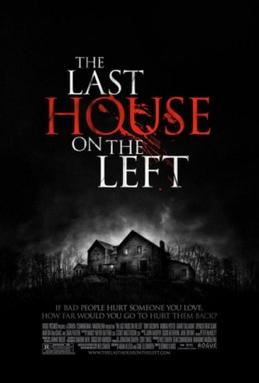

Warning: The following review concerns material much more disturbing than this reviewer usually covers. The plots of both movies featured here become crude, as does the review at brief points.
In the 1970s, two low budget exploitation films drew attention to themselves for various reasons, surviving to this day while most of their schlocky peers have faded into obscurity. Both are stories of rape and revenge. Both were covered on Siskel and Ebert and the Movies, one relatively well and one with absolute condemnation. Counters to points on both sides later rose up. Some people like one and not the other, some like both, and some like neither, but regardless, both were remade within a year of each other, with one striking difference: The Last House on the Left, the one Roger Ebert reviewed favorably, was given a wide release and made over 45 million dollars, while the other, I Spit On Your Grave remained a small-time project of no profit, despite a more professional production. Now that one has made it into the mainstream, it’s time to compare them here and see what’s really behind the legend. (Note: All four movies will be discussed, but the remakes are the movies being rated.)
The Last House on the Left (2009)
The most interesting characters in this surprisingly well-acted remake are Krug, the leader of the movie’s gang of villains, and Justin, his quiet son, who is a victim of circumstance and much too humane to be a part of their crimes. Their interactions allow us to explore Krug’s twisted morals and how they fail to sway the innocent Justin. It’s a shame the movie failed to realize that its heroes are the characters who needed to be worked out more, and it’s telling that what little interaction they have with Justin builds his character while leaving them in the dark.
Wes Craven’s The Last House on the Left was a low budget horror film, generally seen as an adaptation of The Virgin Spring. It’s a straightforward story of a family who loses a daughter when a small gang of rapists and murderers abduct her and her friend after offering to sell them marijuana. By coincidence, after the homeless gang finishes their crime, they ask to stay overnight at the family’s house, masquerading as salesmen, and when the parents discover their secret, they vengefully take on the gang until each criminal is dead. It isn’t pleasant material, but Craven’s decision to adapt the story of a man compelled to build a church in repentance for his vengeance was not a casual one: Both with the gang and with the parents, the movie pushes the notion that malice drinks half its own poison, even when it’s near-impossible to resist.
Today, however, horror movies are most popular as endurance tests of gore and death, so deconstructing violence probably wouldn’t bode well. Instead, this movie revels in its violence, sometimes expecting us to cheer for it. Its reputation precedes it, and I expected to have a miserable time. So I was genuinely surprised when it found new ways to keep me invested.
If there’s one thing this movie deserves credit for, it’s the fact that it understands how a little character building in the right direction can go a long way. Mari, the daughter, is close to her parents, as she was in the original movie, and more time is devoted to building her melancholy-yet-sweetheart personality. It registers that she wouldn’t have accepted Justin’s invitation if not swayed by her friend Paige, and when she and Paige were subjected to their captors’ disgusting cruelty, I was still more sorry for them than I was for myself at having to see this. I would’ve been silently rooting for Mari during her final escape attempt if I hadn’t seen the original movie, in which she is gunned down. But then came a twist on the tale that, so help me, genuinely made me happy: She makes it anyway.
Yes, after the criminals manage to secure the guest house at her parents’ vacation home, Mari pulls herself out of the lake she attempted to swim away in and just manages to crawl her way home, where we’re – heck, I’ll say “treated†– to a scene of her mother and father, a doctor, saving her life. And so, the story of vengeance becomes the story of the parents fighting to get themselves and their daughter out of the house to the nearest hospital. Or at least, so the movie claims.
The problem is that the remake doesn’t forget the parents’ desire for revenge, and there are points at which you can’t tell if it’s just trying to live up to the horror genre or if it’s something less forgivable and more sadistic. It’s easy to cheer for the moments in which the family fights back to save each other and starts to defeat the monsters menacing them. But it’s hard to always see that as the point, what with the gore the movie dreams up for the criminals, who of course are invulnerable to something as underwhelming as a wine bottle over the head.
I don’t really like the original Last House on the Left, but I do respect it. It’s a far more competent piece of filmmaking than any distributor could have expected, let alone required, and the final shot of the parents huddled together, not in triumph, but in weary, shell-shocked anguish is a bold and poignant statement. This one is a movie I could actually like if I were only sure about the “respect†part. I wasn’t unhappy with its resolution, but I wondered I’d had to forgive too much to get there, and I still wasn’t sure if the parents were only supposed to have fought the gang or actively savored their deaths. Then came the infamous final scene, which pretty much answered my question. This time around, that half-cup of poison is meant to be drunk by the audience.
I Spit On Your Grave (2010)
If you don’t know the story of this rape and revenge movie, I don’t need to linger on it long. The rapists are four gas station employees, one mentally disabled, and a corrupt sheriff ringleader added for this remake. The revenge is from their victim, a woman named Jennifer, who decides that only their deaths can bring her back into balance. The purpose, or at least the excuse, is to deliver some sort of feminist moral from the notion of disgusting misogynists who have it coming defeated and punished by a woman.
There is a thin line between violent scenes in a movie that serve a purpose and violent scenes that are exploitative, the kind some have branded as its own category of porn. It’s a very different effect, and the mindset of the production team is not remotely the same, but when a movie claims to be moralizing the audience with rape scenes, determining what makes it true or false is no simple task. So as I tried to come up with the reason this remake seemed like nothing but sleazy trash using the fear and hatred of rapists as a smokescreen, I began to wonder if I was the one who’d gone wrong. I respect Craven’s version of The Last House on the Left, so was anything the victims were suffering in that movie really any different? House focused on how horrific and wrong the suffering of its victims was, and the scene was shorter, but violence is violence, so was I just being biased? Why was I mad at Grave for giving me a sense of the criminals’ joy, even though this was present in both movies and was a true depiction of such figures? Shouldn’t I be thinking less about measuring how sick the images were and more about what the poor victim must be going through?
That’s when I realized that this movie wasn’t trying to make me identify with its victim. Her depiction was limited to the same pleading and crying through the entire sequence, using her merely as a measurement of how hard this sick assault was hitting. The reason we were watching the men torment and humiliate her in various, oh-so inventive ways was to build them up as our villains, not make some type of statement about them or their actions, as the original movie thought it was doing. While both may have the same core problem, the biggest difference between the two is that instead of self-righteous, the new Grave thinks its extended scenes of rape, torture, humiliation, and general sadism are in and of themselves entertaining aspects of a story about a “hero†placed against villains. And to that, my response is the same thing I said aloud when the sheriff character held a rifle to the mouth of the pleading, crying woman and forced her to show her teeth and whinny like a horse over and over: Fuck you, movie.
The original had its own bad morals but of a different variety. It loathed the idea of misogynistic rapists, and so it tried (and failed) to deconstruct the mindset of such people in attempt to convince us that their murder at the hands of their victim was “right.†The only times it seemed to come alive were during the rape and murder scenes, dragging out the former in a misguided attempt to “expose†all the different horrors of rape, serving all the same purposes as violent pornography. (And if you don’t believe me there, read Roger Ebert’s review of it.) Otherwise, it made silly, flat, amateurish attempts to portray the villains as regular guys who were bored and simply didn’t understand that rape wasn’t one of their rights. Between this and the pointless “artistic†shots of trees and such, “slow†and “boring†became another of the movie’s problems. Do I, a young man who’s never had to fight against such a life-changing threat as rape, credit either version for coming to the defense of women’s empowerment? I don’t. This is one case where even I won’t hesitate to say, especially because it appealed to some of the very people it criticized, that nobody should.
Why did Meir Zarchi, the director who started all of this, think the victim sinking to the same depths as her attackers was empowering? Did he think he was moralizing the real-world rapists who would somehow relate to his dense, cardboard impressions of them? If so, where does that leave our impression of Jennifer, who sees her first degree murders as righteous victories that put her mind at ease? (That, by the way, includes the rapists’ “pet retard,†who she knows is nothing but their victim, whimpering and refusing when they don’t force him.) Are we supposed to be impressed that a woman can be such a formidable force, winning out through a combination of the director placing her in the advantageous position and the rapists being stupid enough to fall for each obvious trap? Probably, since Zarchi complained that the remake does not portray Jennifer using her sexuality to overcome the villains.
The bottom line is, like Jennifer, the movies themselves don’t want to right wrongs. They want to hit back. Their purpose is to vent, not so much correct. Neither was the first or the last attempt to do so, and the response to such has always been the same: More in kind. This type of thing is one reason that shortsighted men feel the need to throw terms like “feminazi†around. It’s the inevitable chain reaction of hatred, and I doubt Zarchi himself has realized the chain his product in particular is forming: He allegedly made the movie after aiding a rape victim, while a callous police officer treated her coldly. (I choose not to doubt it, though I’d want to ask just what it was he learned.) Obviously, it angered him, and the movie was his response. Then came the remake, which channels the anger of Zarchi’s film in attempt to stimulate the grindhouse buffs. Not only does it dream up an even better, lengthier, more disgusting impression of rape, it makes the revenge portion the one in which we’re supposed to imagine the men’s pain and torment, knowing that sadism, not righteousness, is what will really make people cheer for it. Now, last year, the otherwise undistinguished director of the remake made a sequel, which pretty much forgot the notion of gender relevance and focused on what was really at the core all along: A pornographically violent attack in retaliation to another one.
Which version of I Spit on Your Grave is worse? Pick your poison. Personally, I don’t have to, because I can say this about either one and be equally as truthful: I Spit on Your Grave is the worst movie I have ever seen, and I don’t say that lightly. I have seen some bad ones.
And I don’t mean they’re the most “intense†or the most “extreme†movies. They’re not. You want something to make you squirm at the pain and fear onscreen? Hobo with a Shotgun beats both versions together. Enjoy yourself. So do I mean they’re the most “offensive†movies? They might be, but that’s not the way I’d put it, as though I’m some kind of dumbstruck politician. These movies are pathetic. Altogether, they’re an otherwise boring, amateur flick that honestly believes its sick scenes are righteous, followed by a movie more efficient as a piece of exploitation that does not believe it but clings to the notion as an excuse. There’s nothing else to them. And don’t come telling me that A Serbian Film or The Beast of Yucca Flats were more disgusting or poorly made, because I can’t give less credit than none at all. These two are nothing but an aid to some of the lamest, angriest aspects of humanity, and as far as I’m concerned, it doesn’t get any worse than that.
The Better Movie:
The Last House on the Left –
Pros:
– Better acting and character development
– More sympathetic and likable protagonists
– More legitimate “thriller†aspects, with action it’s possible to get invested in
Cons:
– The sadism counters the effect
– The violence is gratuitous
– Betrays the original’s message
I Spit On Your Grave – N/A
It’s a little bit funny how these two have overlapped in the past. Many people attack Roger Ebert’s zero star review of the first I Spit On Your Grave by pointing out that he gave a positive review to the first Last House on the Left, as though it’s a given that the two are equal. So let’s think about that for a second: The Last House of the Left is the breakout film of Wes Craven, who would go on to direct The Hills Have Eyes, A Nightmare on Elm Street, the Scream series, and many more. I Spit on Your Grave is the first film of Meir Zarchi, who would go on to direct exactly one other movie, though I’m likely the only one you’ll ever come across who knows about it. The Last House on the Left is about how violence is a two-way street. I Spit on Your Grave revels in violence, launching a sadomasochistic attack on the paper thin villains in its imagination. The Last House on the Left was made with surprising, if still limited competence. The amateur production of I Spit on Your Grave would be funny if it weren’t all so pitiful. And The Last House on the Left inspired a mainstream remake because it deserved to. There was something of value to it, something humane that viewers who could accept it were better for gaining. And the remake was not entirely unsuccessful in its attempt to apply that quality in a different direction. I Spit On Your Grave never had anything but hatred and misery to offer. Its remake did not make it out of “cult†territory because there’s no reason it should. It didn’t deserve the remake, nor even its cult following, though it inevitably would have gained some following even if the scathing reviews of Gene Siskel and Roger Ebert hadn’t drawn attention to it.
Final Scores:
The Last House on the Left: 5/10
I Spit on Your Grave: 0/10
Winner:
And so, “mainstream†takes round 3 after a very strong demonstration of the ugly side of cult films. Next time, we can hopefully lighten it up a bit
Cult: 1
Mainstream: 2
Cult vs. Mainstream: The Last House on the Left vs. I Spit On Your Grave
July 24, 2014 in Uncategorized
Warning: The following review concerns material much more disturbing than this reviewer usually covers. The plots of both movies featured here become crude, as does the review at brief points.
In the 1970s, two low budget exploitation films drew attention to themselves for various reasons, surviving to this day while most of their schlocky peers have faded into obscurity. Both are stories of rape and revenge. Both were covered on Siskel and Ebert and the Movies, one relatively well and one with absolute condemnation. Counters to points on both sides later rose up. Some people like one and not the other, some like both, and some like neither, but regardless, both were remade within a year of each other, with one striking difference: The Last House on the Left, the one Roger Ebert reviewed favorably, was given a wide release and made over 45 million dollars, while the other, I Spit On Your Grave remained a small-time project of no profit, despite a more professional production. Now that one has made it into the mainstream, it’s time to compare them here and see what’s really behind the legend. (Note: All four movies will be discussed, but the remakes are the movies being rated.)
The Last House on the Left (2009)
The most interesting characters in this surprisingly well-acted remake are Krug, the leader of the movie’s gang of villains, and Justin, his quiet son, who is a victim of circumstance and much too humane to be a part of their crimes. Their interactions allow us to explore Krug’s twisted morals and how they fail to sway the innocent Justin. It’s a shame the movie failed to realize that its heroes are the characters who needed to be worked out more, and it’s telling that what little interaction they have with Justin builds his character while leaving them in the dark.
Wes Craven’s The Last House on the Left was a low budget horror film, generally seen as an adaptation of The Virgin Spring. It’s a straightforward story of a family who loses a daughter when a small gang of rapists and murderers abduct her and her friend after offering to sell them marijuana. By coincidence, after the homeless gang finishes their crime, they ask to stay overnight at the family’s house, masquerading as salesmen, and when the parents discover their secret, they vengefully take on the gang until each criminal is dead. It isn’t pleasant material, but Craven’s decision to adapt the story of a man compelled to build a church in repentance for his vengeance was not a casual one: Both with the gang and with the parents, the movie pushes the notion that malice drinks half its own poison, even when it’s near-impossible to resist.
Today, however, horror movies are most popular as endurance tests of gore and death, so deconstructing violence probably wouldn’t bode well. Instead, this movie revels in its violence, sometimes expecting us to cheer for it. Its reputation precedes it, and I expected to have a miserable time. So I was genuinely surprised when it found new ways to keep me invested.
If there’s one thing this movie deserves credit for, it’s the fact that it understands how a little character building in the right direction can go a long way. Mari, the daughter, is close to her parents, as she was in the original movie, and more time is devoted to building her melancholy-yet-sweetheart personality. It registers that she wouldn’t have accepted Justin’s invitation if not swayed by her friend Paige, and when she and Paige were subjected to their captors’ disgusting cruelty, I was still more sorry for them than I was for myself at having to see this. I would’ve been silently rooting for Mari during her final escape attempt if I hadn’t seen the original movie, in which she is gunned down. But then came a twist on the tale that, so help me, genuinely made me happy: She makes it anyway.
Yes, after the criminals manage to secure the guest house at her parents’ vacation home, Mari pulls herself out of the lake she attempted to swim away in and just manages to crawl her way home, where we’re – heck, I’ll say “treated†– to a scene of her mother and father, a doctor, saving her life. And so, the story of vengeance becomes the story of the parents fighting to get themselves and their daughter out of the house to the nearest hospital. Or at least, so the movie claims.
The problem is that the remake doesn’t forget the parents’ desire for revenge, and there are points at which you can’t tell if it’s just trying to live up to the horror genre or if it’s something less forgivable and more sadistic. It’s easy to cheer for the moments in which the family fights back to save each other and starts to defeat the monsters menacing them. But it’s hard to always see that as the point, what with the gore the movie dreams up for the criminals, who of course are invulnerable to something as underwhelming as a wine bottle over the head.
I don’t really like the original Last House on the Left, but I do respect it. It’s a far more competent piece of filmmaking than any distributor could have expected, let alone required, and the final shot of the parents huddled together, not in triumph, but in weary, shell-shocked anguish is a bold and poignant statement. This one is a movie I could actually like if I were only sure about the “respect†part. I wasn’t unhappy with its resolution, but I wondered I’d had to forgive too much to get there, and I still wasn’t sure if the parents were only supposed to have fought the gang or actively savored their deaths. Then came the infamous final scene, which pretty much answered my question. This time around, that half-cup of poison is meant to be drunk by the audience.
I Spit On Your Grave (2010)
If you don’t know the story of this rape and revenge movie, I don’t need to linger on it long. The rapists are four gas station employees, one mentally disabled, and a corrupt sheriff ringleader added for this remake. The revenge is from their victim, a woman named Jennifer, who decides that only their deaths can bring her back into balance. The purpose, or at least the excuse, is to deliver some sort of feminist moral from the notion of disgusting misogynists who have it coming defeated and punished by a woman.
There is a thin line between violent scenes in a movie that serve a purpose and violent scenes that are exploitative, the kind some have branded as its own category of porn. It’s a very different effect, and the mindset of the production team is not remotely the same, but when a movie claims to be moralizing the audience with rape scenes, determining what makes it true or false is no simple task. So as I tried to come up with the reason this remake seemed like nothing but sleazy trash using the fear and hatred of rapists as a smokescreen, I began to wonder if I was the one who’d gone wrong. I respect Craven’s version of The Last House on the Left, so was anything the victims were suffering in that movie really any different? House focused on how horrific and wrong the suffering of its victims was, and the scene was shorter, but violence is violence, so was I just being biased? Why was I mad at Grave for giving me a sense of the criminals’ joy, even though this was present in both movies and was a true depiction of such figures? Shouldn’t I be thinking less about measuring how sick the images were and more about what the poor victim must be going through?
That’s when I realized that this movie wasn’t trying to make me identify with its victim. Her depiction was limited to the same pleading and crying through the entire sequence, using her merely as a measurement of how hard this sick assault was hitting. The reason we were watching the men torment and humiliate her in various, oh-so inventive ways was to build them up as our villains, not make some type of statement about them or their actions, as the original movie thought it was doing. While both may have the same core problem, the biggest difference between the two is that instead of self-righteous, the new Grave thinks its extended scenes of rape, torture, humiliation, and general sadism are in and of themselves entertaining aspects of a story about a “hero†placed against villains. And to that, my response is the same thing I said aloud when the sheriff character held a rifle to the mouth of the pleading, crying woman and forced her to show her teeth and whinny like a horse over and over: Fuck you, movie.
The original had its own bad morals but of a different variety. It loathed the idea of misogynistic rapists, and so it tried (and failed) to deconstruct the mindset of such people in attempt to convince us that their murder at the hands of their victim was “right.†The only times it seemed to come alive were during the rape and murder scenes, dragging out the former in a misguided attempt to “expose†all the different horrors of rape, serving all the same purposes as violent pornography. (And if you don’t believe me there, read Roger Ebert’s review of it.) Otherwise, it made silly, flat, amateurish attempts to portray the villains as regular guys who were bored and simply didn’t understand that rape wasn’t one of their rights. Between this and the pointless “artistic†shots of trees and such, “slow†and “boring†became another of the movie’s problems. Do I, a young man who’s never had to fight against such a life-changing threat as rape, credit either version for coming to the defense of women’s empowerment? I don’t. This is one case where even I won’t hesitate to say, especially because it appealed to some of the very people it criticized, that nobody should.
Why did Meir Zarchi, the director who started all of this, think the victim sinking to the same depths as her attackers was empowering? Did he think he was moralizing the real-world rapists who would somehow relate to his dense, cardboard impressions of them? If so, where does that leave our impression of Jennifer, who sees her first degree murders as righteous victories that put her mind at ease? (That, by the way, includes the rapists’ “pet retard,†who she knows is nothing but their victim, whimpering and refusing when they don’t force him.) Are we supposed to be impressed that a woman can be such a formidable force, winning out through a combination of the director placing her in the advantageous position and the rapists being stupid enough to fall for each obvious trap? Probably, since Zarchi complained that the remake does not portray Jennifer using her sexuality to overcome the villains.
The bottom line is, like Jennifer, the movies themselves don’t want to right wrongs. They want to hit back. Their purpose is to vent, not so much correct. Neither was the first or the last attempt to do so, and the response to such has always been the same: More in kind. This type of thing is one reason that shortsighted men feel the need to throw terms like “feminazi†around. It’s the inevitable chain reaction of hatred, and I doubt Zarchi himself has realized the chain his product in particular is forming: He allegedly made the movie after aiding a rape victim, while a callous police officer treated her coldly. (I choose not to doubt it, though I’d want to ask just what it was he learned.) Obviously, it angered him, and the movie was his response. Then came the remake, which channels the anger of Zarchi’s film in attempt to stimulate the grindhouse buffs. Not only does it dream up an even better, lengthier, more disgusting impression of rape, it makes the revenge portion the one in which we’re supposed to imagine the men’s pain and torment, knowing that sadism, not righteousness, is what will really make people cheer for it. Now, last year, the otherwise undistinguished director of the remake made a sequel, which pretty much forgot the notion of gender relevance and focused on what was really at the core all along: A pornographically violent attack in retaliation to another one.
Which version of I Spit on Your Grave is worse? Pick your poison. Personally, I don’t have to, because I can say this about either one and be equally as truthful: I Spit on Your Grave is the worst movie I have ever seen, and I don’t say that lightly. I have seen some bad ones.
And I don’t mean they’re the most “intense†or the most “extreme†movies. They’re not. You want something to make you squirm at the pain and fear onscreen? Hobo with a Shotgun beats both versions together. Enjoy yourself. So do I mean they’re the most “offensive†movies? They might be, but that’s not the way I’d put it, as though I’m some kind of dumbstruck politician. These movies are pathetic. Altogether, they’re an otherwise boring, amateur flick that honestly believes its sick scenes are righteous, followed by a movie more efficient as a piece of exploitation that does not believe it but clings to the notion as an excuse. There’s nothing else to them. And don’t come telling me that A Serbian Film or The Beast of Yucca Flats were more disgusting or poorly made, because I can’t give less credit than none at all. These two are nothing but an aid to some of the lamest, angriest aspects of humanity, and as far as I’m concerned, it doesn’t get any worse than that.
The Better Movie:
The Last House on the Left –
Pros:
– Better acting and character development
– More sympathetic and likable protagonists
– More legitimate “thriller†aspects, with action it’s possible to get invested in
Cons:
– The sadism counters the effect
– The violence is gratuitous
– Betrays the original’s message
I Spit On Your Grave – N/A
It’s a little bit funny how these two have overlapped in the past. Many people attack Roger Ebert’s zero star review of the first I Spit On Your Grave by pointing out that he gave a positive review to the first Last House on the Left, as though it’s a given that the two are equal. So let’s think about that for a second: The Last House of the Left is the breakout film of Wes Craven, who would go on to direct The Hills Have Eyes, A Nightmare on Elm Street, the Scream series, and many more. I Spit on Your Grave is the first film of Meir Zarchi, who would go on to direct exactly one other movie, though I’m likely the only one you’ll ever come across who knows about it. The Last House on the Left is about how violence is a two-way street. I Spit on Your Grave revels in violence, launching a sadomasochistic attack on the paper thin villains in its imagination. The Last House on the Left was made with surprising, if still limited competence. The amateur production of I Spit on Your Grave would be funny if it weren’t all so pitiful. And The Last House on the Left inspired a mainstream remake because it deserved to. There was something of value to it, something humane that viewers who could accept it were better for gaining. And the remake was not entirely unsuccessful in its attempt to apply that quality in a different direction. I Spit On Your Grave never had anything but hatred and misery to offer. Its remake did not make it out of “cult†territory because there’s no reason it should. It didn’t deserve the remake, nor even its cult following, though it inevitably would have gained some following even if the scathing reviews of Gene Siskel and Roger Ebert hadn’t drawn attention to it.
Final Scores:
The Last House on the Left: 5/10
I Spit on Your Grave: 0/10
Winner:
And so, “mainstream†takes round 3 after a very strong demonstration of the ugly side of cult films. Next time, we can hopefully lighten it up a bit
Cult: 1
Mainstream: 2
Top 9 Good Songs in Bad (Animated) Movies
July 24, 2014 in Uncategorized
You know, I’m starting to think I have a thing for these “best of†lists. I might start doing them more often. This time, it’s the top 9, because less is more, right?
We know that the soundtrack can often steal the show in a movie, Disney films being the prime example, but it’s a bit surprising how often bad or underwhelming movies can score big on that front. And I don’t mean the great songs already in existence that big-budgeted cash-grabs just happened to get their grubby little fingers on. These are the songs created specifically for films that, whatever their flaws may have been, knew when they had something worth hearing. This is actually so common that if I didn’t restrict it somehow, I’d probably be thinking it over forever. So this time, it’s the animated films, where the competition is arguably steepest. (Note that it doesn’t necessarily have to be a movie I’d flat-out give a “thumbs down.†It just has to be an example of a song being in another league of quality than the movie as a whole.)
9. I Stand Alone – Quest For Camelot
Well, it’s no Let it Go, and it does lose points for the fact that its chorus is the only part that really stands out. Still, there’s no denying the sense of triumph in this number belted out by a blind character about how he neither wants nor needs help from anybody, having mastered his own unique foothold in life. In this clunky, bland, sometimes juvenile effort from Warner Bros. Animation, this song was one of the few bits that stuck with me, and I’m still happy to hear it, even if those four lines in the refrain are pretty much the whole story. (It’s also been pointed out that the very next thing the guy does after he stops singing is relent for no reason and allow the main character to come with him.)
8. Please Wake Up – Once Upon a Forest
The biggest problem with this movie is either the first half or the second half of the fact that it’s Ferngully-lite, depending on who you are. But otherwise, it’s just another lukewarm talking animal adventure with some cute moments and a couple lame ones as well. But it does contain a sincere lament of a song sung by Michael Crawford, about what a profound shame it is that his character’s niece, who’s barely begun her life, might die before him, an old soul who already got to experience the gift she might lose.
7. Sun Do Shine – Rock-A-Doodle
This weak, bizarre film from Don Bluth did not win over fans like his past efforts, but he probably helped its cause, convincing viewers to at least give it a chance, by giving them the best part right at the top. Since the conflict hinges on getting the key character to come back to the farm and raise the sun once again, the film wisely starts with a jovial scene of him doing just that to get us invested in the notion. With a distinct and suitably sunny song sung by Glenn Campbell, the Elvis-esque rooster named Chanticleer calls forth and celebrates the sunrise, making a generic farm seem like the most fun joint in town. It might have even ranked higher if they hadn’t put aside a portion of it to hear a few words from the dog that never shuts up about his shoes.
6. Spark Inside Us – The Princess and the Goblin
I was seriously disappointed to find this movie neither as grand nor as epic as I remembered it. It’s cheap, second rate production values and flat, wooden storytelling are weak enough to make you grateful that Disney at very worst is only competently mediocre. It would have been another memory to be tossed aside entirely if not for a song made even more powerful by context.
Picture this: You’re four years old, watching another well-to-do story about a mischievous princess running away from her nanny, when literally out of nowhere, monster hands start grabbing at her, driving her into the woods. More monsters and weird little critters emerge in a rip-off of Snow White, but it’s done just well enough so that it doesn’t seem hollow to you. In fact, with sharp teeth popping out right where she was about to run and monster hands managing to grab ahold of her for a second, it’s not exactly low tension. And it’s obviously not a false alarm as it was in Snow White, so you have no idea how this will be resolved. She finally gives up, cornered, and lies down to sob, at which point more weird critters emerge from the ground beside her and join their friends closing in. And then, when it looks like her cat is about to be mauled in attempt to hold its ground, this happens:  http /www.youtube.com/watch?v=FdLEKZ932bQ
How’s that for a triumph of light over darkness? If the song lived up to my memory, I’d probably be trying to convince myself that the movie as a whole is some kind of deserving little underdog effort, but it doesn’t ring quite as true now. Even so, it’s an ardent, slightly haunting number that earns this spot on the list. (In fact, the movie is even more impressed with it than I am, reprising it four different times.)
5. Let Me Be Your Wings – Thumbelina
Now Thumbelina remains an obvious, mediocre rip-off of Disney’s most popular movies at the time, really going out of its way to feature the same aspects. The same actress who voiced The Little Mermaid’s Ariel in the title role? Check. And she has the same gimmick of everyone being impressed with her singing voice? Check. And, just to be sure, the author who wrote The Little Mermaid also wrote the story being adapted here? Check.
Okay, moving on to Aladdin: The couple gets a song about how one wants to take the other on a sightseeing adventure like no other, a la I Can Show You the World? Hold on a second, this song sounds all unique and heartfelt, like it actually was something off a Disney soundtrack. Jeez, why didn’t we just rip off this film the whole time? Speaking of which, you did get the voice of that parrot I know everyone loves, right?
As weak as it is, I can’t hate Thumbelina. Not that I recommend it, but with this song as its crown jewel, it’s a tolerable film. And I’d never say that it left me with nothing. For example… actually, maybe I should say that it managed to make 86 minutes of my time in exchange for this song a trade I can live with.
4. Send Love Through – Rock and Rule
If you haven’t seen the slightly controversial Rock and Rule – which, make no mistake, is not made for children – I don’t know that I’d recommend it. For a movie about the sci-fi triumphs of rock-and-roll, it’s not the most pleasant experience you could ask for, giving off a dingy, mildly unclean sort of feeling. This is made worse by the fact that all the characters (whose likability is limited to begin with) are anthropomorphic dogs, cats, and mice, apparently just because the animators were more at home drawing them like that. Still, it’s pretty funny (sometimes on purpose). And not only does the soundtrack almost live up to the promise of the title, but unlike Heavy Metal, its biggest winner is a song that actually was made for the movie. Send Love Through, the song that can only defeat the main villain’s demon when performed as a duet, rocks, and it’s one of the most enjoyable songs on this list. It does lose some ground on the other songs in the top half for memorability, but I give it the edge over Let Me Be Your Wings for how well they played the scene it appears in.
3. How Bad Can I Be? – The Lorax
This big budget adaptation of the Dr. Seuss story might have at least qualified as a guilty pleasure with its cute zaniness and laughs, if not for the fact that it tap dances on the line between being a disservice to the source material and being a full-blown insult. In attempt to cover its back, it creates a new story about the wacky adventures of teenagers to compress and push aside Seuss’s actual story, and then it rather pathetically tries to make the scenario so extreme that “everyone†can agree it calls for environmentalism, to avoid the risk of arguing an actual case for it. Still, it did have just a few moments in which it did almost seem to care about representing Seuss and his vision, and this song was one of them.
This song is any and all strengths the movie took from the book’s actual plotline compressed into 3 minutes. It’s here that the Once-ler, who, before now, was just a beleaguered innocent trying to find his way, starts to strike gold at the cost of selling out his woodland friends. It’s such a sweet relief, as it could only be for anyone who’s ever found himself in his position, that he doesn’t mind putting the critters on the back-burner, as many tend to do. However, he is bothered a bit by the inevitable, undeniable truth that he’s only trying to help himself, hurting others to do so, and that by definition is bad. So what does he do? He kicks off a hardcore anthem, dives into the wave of success without a backward glance, and denies it, happily using all the excuses we’ve ever heard simultaneously. And in this light, they come across so clearly as just that. The Once-ler doesn’t seem to honestly believe them, but he wants to, and it’s so easy to get away with it. But in the end, even if there are grains of truth in what he says, selfishness is selfishness when it’s all said and done, and once it’s your mindset, it’s easy to get lost in it and become something different.
2. Absolutely Green – A Troll in Central Park
You may remember that I gave a marginal vote of approval to A Troll in Central Park, and I do stand by that. It’s certainly the most inspired of the four films in Bluth’s infamous failing streak. But keep in mind, the soundtrack was one of the major benefits to its case: I think these are A-minus songs in an otherwise C-minus movie. But while that goes for all three tunes that appear in this movie, the best can only be Absolutely Green, which is something like what would have happened if John Lennon had been asked to turn Imagine into a song you could sing to a kindergarten classroom and still more or less get the point across. It’s the most sincere song on this list, in a movie that was at least striving to be exactly that. Just don’t stare too much at the anthropomorphic flowers, and you should be able to enjoy yourself.
1. I Believe I Can Fly – Space Jam
There’s something about this movie. From the outside looking in, it seems like a terrible 90s cash grab. The more distanced you are from it, the stupider it seems. But for the generation that grew up with it, Michael Jordan and the Looney Tunes were both larger than life figures that somehow belonged together. We wanted to see Michael Jordan come down and be their hero. We wanted to see Bugs Bunny become his buddy and show him that the Looney Tunes, with all their nonsensical craziness kids gobble down like candy, were totally real. And the aliens? At the time, that was popular enough to be just within reach of all of the above, making them just the sort of villains we loved watching lose in spectacular fashion to our heroes. And so, even if the movie was far from the finest hour of anyone involved and is the type of marketing project that deserves to never, ever be repeated (!), it managed to reach a fanbase that will probably never be able to disown it.
That said, there’s one piece of this movie that’s a fond memory for everyone and not as a guilty pleasure. I Believe I Can Fly is one of those songs like Can’t Help Falling in Love or Don’t You Forget About Me, a classic in its own right that’s managed to build its own reputation separate from the film in which it debuted. As an inspirational song, it’s bold and uncompromising uplift. It shamelessly claims that the one singing can do it all, chiefly the one thing mankind has always seemed to long for. (That is, the one thing that doesn’t make cynical people write “dark side of human nature†stories about mankind always wanting it.) It became the biggest success of R. Kelly’s career and landed #406 in Rolling Stone’s list of the 500 greatest songs of all time. Its titular line is so iconic that it’s considered a legitimate joke to sing it before you hit the ground, as has been done in multiple other movies with no context. In fact, it’s more of a classic than the majority of the good animated musicals have managed to create. If there’s a song that deserves the win more than this one, someone please tell me what it is right away.
Honorable Mention:
Various songs – The Land Before Time sequels
Oh, these sequels became an insult like no other to the original. There were way more than ever could have been necessary, they ranged from so-so to terrible, and the standard they maintained as the series wore on looked something like this:

But even though the original wasn’t a musical in the first place, the sequels maintained a surprisingly high batting average in the song department, by which I mean almost all of them had at least one that wasn’t downright awful. The best of them were probably Beyond the Mysterious Beyond, a reflective number from a chapter that was at least trying for thoughtfulness and Always There, the only one in memory that honestly put in some heart. (In fact, I don’t think I realized when I was younger that in Littlefoot’s portion of the latter, he was singing about his long-deceased mother. Whoa… ) And I do think the catchy You’re One of Us Now also deserves a shout-out, even if, admittedly, that one does throw in some pretty stupid lines. However, since these were all direct to DVD, I didn’t consider them for a place on the list.
Takin’ A Ride – Heavy Metal
This movie is known for its soundtrack, but most of the songs were just well-utilized numbers that already existed. Still, this song by Don Felder, who they actually did get to write two original works for the movie, is fun. It’s not the best one in the movie, but just the fact that it holds its own against the others is pretty significant.
Top 9 Good Songs in Bad (Animated) Movies
July 24, 2014 in Uncategorized
You know, I’m starting to think I have a thing for these “best of†lists. I might start doing them more often. This time, it’s the top 9, because less is more, right?
We know that the soundtrack can often steal the show in a movie, Disney films being the prime example, but it’s a bit surprising how often bad or underwhelming movies can score big on that front. And I don’t mean the great songs already in existence that big-budgeted cash-grabs just happened to get their grubby little fingers on. These are the songs created specifically for films that, whatever their flaws may have been, knew when they had something worth hearing. This is actually so common that if I didn’t restrict it somehow, I’d probably be thinking it over forever. So this time, it’s the animated films, where the competition is arguably steepest. (Note that it doesn’t necessarily have to be a movie I’d flat-out give a “thumbs down.†It just has to be an example of a song being in another league of quality than the movie as a whole.)
9. I Stand Alone – Quest For Camelot
Well, it’s no Let it Go, and it does lose points for the fact that its chorus is the only part that really stands out. Still, there’s no denying the sense of triumph in this number belted out by a blind character about how he neither wants nor needs help from anybody, having mastered his own unique foothold in life. In this clunky, bland, sometimes juvenile effort from Warner Bros. Animation, this song was one of the few bits that stuck with me, and I’m still happy to hear it, even if those four lines in the refrain are pretty much the whole story. (It’s also been pointed out that the very next thing the guy does after he stops singing is relent for no reason and allow the main character to come with him.)
8. Please Wake Up – Once Upon a Forest
The biggest problem with this movie is either the first half or the second half of the fact that it’s Ferngully-lite, depending on who you are. But otherwise, it’s just another lukewarm talking animal adventure with some cute moments and a couple lame ones as well. But it does contain a sincere lament of a song sung by Michael Crawford, about what a profound shame it is that his character’s niece, who’s barely begun her life, might die before him, an old soul who already got to experience the gift she might lose.
7. Sun Do Shine – Rock-A-Doodle
This weak, bizarre film from Don Bluth did not win over fans like his past efforts, but he probably helped its cause, convincing viewers to at least give it a chance, by giving them the best part right at the top. Since the conflict hinges on getting the key character to come back to the farm and raise the sun once again, the film wisely starts with a jovial scene of him doing just that to get us invested in the notion. With a distinct and suitably sunny song sung by Glenn Campbell, the Elvis-esque rooster named Chanticleer calls forth and celebrates the sunrise, making a generic farm seem like the most fun joint in town. It might have even ranked higher if they hadn’t put aside a portion of it to hear a few words from the dog that never shuts up about his shoes.
6. Spark Inside Us – The Princess and the Goblin
I was seriously disappointed to find this movie neither as grand nor as epic as I remembered it. It’s cheap, second rate production values and flat, wooden storytelling are weak enough to make you grateful that Disney at very worst is only competently mediocre. It would have been another memory to be tossed aside entirely if not for a song made even more powerful by context.
Picture this: You’re four years old, watching another well-to-do story about a mischievous princess running away from her nanny, when literally out of nowhere, monster hands start grabbing at her, driving her into the woods. More monsters and weird little critters emerge in a rip-off of Snow White, but it’s done just well enough so that it doesn’t seem hollow to you. In fact, with sharp teeth popping out right where she was about to run and monster hands managing to grab ahold of her for a second, it’s not exactly low tension. And it’s obviously not a false alarm as it was in Snow White, so you have no idea how this will be resolved. She finally gives up, cornered, and lies down to sob, at which point more weird critters emerge from the ground beside her and join their friends closing in. And then, when it looks like her cat is about to be mauled in attempt to hold its ground, this happens:  http/www.youtube.com/watch?v=FdLEKZ932bQ
How’s that for a triumph of light over darkness? If the song lived up to my memory, I’d probably be trying to convince myself that the movie as a whole is some kind of deserving little underdog effort, but it doesn’t ring quite as true now. Even so, it’s an ardent, slightly haunting number that earns this spot on the list. (In fact, the movie is even more impressed with it than I am, reprising it four different times.)
5. Let Me Be Your Wings – Thumbelina
Now Thumbelina remains an obvious, mediocre rip-off of Disney’s most popular movies at the time, really going out of its way to feature the same aspects. The same actress who voiced The Little Mermaid’s Ariel in the title role? Check. And she has the same gimmick of everyone being impressed with her singing voice? Check. And, just to be sure, the author who wrote The Little Mermaid also wrote the story being adapted here? Check.
Okay, moving on to Aladdin: The couple gets a song about how one wants to take the other on a sightseeing adventure like no other, a la I Can Show You the World? Hold on a second, this song sounds all unique and heartfelt, like it actually was something off a Disney soundtrack. Jeez, why didn’t we just rip off this film the whole time? Speaking of which, you did get the voice of that parrot I know everyone loves, right?
As weak as it is, I can’t hate Thumbelina. Not that I recommend it, but with this song as its crown jewel, it’s a tolerable film. And I’d never say that it left me with nothing. For example… actually, maybe I should say that it managed to make 86 minutes of my time in exchange for this song a trade I can live with.
4. Send Love Through – Rock and Rule
If you haven’t seen the slightly controversial Rock and Rule – which, make no mistake, is not made for children – I don’t know that I’d recommend it. For a movie about the sci-fi triumphs of rock-and-roll, it’s not the most pleasant experience you could ask for, giving off a dingy, mildly unclean sort of feeling. This is made worse by the fact that all the characters (whose likability is limited to begin with) are anthropomorphic dogs, cats, and mice, apparently just because the animators were more at home drawing them like that. Still, it’s pretty funny (sometimes on purpose). And not only does the soundtrack almost live up to the promise of the title, but unlike Heavy Metal, its biggest winner is a song that actually was made for the movie. Send Love Through, the song that can only defeat the main villain’s demon when performed as a duet, rocks, and it’s one of the most enjoyable songs on this list. It does lose some ground on the other songs in the top half for memorability, but I give it the edge over Let Me Be Your Wings for how well they played the scene it appears in.
3. How Bad Can I Be? – The Lorax
This big budget adaptation of the Dr. Seuss story might have at least qualified as a guilty pleasure with its cute zaniness and laughs, if not for the fact that it tap dances on the line between being a disservice to the source material and being a full-blown insult. In attempt to cover its back, it creates a new story about the wacky adventures of teenagers to compress and push aside Seuss’s actual story, and then it rather pathetically tries to make the scenario so extreme that “everyone†can agree it calls for environmentalism, to avoid the risk of arguing an actual case for it. Still, it did have just a few moments in which it did almost seem to care about representing Seuss and his vision, and this song was one of them.
This song is any and all strengths the movie took from the book’s actual plotline compressed into 3 minutes. It’s here that the Once-ler, who, before now, was just a beleaguered innocent trying to find his way, starts to strike gold at the cost of selling out his woodland friends. It’s such a sweet relief, as it could only be for anyone who’s ever found himself in his position, that he doesn’t mind putting the critters on the back-burner, as many tend to do. However, he is bothered a bit by the inevitable, undeniable truth that he’s only trying to help himself, hurting others to do so, and that by definition is bad. So what does he do? He kicks off a hardcore anthem, dives into the wave of success without a backward glance, and denies it, happily using all the excuses we’ve ever heard simultaneously. And in this light, they come across so clearly as just that. The Once-ler doesn’t seem to honestly believe them, but he wants to, and it’s so easy to get away with it. But in the end, even if there are grains of truth in what he says, selfishness is selfishness when it’s all said and done, and once it’s your mindset, it’s easy to get lost in it and become something different.
2. Absolutely Green – A Troll in Central Park
You may remember that I gave a marginal vote of approval to A Troll in Central Park, and I do stand by that. It’s certainly the most inspired of the four films in Bluth’s infamous failing streak. But keep in mind, the soundtrack was one of the major benefits to its case: I think these are A-minus songs in an otherwise C-minus movie. But while that goes for all three tunes that appear in this movie, the best can only be Absolutely Green, which is something like what would have happened if John Lennon had been asked to turn Imagine into a song you could sing to a kindergarten classroom and still more or less get the point across. It’s the most sincere song on this list, in a movie that was at least striving to be exactly that. Just don’t stare too much at the anthropomorphic flowers, and you should be able to enjoy yourself.
1. I Believe I Can Fly – Space Jam
There’s something about this movie. From the outside looking in, it seems like a terrible 90s cash grab. The more distanced you are from it, the stupider it seems. But for the generation that grew up with it, Michael Jordan and the Looney Tunes were both larger than life figures that somehow belonged together. We wanted to see Michael Jordan come down and be their hero. We wanted to see Bugs Bunny become his buddy and show him that the Looney Tunes, with all their nonsensical craziness kids gobble down like candy, were totally real. And the aliens? At the time, that was popular enough to be just within reach of all of the above, making them just the sort of villains we loved watching lose in spectacular fashion to our heroes. And so, even if the movie was far from the finest hour of anyone involved and is the type of marketing project that deserves to never, ever be repeated (!), it managed to reach a fanbase that will probably never be able to disown it.
That said, there’s one piece of this movie that’s a fond memory for everyone and not as a guilty pleasure. I Believe I Can Fly is one of those songs like Can’t Help Falling in Love or Don’t You Forget About Me, a classic in its own right that’s managed to build its own reputation separate from the film in which it debuted. As an inspirational song, it’s bold and uncompromising uplift. It shamelessly claims that the one singing can do it all, chiefly the one thing mankind has always seemed to long for. (That is, the one thing that doesn’t make cynical people write “dark side of human nature†stories about mankind always wanting it.) It became the biggest success of R. Kelly’s career and landed #406 in Rolling Stone’s list of the 500 greatest songs of all time. Its titular line is so iconic that it’s considered a legitimate joke to sing it before you hit the ground, as has been done in multiple other movies with no context. In fact, it’s more of a classic than the majority of the good animated musicals have managed to create. If there’s a song that deserves the win more than this one, someone please tell me what it is right away.
Honorable Mention:
Various songs – The Land Before Time sequels
Oh, these sequels became an insult like no other to the original. There were way more than ever could have been necessary, they ranged from so-so to terrible, and the standard they maintained as the series wore on looked something like this:
But even though the original wasn’t a musical in the first place, the sequels maintained a surprisingly high batting average in the song department, by which I mean almost all of them had at least one that wasn’t downright awful. The best of them were probably Beyond the Mysterious Beyond, a reflective number from a chapter that was at least trying for thoughtfulness and Always There, the only one in memory that honestly put in some heart. (In fact, I don’t think I realized when I was younger that in Littlefoot’s portion of the latter, he was singing about his long-deceased mother. Whoa… ) And I do think the catchy You’re One of Us Now also deserves a shout-out, even if, admittedly, that one does throw in some pretty stupid lines. However, since these were all direct to DVD, I didn’t consider them for a place on the list.
Takin’ A Ride – Heavy Metal
This movie is known for its soundtrack, but most of the songs were just well-utilized numbers that already existed. Still, this song by Don Felder, who they actually did get to write two original works for the movie, is fun. It’s not the best one in the movie, but just the fact that it holds its own against the others is pretty significant.
A Purely Critical Standpoint: Equestria Girls
July 24, 2014 in Uncategorized

It’s been just over three years since My Little Pony: Friendship is Magic premiered and did the unthinkable by earning some genuine respect for the My Little Pony franchise. It also sparked an enthusiastic older fanbase of “bronies†and “pegasisters†that seems to have scared a few bystanders, but it’s not the first cartoon – meant for girls or otherwise – to find a cult following in older viewers. Then, giving us the icing on the cake in these strangely fascinating twists, last year it spawned My Little Pony: Equestria Girls, a movie starring human versions of the pony characters, and the fanbase exploded… in controversy. Oh, some appreciated it, to be sure. But many felt it was an example of how the show had lost its way, after losing the involvement of its creator, Lauren Faust, and a couple mixed reviews from the lockstep critics who saw it didn’t reveal much. Hearing legitimate praise for My Little Pony was unexpected, but hearing people say that it’s not living up to its potential? Now there are questions demanding to be answered.

Looks pretty much like every other attempt to mass market a franchise to little girls. You say this isn’t the norm for My Little Pony?
With my little blog (no pun intended), I vowed to solve this oddity and sit through the show episode by episode, picking apart each one until I determined what was warranted and what was overrated. (And I demonstrated how secure I was in taking up this task by titling it “From the Files of a Non-Brony.†) I tried to be tough on it, but in the end, I had to concede that it deserved much of the credit it got. The writers found a way; their comedy was exuberant, funnier than many long-running sitcoms written for adults, and at its best, it packed some of the same disarming sweetness as Hayao Miyazaki’s gentler movies.
Then I got to season 3, the one following Faust’s departure, and it didn’t take me long to see where the “controversy†part came in. Though it wasn’t evident in all of the episodes, the writing staff became inclined to play it safer and easier, growing less subtle, less nuanced, and falling back on generic solutions to conflicts. Not only that, the final episode took it in the direction of a pandering self-insert fantasy, deciding that its main character – whose name, “Twilight Sparkle,†was already an estrogen joygasm – had become so special for her inanely “endless†love of her friends, that she deserved to grow a pair of wings and be Princess Twilight Sparkle. With that, I was ready to give my sympathy to the dissenters, who rounded on this movie with all the loathing that the disappointing finale had sewn.
So now, here’s the franchise’s first theatrical movie in 27 years. Its mere existence is a mark of how the fanbase has grown in this newest incarnation, which makes it doubly strange that there still is no overriding consensus, neither in support nor in disdain. It’s a mystery, and having seen the entire show preceding it while also not counting myself among the fandom, I might just be in a position to solve it, at least for myself. And what’s the first note to make? That against my expectations, I found Equestria Girls providing the some of the same charm as earlier episodes in the series, right from the start.
Twilight Sparkle and her friends are traveling to her very first princess summit. Twilight has mixed emotions, which, her hyperactive friend Pinkie Pie explains, mean she is “nervouscited,†giving a rather animated demonstration. (After watching it evenly, their timid friend Fluttershy decides that it’s pretty much where she is every day.) But Twilight has good reason to be nervouscited. For one, the last pony promoted to a princess, who happens to be her sister in law, was placed in charge of the kingdom where the summit is held. What’s more, she is now expected to wear her crown everywhere, which before was strictly one of the group’s six magic tools used in emergencies, and those darn wings are impossible to sleep on without cramping, popping out involuntarily and shooting the covers off her.
Her closest friend/assistant/adopted brother Spike, a tiny dragon, has total faith in her, but she’s less than convinced. In fact, a challenge to her worthiness is indeed in store, as Sunset Shimmer, a former student of the head Princess – who was also Twilight’s mentor – has returned from her self-imposed exile, stealing Twilight’s crown to use in her newfound home. Only some quick interference from Twilight tears it from her grasp, both losing it through the portal back to Shimmer’s world, in which human counterparts of all the ponies in the land attend an average high school. Through mostly convoluted means, the crown ends up a prize for the one voted princess at the next school dance, and it’s up to Twilight and Spike, entering the new world transformed into a confused girl and a dog, to win votes away from Shimmer, the most popular girl in the school. (Imagine how much more entertaining past versions of the school dance/crowned princess plotline would have been if both competitors just happened, for what it’s worth, to secretly be good and evil sorceresses from another dimension. And unicorns.)
Unfortunately, much of the second act – in which Twilight and the human counterparts of her friends fix the rifts between different cliques in the style of High School Musical – resembles the kind of movie I was afraid of. Not only does it come across as forced and false, it includes a romantic subplot with a character who only occasionally does more than smile his dopey Ken doll smile. But then, this isn’t really its selling point anyway. The movie has a pretty good idea of what fans want from its characters, and it gives all of them moments to showcase their personality, plus a catchy, triumphant song to rally the whole cafeteria behind Twilight. Really, the movie cannot be seen as a standalone creation. With callbacks galore to events from the show, minor to secondary characters showing up all over the background – and two annoying lackeys promoted here to co-villains – and a final solution that requires seeing at least the first two-part episode to understand, it must be reviewed as an extension of the show. This does drop its potential for the casual viewer, but then, if you’re interested in the franchise, you shouldn’t be starting with the movie anyway.
So why might so many fans have doubted the movie’s ability to give them what they wanted? Well, for one, the designs of the Equestria Girls are terrible. I’m sure other fans are tempted to stand behind them, as they still represent the same beloved characters, but let’s take a moment to think about what should have been. The original pony designs draw attention with sharp, distinct colors, emphasizing one above the rest, and their most prominent feature is their expressive, anime-style faces. Picture the Powerpuff Girls or the Sailor Scouts, simple, dynamic, and engaging to the eye. The Equestria Girls have a bland mishmash of clothes in a near-random assortment of colors, and the first features that draw attention are those awkwardly long legs and boots. They look like cheap plastic dolls, not characters with staying power.
Which brings me to the next point of contention: Why make the first movie one in which the designs that won a fan base barely even appear? The most obvious answer, as fans also must have gathered, is for the marketing potential. New characters means new toys in demand, and the most popular toys that the Equestria Girls resemble aren’t exactly connected to sincere, quality stories. If there’s one thing the show deserves credit for, it’s going out of its way to treat its female demographic like smart and diverse people with their own unique interests. If your goal is to imitate the sales of dolls that take dress-up, shopping, and fashion to near cult-like worship, this probably isn’t something you care about.
Ah, but never mind. The girls do have a certain endearing cuteness, and you get used to them as the movie goes on. Put your worries away, because even with the task of filling out a whole movie, Equestria Girls wins out by split decision, a cute and enthusiastic opening half-hour, a generic and underachieving middle portion, and a looser, more expressive and fun third act that really does start to strike a chord. The list of little pleasures steadily grows, including an amusing reveal of Twilight’s secret, a couple of preparation sequences with a laid back, understated sweetness, some energetic antics from good old Pinkie Pie, and a final standoff that recalls the show’s ability to just imply serious consequences. (Note the shots in which a sledgehammer and Spike appear in the same frame and the split second in which Shimmer, unhindered, attempts to eliminate Twilight.) Altogether, they demonstrate that for any bad habits the franchise might have gained, or regained, its newfound strengths are still not beyond it. What’s more, it shifts back to using friendship as a solution based on what we’ve seen, not a hollow point of worship that promises idyllic wish fulfillment, putting just a little bit of weight behind its new subtitle.
Final Score: 6.5/10
Cult vs. Mainstream: Batman Returns vs. Batman: Mask of the Phantasm
July 24, 2014 in Uncategorized
Comic Book Movies
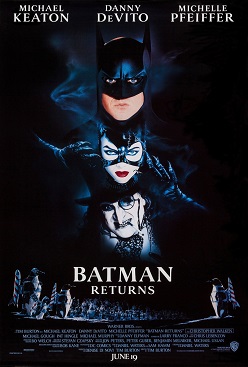
Vs.

In one corner, the small-time passion projects. In the other, the big-shot blockbusters. This is Cult vs. Mainstream.
This week, we compare two different takes on one of the most popular American characters, released within a year of each other. One is a sequel to a smash-hit, with the director out to really put his own spin on the franchise. The other is the grace note of a television show, both created by the same people, which sought to take the character and his story to new heights.
Batman: Mask of the Phantasm
Since Tim Burton brought the superhero back to the big screen with his movie Batman (1989), there have been eight theatrical releases about the character. Four were made in Burton’s (and later Joel Schumacher’s) series, and three are the entries in Christopher Nolan’s Dark Knight trilogy. Of those seven, the money made ranges from just under $240 million to well over one billion. The eighth is Mask of the Phantasm, an animated adaptation released right in the middle of the Burton/Schumacher series, which couldn’t even recover its $6 million dollar budget, attracting, at most, the fans of the popular cartoon series that inspired it. It is, to date, the only adaptation of the character to fail. It also may have been the first to truly treat its audience like adults.
Billionaire and tortured soul Bruce Wayne (Kevin Conroy) is in the middle of his double life as the vigilante Batman, capturing Gotham City’s worst criminals every night, when his old romance, Andrea Beaumont (Dana Delany) – who left Gotham suddenly and without explanation just prior to his start as Batman – returns and deduces his secret identity, linking their fates once again. Meanwhile, a mysterious figure in a bat cape appears and begins picking off criminals in Gotham, leading the police to suspect Batman and quickly drop their tolerance for him. But as he tails the assassin, the mysterious “Phantasm,†he begins to realize that the targets are all connected to the conspiracy that made Andrea and her wealthy father flee Gotham. The stakes are raised when the last member of the group on Phantasm’s hit list is revealed: The Joker (Mark Hamill).
It would have been easy to use Andrea as a stock character, made simply to move the plot forward, but her romance with Bruce Wayne is perhaps the movie’s greatest accomplishment. In flashback, we learn that the optimistic and eccentric Andrea, Bruce’s equal in mind and athleticism, was the one person to slip through his detachment, almost ending his plans to become Batman. Torn by indecision when he realized he hadn’t counted on finding happiness, Bruce fled to his parents’ grave and begged to be released from his promise, where he found an answer he didn’t expect. In the end, he decided to forgo his plans and marry Andrea, but just before this turn could become reality, she called off their engagement and fled the country (against her will, as he discovers in the present).
In some ways, animation is best suited to tell Batman’s stories. Never in another movie have the rooftops of Gotham city been more clearly defined, allowing Batman to leap and swing across them in his battle with the Phantasm, who’s difficult to keep up with. The noir look and style that Burton attempted in his adaptations is perfected here with nothing left obscured, and the action is quick and fluid without the constraints of reality. And the voice cast speaks for itself (no pun intended), as Conroy and Hamill demonstrate why some fans still consider them the best Batman and Joker, respectively. The former may be the most darkly and naturally masculine tone ever given to the character, and the latter, still best known for his role as Luke Skywalker, falls somewhere in between Jack Nicholson and Eric Idle, oozing with a sense of wicked joy and sadism.
In a time where Batman was only just starting to recover the image he has today, still linked with the silly 1960s TV series starring Adam West, directors Bruce Timm and Eric Radomski made a bold artistic move in trying to push the mature side of the character. Some of the choices they made were sheer gambles against what was popular. More than anything, their series, and this film that followed it, made audiences believe that Wayne dressed as Batman to scare. Batman never seemed to enjoy what he did. He didn’t want to play superhero; he needed to know that nobody else could be harmed by crime as he was. Mask of the Phantasm, which should have been their moment to share their creation with the public, instead became merely the crown jewel for fans paying close enough attention to hear about it. But it still maintains a decent cult following that continues to spread the word.
Batman Returns
Time has passed since Batman’s defeat of the Joker, and new menaces are rising in the Christmas season. Most prominent on the radar is Max Shreck, throwing the infamous Christopher Walken into the mix as a wealthy megalomaniac who has managed to purchase a favorable public image. But the city faces a more immediate threat from the mysterious Red Triangle Circus gang, a violent anarchist group of gun-toting clowns and exotic freaks wielding exotic weapons. And when Shreck is driven into the sewers during one of the gang’s attacks, they part to reveal the jealous, wisecracking Penguin (Danny DeVito), a grotesque mutant with an even more grotesque disposition, who blackmails Shreck into an allegiance that enables both to ascend.
This, of course, is more fantastical than the first Batman, in which the Joker led a gang of typical thugs, instead of acrobats and actual penguins, and his backstory didn’t drop all concern for plausibility. In fact, Tim Burton, whose feelings on the first film were mixed, did a lot his own way this time around. Batman (Michael Keaton) and his alter-ego Bruce Wayne don’t appear much in the first half of the movie, which, being a sequel, pulls this off under the pretense of setting up his new challenge. In fact, at first, he’s played more as the antagonist of the antiheroic Penguin and his quest to reclaim what he lost the day his parents cast him into the sewers. It barely even pertains to Batman until the arrival of Catwoman (Michelle Pfeiffer), once Max’s shy and grudgingly meek assistant, whose dark side breaks loose after Max’s attempt to silence her by pushing her out a window.
While all three villains are given strong performances – Devito is brilliantly eccentric and menacing, and Walken carries himself fine with his shtick – it’s Pfeiffer’s Catwoman sequences that hold up the best. While the Penguin’s bits make him seem a little unfocused and underdeveloped (is he craving acceptance? Is he vengeful? Is he just using the excuse as a cover for his greed and self-entitlement?), Catwoman’s scenes are bursting with glee at her newfound power. In a movie that’s strange in alternately head-scratching and intriguing ways, her sequences always fall into the latter, starting with a rebirth that pushes the series into supernatural territory. And her would-be love story with the titular protagonist is an interesting arc on both counts, even if the romance between them is a little underdeveloped.
But what Burton offers with this sequel is not an improvement, nor is it a downgrade per se. It’s a tradeoff. In severing ties to plausibility, he moves the story from pulp noir to the realms in which he is most at home, giving it the weightier tone of a gothic fantasy, right down to the superior visuals. But in exchange, he weakens its impact as an action movie, providing cheap Saturday morning cartoon gimmicks in attempt to fit both bills. After enough time with rocket-launching penguins, trapdoor manhole covers, and the Penguin’s useless Duckmobile, which is only really there to be a set piece, it harder to view this movie as not just for kids (something superhero movies managed to avoid before and since). Some of its scenes don’t even seem finished: In the circus gang’s first attack, Batman plows through a few in his Batmobile, gets out and takes down a couple more as the chaos rages around him, then walks off, at which point he is thanked by Commissioner Gordon for saving the day in the now-cleared streets. Meanwhile, Max Shreck, who is supposed to be fleeing for his life, looks more like he’s weaving through a parade. If there’s a scale-tipper between the first Batman and this one, it’s that Returns doesn’t age as well. And that’s doubly a shame after its darker tone made audiences also hesitate to embrace it the same way when it first came out.
Are Burton’s Batman films among the greatest superhero movies of all time? Come on now, I grew up while this series was still finishing its run, when the Superman films were the only real contenders to the crown, and even then, nobody really called them that. (No one I knew, anyway). But they are engaging, and they do manage to be their own distinct creations, enabling them to continue striking a chord with several fans today, even as superior films enter the genre. They deserve to be respected as successful efforts from Burton to put his stamp on the character, which is even more distinct in Returns than it was the first time around.
The Better Movie:
Mask of the Phantasm –
Pros:
– Story is more focused and layered
– Central romance is stronger
– Action is more fully realized
– Central character is more developed and probably better realized
Cons:
– Unless you’ve seen the show, you’re technically starting in the middle of the story
– Batman in animated form might take some getting used to
Batman Returns –
Pros:
– Visuals are at least as good and in live action, even with the constraints of such
– Longer list of exotic and memorable characters
Cons:
– Sometimes it’s just plain sillier
– Blocking and choreography is stagier and less fluid
– Story can be harder to follow
While Burton’s version has its share of strengths, and his typical style and themes do lend themselves to Batman pretty well, Mask of the Phantasm was clearly more interested in the mythos of the character and what it is that makes him so interesting. It’s the stronger vision with the stronger execution and one of the best takes on the character to date.
Final Scores:
Batman: Mask of the Phantasm: 8.5/10
Batman Returns: 7.5/10
Winner:
“Cult†takes round 2 with a staggering effort, proving the value of sheer passion and reverence for the subject matter. Next time, we’ll be going in a different direction, with a look at how each side handles a subject that doesn’t have such widespread appeal.
Cult vs. Mainstream: Batman Returns vs. Batman: Mask of the Phantasm
July 24, 2014 in Uncategorized
Comic Book Movies
Vs.
In one corner, the small-time passion projects. In the other, the big-shot blockbusters. This is Cult vs. Mainstream.
This week, we compare two different takes on one of the most popular American characters, released within a year of each other. One is a sequel to a smash-hit, with the director out to really put his own spin on the franchise. The other is the grace note of a television show, both created by the same people, which sought to take the character and his story to new heights.
Batman: Mask of the Phantasm
Since Tim Burton brought the superhero back to the big screen with his movie Batman (1989), there have been eight theatrical releases about the character. Four were made in Burton’s (and later Joel Schumacher’s) series, and three are the entries in Christopher Nolan’s Dark Knight trilogy. Of those seven, the money made ranges from just under $240 million to well over one billion. The eighth is Mask of the Phantasm, an animated adaptation released right in the middle of the Burton/Schumacher series, which couldn’t even recover its $6 million dollar budget, attracting, at most, the fans of the popular cartoon series that inspired it. It is, to date, the only adaptation of the character to fail. It also may have been the first to truly treat its audience like adults.
Billionaire and tortured soul Bruce Wayne (Kevin Conroy) is in the middle of his double life as the vigilante Batman, capturing Gotham City’s worst criminals every night, when his old romance, Andrea Beaumont (Dana Delany) – who left Gotham suddenly and without explanation just prior to his start as Batman – returns and deduces his secret identity, linking their fates once again. Meanwhile, a mysterious figure in a bat cape appears and begins picking off criminals in Gotham, leading the police to suspect Batman and quickly drop their tolerance for him. But as he tails the assassin, the mysterious “Phantasm,†he begins to realize that the targets are all connected to the conspiracy that made Andrea and her wealthy father flee Gotham. The stakes are raised when the last member of the group on Phantasm’s hit list is revealed: The Joker (Mark Hamill).
It would have been easy to use Andrea as a stock character, made simply to move the plot forward, but her romance with Bruce Wayne is perhaps the movie’s greatest accomplishment. In flashback, we learn that the optimistic and eccentric Andrea, Bruce’s equal in mind and athleticism, was the one person to slip through his detachment, almost ending his plans to become Batman. Torn by indecision when he realized he hadn’t counted on finding happiness, Bruce fled to his parents’ grave and begged to be released from his promise, where he found an answer he didn’t expect. In the end, he decided to forgo his plans and marry Andrea, but just before this turn could become reality, she called off their engagement and fled the country (against her will, as he discovers in the present).
In some ways, animation is best suited to tell Batman’s stories. Never in another movie have the rooftops of Gotham city been more clearly defined, allowing Batman to leap and swing across them in his battle with the Phantasm, who’s difficult to keep up with. The noir look and style that Burton attempted in his adaptations is perfected here with nothing left obscured, and the action is quick and fluid without the constraints of reality. And the voice cast speaks for itself (no pun intended), as Conroy and Hamill demonstrate why some fans still consider them the best Batman and Joker, respectively. The former may be the most darkly and naturally masculine tone ever given to the character, and the latter, still best known for his role as Luke Skywalker, falls somewhere in between Jack Nicholson and Eric Idle, oozing with a sense of wicked joy and sadism.
In a time where Batman was only just starting to recover the image he has today, still linked with the silly 1960s TV series starring Adam West, directors Bruce Timm and Eric Radomski made a bold artistic move in trying to push the mature side of the character. Some of the choices they made were sheer gambles against what was popular. More than anything, their series, and this film that followed it, made audiences believe that Wayne dressed as Batman to scare. Batman never seemed to enjoy what he did. He didn’t want to play superhero; he needed to know that nobody else could be harmed by crime as he was. Mask of the Phantasm, which should have been their moment to share their creation with the public, instead became merely the crown jewel for fans paying close enough attention to hear about it. But it still maintains a decent cult following that continues to spread the word.
Batman Returns
Time has passed since Batman’s defeat of the Joker, and new menaces are rising in the Christmas season. Most prominent on the radar is Max Shreck, throwing the infamous Christopher Walken into the mix as a wealthy megalomaniac who has managed to purchase a favorable public image. But the city faces a more immediate threat from the mysterious Red Triangle Circus gang, a violent anarchist group of gun-toting clowns and exotic freaks wielding exotic weapons. And when Shreck is driven into the sewers during one of the gang’s attacks, they part to reveal the jealous, wisecracking Penguin (Danny DeVito), a grotesque mutant with an even more grotesque disposition, who blackmails Shreck into an allegiance that enables both to ascend.
This, of course, is more fantastical than the first Batman, in which the Joker led a gang of typical thugs, instead of acrobats and actual penguins, and his backstory didn’t drop all concern for plausibility. In fact, Tim Burton, whose feelings on the first film were mixed, did a lot his own way this time around. Batman (Michael Keaton) and his alter-ego Bruce Wayne don’t appear much in the first half of the movie, which, being a sequel, pulls this off under the pretense of setting up his new challenge. In fact, at first, he’s played more as the antagonist of the antiheroic Penguin and his quest to reclaim what he lost the day his parents cast him into the sewers. It barely even pertains to Batman until the arrival of Catwoman (Michelle Pfeiffer), once Max’s shy and grudgingly meek assistant, whose dark side breaks loose after Max’s attempt to silence her by pushing her out a window.
While all three villains are given strong performances – Devito is brilliantly eccentric and menacing, and Walken carries himself fine with his shtick – it’s Pfeiffer’s Catwoman sequences that hold up the best. While the Penguin’s bits make him seem a little unfocused and underdeveloped (is he craving acceptance? Is he vengeful? Is he just using the excuse as a cover for his greed and self-entitlement?), Catwoman’s scenes are bursting with glee at her newfound power. In a movie that’s strange in alternately head-scratching and intriguing ways, her sequences always fall into the latter, starting with a rebirth that pushes the series into supernatural territory. And her would-be love story with the titular protagonist is an interesting arc on both counts, even if the romance between them is a little underdeveloped.
But what Burton offers with this sequel is not an improvement, nor is it a downgrade per se. It’s a tradeoff. In severing ties to plausibility, he moves the story from pulp noir to the realms in which he is most at home, giving it the weightier tone of a gothic fantasy, right down to the superior visuals. But in exchange, he weakens its impact as an action movie, providing cheap Saturday morning cartoon gimmicks in attempt to fit both bills. After enough time with rocket-launching penguins, trapdoor manhole covers, and the Penguin’s useless Duckmobile, which is only really there to be a set piece, it harder to view this movie as not just for kids (something superhero movies managed to avoid before and since). Some of its scenes don’t even seem finished: In the circus gang’s first attack, Batman plows through a few in his Batmobile, gets out and takes down a couple more as the chaos rages around him, then walks off, at which point he is thanked by Commissioner Gordon for saving the day in the now-cleared streets. Meanwhile, Max Shreck, who is supposed to be fleeing for his life, looks more like he’s weaving through a parade. If there’s a scale-tipper between the first Batman and this one, it’s that Returns doesn’t age as well. And that’s doubly a shame after its darker tone made audiences also hesitate to embrace it the same way when it first came out.
Are Burton’s Batman films among the greatest superhero movies of all time? Come on now, I grew up while this series was still finishing its run, when the Superman films were the only real contenders to the crown, and even then, nobody really called them that. (No one I knew, anyway). But they are engaging, and they do manage to be their own distinct creations, enabling them to continue striking a chord with several fans today, even as superior films enter the genre. They deserve to be respected as successful efforts from Burton to put his stamp on the character, which is even more distinct in Returns than it was the first time around.
The Better Movie:
Mask of the Phantasm –
Pros:
– Story is more focused and layered
– Central romance is stronger
– Action is more fully realized
– Central character is more developed and probably better realized
Cons:
– Unless you’ve seen the show, you’re technically starting in the middle of the story
– Batman in animated form might take some getting used to
Batman Returns –
Pros:
– Visuals are at least as good and in live action, even with the constraints of such
– Longer list of exotic and memorable characters
Cons:
– Sometimes it’s just plain sillier
– Blocking and choreography is stagier and less fluid
– Story can be harder to follow
While Burton’s version has its share of strengths, and his typical style and themes do lend themselves to Batman pretty well, Mask of the Phantasm was clearly more interested in the mythos of the character and what it is that makes him so interesting. It’s the stronger vision with the stronger execution and one of the best takes on the character to date.
Final Scores:
Batman: Mask of the Phantasm: 8.5/10
Batman Returns: 7.5/10
Winner:
“Cult†takes round 2 with a staggering effort, proving the value of sheer passion and reverence for the subject matter. Next time, we’ll be going in a different direction, with a look at how each side handles a subject that doesn’t have such widespread appeal.
My Favorite Muppet Movies in Order
July 24, 2014 in Uncategorized
With the latest Muppet movie out in theaters, it’s time to pay my tribute to Jim Henson’s beloved creations by going through all of their theatrical releases and seeing where it lands as I approach my favorite.
First, a technicality:

I’ve never seen it. I don’t necessarily intend to never see it, despite its reputation as the weakest of the Muppet’s theatrical releases. After all, it still technically got a fresh score over on the tomatometer, right? But I always seemed to just miss it when it used to air on TV, and it’s the only Muppet movie I never quite got around to while playing catch up. I’m sure none of you will miss it, but still, a low point is always good for keeping the others in perspective, so here’s my quick take on another Muppet movie I chanced to see with about the same reputation among fans:

This one just had the wrong idea. Ashanti, who seems very nice, don’t get me wrong, doesn’t have the comedic timing or the earnest presence required to match, much less lead the Muppets. And I say this while taking into account that they’re definitely off their game this time around. Granted, some of their jokes work, and they’re basically still the same characters, but instead of finding incidental comedy in the story of Oz, they go for smart-aleck parody, which is more hammy than funny. And to make matters worse, the whole thing is wrapped up in pop culture idolization, seeming more shallow and glitzy than any of the past features. It’s so far below their standard that it’s the only Muppets movie to date that has me considering a thumbs down.
And now, onto the real material:
7.

I do feel a little bad about placing this one at the bottom, considering its reputation as a perfect example of the true, old school Muppets doing what they do best. But while I do like it overall, I found it a little bit slow and lukewarm at points. It wants to be a story like the first one, getting you to root for the little guys as they struggle in an unfair world to make it on Broadway. But this time around, it’s more mopey than heartfelt, and it leaves limited space for their trademark humor, which never rises above moderately entertaining here. Still, it’s a true and trying conflict for the Muppets to face, and who doesn’t like them enough to care how it turns out?
6.

Like many people, A Christmas Carol strikes a chord with me, and the Muppets’ version is a solid adaptation all the way through, with some classic Muppet moments. I never get tired of this one, and I wouldn’t have lost sleep if I’d moved it a couple places up, but in the end, the old school classics are owed a little more respect. While this adaptation doesn’t falter, its take on Scrooge’s adventures with the ghosts of Christmas past and yet to come aren’t the most memorable I’ve ever seen. Ironically, it’s his trip with the ghost of Christmas Present (who by this point, is usually just the precursor to his faceless successor with the iconic grave scene) that manages to hit it out of the park.
5.

Hey, I still ranked it above two Muppet movies that I like. I don’t care what you say, that’s something! But I will admit, it’s a little unusual for me to think the Muppets’ beloved debut, which many say the sequels have only aspired to, has actually been bested four times.
I guess one thing about the Muppets that never seemed hit the perfect note for me was their attempts to go for “heartfelt,†which is this movie often does. It goes without saying that they’re lovable, but much of that is seeing their jovial humor and personalities in action. They usually have to make fun of the heavy stuff as much as they embrace it, which distills it down to “cute†levels and leaves only the briefest of space for the really genuine moments. To me, it hints at the quintessential Muppets movie we might have gotten without ever becoming such itself. Still, even if it’s not done perfectly, it’s still pretty solid. And what’s more, this one also made sure to pack its share of what the Muppets do best, as a few of their funniest and most memorable moments show up in this outing.
4.
And here’s the latest outing as promised, earning the #4 slot on account of the fact that it ranges from funny to hilarious. All in all, it balances the non-human cast pretty well, giving all of them at least a moment in the spotlight. (Walter in particular finds a comfy spot as a second voice of reason, balancing Kermit’s beleaguered leadership with a youthful optimism.) And it gives its conflict just enough weight, lightly delving into Kermit’s relationship with his friends and Miss Piggy. But in the end, what really sells it is the simple fact that it’s one of the most entertaining and hysterical adventures the Muppets have ever been on, with a good villain and good celebrity casting. (I won’t spoil my favorite joke, but I will say that it involves Tina Fey wishing her prisoners good night one by one.)
3.

This would have to go right next to Muppets Most Wanted. They’re both heist movies, they’re both hilariously loaded with 4th wall jokes, and they both feature some of the best cameos in the whole series. But in the end, there really is something charming about the Muppets from back in their heyday, which is why, of the two, I give the win to my favorite “old school†Muppets film. It’s strange to me that they also share a slight dip in the reception from their immediate predecessors, which makes me think I’m in a minority that prefers seeing the Muppets go on gag-filled adventures to seeing them sit around, interacting and bonding. Then again…
2.

I said that the Muppets don’t often reach me in their attempts to add heart, but there are exceptions. And as tight a race as it is between this and my favorite gag-filled crime movies in the series, if I’m giving them both edge over the beloved original, this should even it out.
The Muppets is the one movie in the series considered possibly even better than the first one, and there is a reason. It digs deep into what everyone loved about Henson’s creations, and the story it spins about getting the group back together at the behest of a lifelong fan definitely connects with why we loved them in the first place. You’d think the restraint they showed in past efforts was a sign that it’s best for the Muppets to rein it in, but no, this movie seriously invests itself in everyone’s dilemma and doesn’t cut corners. In fact, it builds to a very mature, very effective message on the goals that are really most important. (And no, I don’t consider the last minute bonus they find to be a take-back of that moral. They’d already won before that came along.) So the Muppets don’t have to focus on jokes to win me over, you ask? First of all, who said this one doesn’t have great jokes?
1.

I guess you never forget your first Muppet movie, which in my case, came out when I was 6 years old. This will surely be heresy to most of the devoted Muppet fans, but we’ve already established that what I like most about the Muppets doesn’t always fall in line with their usual fanbase, even if I might have gotten away without pleading my case before now.
First, the undeniable stuff: This movie gives Sam the Eagle his best role in a Muppet movie ever. It’s the reason I even knew who he was growing up. Usually, he’s off to the side, acting as a self-important version Statler and Waldorf, but as Samuel Arrow, the pompous first mate demanding order and safety from the craziest crew ever to set sail, he fits right in. Also, strangely enough, this is the only time in which we’re sort of supposed to take the relationship between Kermit and Miss Piggy seriously, and somehow, it works in a light kind of way. And the songs are catchy as anything not titled Rainbow Connection to come from the brand.
But that’s not really why it’s my favorite. While I know it’s criticized for being less Muppet-centric, that’s not how I see it. The other movies are about Muppets in a people world, but this one is about people in a Muppet world, filled with a great, blustering energy. In fact, to me, this is what allowed Muppet Treasure Island to finally nail that combination of hysterical and sincere; in addition to infusing Treasure Island with the zaniness of the Muppets, it gives Jim Hawkins (who, unlike Ebenezer Scrooge, is not a-larger-than-life character and can be effectively reimagined) an arc as the brave and hopeful soul who learns to see them as his family. Actually, everyone gets a slice of the pie this time around. Tim Curry, in a great performance, gets to lead the Muppet pirates as the wildest one of all, while Kermit and Miss Piggy get to push the envelope with a scene in which the pirates have all but won, leaving them to fall from a cliff. Kermit points out that they’re together again, and they begin singing an upbeat power ballad about how they’re right where they’re meant to be, about to die and enter heaven together. Whoa…
I suppose you could say that the Muppets have given us a full range display of their talents, meaning that there’s something there for everyone. The variety of the Muppets is one of their best qualities, and so here’s hoping that many more movies are on the horizon.
http/www.youtube.com/watch?v=Xn49H3O0Jvk
My Favorite Muppet Movies in Order
July 24, 2014 in Uncategorized
With the latest Muppet movie out in theaters, it’s time to pay my tribute to Jim Henson’s beloved creations by going through all of their theatrical releases and seeing where it lands as I approach my favorite.
First, a technicality:
I’ve never seen it. I don’t necessarily intend to never see it, despite its reputation as the weakest of the Muppet’s theatrical releases. After all, it still technically got a fresh score over on the tomatometer, right? But I always seemed to just miss it when it used to air on TV, and it’s the only Muppet movie I never quite got around to while playing catch up. I’m sure none of you will miss it, but still, a low point is always good for keeping the others in perspective, so here’s my quick take on another Muppet movie I chanced to see with about the same reputation among fans:
This one just had the wrong idea. Ashanti, who seems very nice, don’t get me wrong, doesn’t have the comedic timing or the earnest presence required to match, much less lead the Muppets. And I say this while taking into account that they’re definitely off their game this time around. Granted, some of their jokes work, and they’re basically still the same characters, but instead of finding incidental comedy in the story of Oz, they go for smart-aleck parody, which is more hammy than funny. And to make matters worse, the whole thing is wrapped up in pop culture idolization, seeming more shallow and glitzy than any of the past features. It’s so far below their standard that it’s the only Muppets movie to date that has me considering a thumbs down.
And now, onto the real material:
7.
I do feel a little bad about placing this one at the bottom, considering its reputation as a perfect example of the true, old school Muppets doing what they do best. But while I do like it overall, I found it a little bit slow and lukewarm at points. It wants to be a story like the first one, getting you to root for the little guys as they struggle in an unfair world to make it on Broadway. But this time around, it’s more mopey than heartfelt, and it leaves limited space for their trademark humor, which never rises above moderately entertaining here. Still, it’s a true and trying conflict for the Muppets to face, and who doesn’t like them enough to care how it turns out?
6.
Like many people, A Christmas Carol strikes a chord with me, and the Muppets’ version is a solid adaptation all the way through, with some classic Muppet moments. I never get tired of this one, and I wouldn’t have lost sleep if I’d moved it a couple places up, but in the end, the old school classics are owed a little more respect. While this adaptation doesn’t falter, its take on Scrooge’s adventures with the ghosts of Christmas past and yet to come aren’t the most memorable I’ve ever seen. Ironically, it’s his trip with the ghost of Christmas Present (who by this point, is usually just the precursor to his faceless successor with the iconic grave scene) that manages to hit it out of the park.
5.
Hey, I still ranked it above two Muppet movies that I like. I don’t care what you say, that’s something! But I will admit, it’s a little unusual for me to think the Muppets’ beloved debut, which many say the sequels have only aspired to, has actually been bested four times.
I guess one thing about the Muppets that never seemed hit the perfect note for me was their attempts to go for “heartfelt,†which is this movie often does. It goes without saying that they’re lovable, but much of that is seeing their jovial humor and personalities in action. They usually have to make fun of the heavy stuff as much as they embrace it, which distills it down to “cute†levels and leaves only the briefest of space for the really genuine moments. To me, it hints at the quintessential Muppets movie we might have gotten without ever becoming such itself. Still, even if it’s not done perfectly, it’s still pretty solid. And what’s more, this one also made sure to pack its share of what the Muppets do best, as a few of their funniest and most memorable moments show up in this outing.
4.
And here’s the latest outing as promised, earning the #4 slot on account of the fact that it ranges from funny to hilarious. All in all, it balances the non-human cast pretty well, giving all of them at least a moment in the spotlight. (Walter in particular finds a comfy spot as a second voice of reason, balancing Kermit’s beleaguered leadership with a youthful optimism.) And it gives its conflict just enough weight, lightly delving into Kermit’s relationship with his friends and Miss Piggy. But in the end, what really sells it is the simple fact that it’s one of the most entertaining and hysterical adventures the Muppets have ever been on, with a good villain and good celebrity casting. (I won’t spoil my favorite joke, but I will say that it involves Tina Fey wishing her prisoners good night one by one.)
3.
This would have to go right next to Muppets Most Wanted. They’re both heist movies, they’re both hilariously loaded with 4th wall jokes, and they both feature some of the best cameos in the whole series. But in the end, there really is something charming about the Muppets from back in their heyday, which is why, of the two, I give the win to my favorite “old school†Muppets film. It’s strange to me that they also share a slight dip in the reception from their immediate predecessors, which makes me think I’m in a minority that prefers seeing the Muppets go on gag-filled adventures to seeing them sit around, interacting and bonding. Then again…
2.
I said that the Muppets don’t often reach me in their attempts to add heart, but there are exceptions. And as tight a race as it is between this and my favorite gag-filled crime movies in the series, if I’m giving them both edge over the beloved original, this should even it out.
The Muppets is the one movie in the series considered possibly even better than the first one, and there is a reason. It digs deep into what everyone loved about Henson’s creations, and the story it spins about getting the group back together at the behest of a lifelong fan definitely connects with why we loved them in the first place. You’d think the restraint they showed in past efforts was a sign that it’s best for the Muppets to rein it in, but no, this movie seriously invests itself in everyone’s dilemma and doesn’t cut corners. In fact, it builds to a very mature, very effective message on the goals that are really most important. (And no, I don’t consider the last minute bonus they find to be a take-back of that moral. They’d already won before that came along.) So the Muppets don’t have to focus on jokes to win me over, you ask? First of all, who said this one doesn’t have great jokes?
1.
I guess you never forget your first Muppet movie, which in my case, came out when I was 6 years old. This will surely be heresy to most of the devoted Muppet fans, but we’ve already established that what I like most about the Muppets doesn’t always fall in line with their usual fanbase, even if I might have gotten away without pleading my case before now.
First, the undeniable stuff: This movie gives Sam the Eagle his best role in a Muppet movie ever. It’s the reason I even knew who he was growing up. Usually, he’s off to the side, acting as a self-important version Statler and Waldorf, but as Samuel Arrow, the pompous first mate demanding order and safety from the craziest crew ever to set sail, he fits right in. Also, strangely enough, this is the only time in which we’re sort of supposed to take the relationship between Kermit and Miss Piggy seriously, and somehow, it works in a light kind of way. And the songs are catchy as anything not titled Rainbow Connection to come from the brand.
But that’s not really why it’s my favorite. While I know it’s criticized for being less Muppet-centric, that’s not how I see it. The other movies are about Muppets in a people world, but this one is about people in a Muppet world, filled with a great, blustering energy. In fact, to me, this is what allowed Muppet Treasure Island to finally nail that combination of hysterical and sincere; in addition to infusing Treasure Island with the zaniness of the Muppets, it gives Jim Hawkins (who, unlike Ebenezer Scrooge, is not a-larger-than-life character and can be effectively reimagined) an arc as the brave and hopeful soul who learns to see them as his family. Actually, everyone gets a slice of the pie this time around. Tim Curry, in a great performance, gets to lead the Muppet pirates as the wildest one of all, while Kermit and Miss Piggy get to push the envelope with a scene in which the pirates have all but won, leaving them to fall from a cliff. Kermit points out that they’re together again, and they begin singing an upbeat power ballad about how they’re right where they’re meant to be, about to die and enter heaven together. Whoa…
I suppose you could say that the Muppets have given us a full range display of their talents, meaning that there’s something there for everyone. The variety of the Muppets is one of their best qualities, and so here’s hoping that many more movies are on the horizon.
http/www.youtube.com/watch?v=Xn49H3O0Jvk
Cult vs. Mainstream: Idiocracy vs. The Hitchhiker’s Guide to the Galaxy
July 24, 2014 in Uncategorized
Satirical Science Fiction

Vs.

I’d say I’m overdue to get a series started up again by now, so here’s a new direction that hopefully gets more to the point on cult movies: How do they hold up against movies in general? Is theirs an approach that deserves more recognition, or are they left out of the spotlight so often for a reason? For now, we’ll be following two rules: the movies compared must be in the same genre, and they need to be from about the same era (released roughly within the same decade).
First up on the schedule is a match between two satirical science fiction movies, one a modest hit adapted from a popular novel and one an undersold creation of the one and only Mike Judge, creator of Beavis and Butt-head.
Idiocracy:
There’s a scene in Idiocracy in which the newly elected president addresses his citizens, knowing full well that his IQ is multiple times above the national average of 20. Having mastered public speaking of the modern times, he gets them psyched for the return of an era in which reading wasn’t “just for fags†and movies were written with stories that enabled you to care about “whose ass it was and why it was farting.†The crowd cheers and chants his name as he performs the nation’s signature salute, holding up his middle fingers proudly (and cathartically, I’m willing to bet).
This is a pretty apt summary Mike Judge’s work. His trademark show about two degenerate couch potatoes mocks its protagonists without quite siding against them, as though he thinks they’re just inevitable. It’s often enjoyed by the very people it satirizes. Judge has scorned everything from disaffected teenagers to the society that’s supposed to be setting them straight, rarely portraying anyone as even a little bit sympathetic. He’s downright cynical, towards cynicism itself more than anything, so there’s usually something there for everybody.
This holds true in Idiocracy, the story of two average people (Luke Wilson and Maya Rudolph) transported 500 years into the future, where natural selection has come to favor the idiots who didn’t mind mating irresponsibly with each other as often as possible. The two find themselves in predicament after predicament in a society falling to pieces, and most of them are funny enough, though as a whole, it suggests this story might have been better off as a TV show. Both characters do get something of an arc, but with a narrator bridging, or sometimes abridging scenes, our investment in them is limited.
Instead, the real appeal here is exploring the dystopian world with Wilson and watching him try to work with the obnoxious knuckleheads taking care of it. As it turns out, the computers created by their ancestors are all that keeps anything organized, but the people are still left to make the immediate decisions dictating each other’s fate. Trials are won by whichever side can best insult the other (and if you dare appeal to the crowd’s sense of mercy or empathy, they’ll drop your case right away for talking “like a fag†), politicians are more like professional wrestlers, and the people spend most of their time watching the show Ow! My Balls! And as the smartest man in the world, Wilson wields a double edged sword: It’s all too easy for him to rise to the top, but he’s also the one the people are most eager to throw back down to the bottom. His intelligence may be useful to them (usually in ways they don’t actually realize), but it’s not something they admire or respect. It doesn’t take long for them to feel like he’s wasting their time.
Idiocracy is a strong and funny statement from Judge, and the sheer memorability of some of its scenes makes the movie worth it. (Add on extra points for the jab at how a certain brand of neon-colored sugar water could be seen as a routinely better, healthier option than water because “It’s got electrolytes!†) Still, there comes a point at which you really are just flipping the bird back the offender.
The Hitchhiker’s Guide to the Galaxy:
We are not alone. Mankind is not the smartest being in the universe. In fact, we’re not even the smartest species in the world. The dolphins, for one, saw the trouble from a distant planet coming, and they attempted to warn us before giving up and departing. But there’s something even smarter lurking on earth with a scheme that goes deeper than any of us can imagine.
But as it turns out, the point of The Hitchhiker’s Guide to the Galaxy isn’t really its plot. Different threads come in and out of the story, tying into the misadventures of our protagonists just well enough to convince us they should be there, but they’re really only markers between points. Hitchhiker’s is not a sci-fi thriller, not even to the extent that Spaceballs was. It’s a road movie of sorts, with the heroes travelling from planet to planet, bonding, and learning their life lessons. But the endpoint isn’t even known until the movie’s almost over, and even then, it’s not really imperative that they go there. Maybe the message is that an endpoint, regardless of greatness or finality, is a silly idea when you have a whole universe to explore.
Hitchhiker’s is the story of Arthur Dent (Martin Freeman), who begins the story lying down in front of a bulldozer to stop a construction crew from demolishing his house, despite their claim that their plans have been on public display for a year. But he’s made to stand aside by his friend Ford Perfect (Mos Def), who tells him the world is about to be destroyed, and they need to hitch a ride. He transports both of them off the planet just before the arrival of the Vogons, a race of sniffling, business-oriented slugs ruled by routine and procedure, who announce that the plans to renovate earth were posted 50 years in advance, and now it’s time to start.
Through a zany turn of events, the two end up on the same ship as Tricia Mcmillan (Zooey Deschanel), the girl whose heart Arthur almost won at a party, before his lack of spontaneity made her opt for President Zaphod Beeblebrox (Sam Rockwell), eloping his duties as president of the galaxy to attend the party. Joined by Marvin (Alan Rickman), the first robot designed to have a man’s personality (manic depression), they strap into President Zaphod’s ship and set out on an adventure, fleeing the Vogons, visiting Zaphod’s opponent in the last election – whom Zaphod wants to settle with for calling him stupid – and finding a conspiracy involving a supercomputer’s failure to determine the answer to life, as finding the answer still left the question that particular number solves.
Most of the humor comes from viewing each alien races’ attempts to reconcile the same religious, political, and social dilemmas that we ponder every day, which can be very funny and pretty good satire. But there’s also a sense that the translation from book to movie might sometimes have been a little too word-for-word. Some lines sound like attempts to pick apart at least one of the above, but instead of a punchline, we end up with barely a hint at what they’re getting at. It reminded me of when my geekier friends would deconstruct an idea just for the fun of seeing how silly their own tangents could become. But then, who am I to judge? I was joining in as often as not. There’s a reassuring bond in the notion that we all think outside the box like so, which might explain the novel’s strong cult following – not that it’s lacking in literary merits.
It’s been a divisive movie for both fans of the book and the general audience, but in the end, I enjoyed The Hitchhiker’s Guide to the Galaxy. The tone is good-natured, easygoing, and moderately funny, the special effects are entertaining, and the actors all bring their own charm to their performances. At times, you might be tempted to tell the movie that it isn’t as smart as it thinks it is, but that’s not really necessary. After all, it knew the same was true for us, but it opted to bring joy instead of getting in our faces about it.
The Better Movie
Idiocracy –
Pros:
– Satire is more focused and harder hitting
– More memorable scenes
Cons:
– Small budget
– Main character’s arc is not as important
– Comedic characters become annoying. (The foremost concern is making us side against them.)
The Hitchhiker’s Guide to the Galaxy –
Pros:
– Comedy is lighter and more spontaneous
– Much better special effects
– Sweeter and stronger love story at the center
Cons:
– More fanciful
– Might be geared towards fans of the novel more than a general audience
– Satire can be unfocused
I’ll give Idiocracy credit as the movie more people can probably agree on, but in the end, a movie, an entire runtime, needs a story driving it or at least a point to build towards. The difference in quality between these two can be glimpsed in their respective narrators. Both explain points in question, but in Idiocracy, it’s often a shortcut for showing us the rest of a scene, while in Hitchhiker’s, it’s used to expand the jokes and add to the exploration of space as seen by the main characters. The latter clearly had as much investment in its tale as it did in its jabs at society (almost as much, anyway), and the bigger budget to spend on cast, crew, and special effects helps as well. Though it’s proven to be a polarizing movie, Hitchhiker’s is breezier and more enthusiastic, and if you like it at all, you’ll probably like it more than Idiocracy.
Final scores –
Idocracy: 6.5/10
Hitchhiker’s Guide to the Galaxy: 7/10
Winner:
So, in a surprising non-upset, “mainstream†takes round 1. It seems there is something to be said for the interest a film can generate and the money that the creators are able to put into the project. As usual, the suggestion box is open, so feel free to request a match for later down the line.
Cult vs. Mainstream: Idiocracy vs. The Hitchhiker’s Guide to the Galaxy
July 24, 2014 in Uncategorized
Satirical Science Fiction
Vs.
I’d say I’m overdue to get a series started up again by now, so here’s a new direction that hopefully gets more to the point on cult movies: How do they hold up against movies in general? Is theirs an approach that deserves more recognition, or are they left out of the spotlight so often for a reason? For now, we’ll be following two rules: the movies compared must be in the same genre, and they need to be from about the same era (released roughly within the same decade).
First up on the schedule is a match between two satirical science fiction movies, one a modest hit adapted from a popular novel and one an undersold creation of the one and only Mike Judge, creator of Beavis and Butt-head.
Idiocracy:
There’s a scene in Idiocracy in which the newly elected president addresses his citizens, knowing full well that his IQ is multiple times above the national average of 20. Having mastered public speaking of the modern times, he gets them psyched for the return of an era in which reading wasn’t “just for fags†and movies were written with stories that enabled you to care about “whose ass it was and why it was farting.†The crowd cheers and chants his name as he performs the nation’s signature salute, holding up his middle fingers proudly (and cathartically, I’m willing to bet).
This is a pretty apt summary Mike Judge’s work. His trademark show about two degenerate couch potatoes mocks its protagonists without quite siding against them, as though he thinks they’re just inevitable. It’s often enjoyed by the very people it satirizes. Judge has scorned everything from disaffected teenagers to the society that’s supposed to be setting them straight, rarely portraying anyone as even a little bit sympathetic. He’s downright cynical, towards cynicism itself more than anything, so there’s usually something there for everybody.
This holds true in Idiocracy, the story of two average people (Luke Wilson and Maya Rudolph) transported 500 years into the future, where natural selection has come to favor the idiots who didn’t mind mating irresponsibly with each other as often as possible. The two find themselves in predicament after predicament in a society falling to pieces, and most of them are funny enough, though as a whole, it suggests this story might have been better off as a TV show. Both characters do get something of an arc, but with a narrator bridging, or sometimes abridging scenes, our investment in them is limited.
Instead, the real appeal here is exploring the dystopian world with Wilson and watching him try to work with the obnoxious knuckleheads taking care of it. As it turns out, the computers created by their ancestors are all that keeps anything organized, but the people are still left to make the immediate decisions dictating each other’s fate. Trials are won by whichever side can best insult the other (and if you dare appeal to the crowd’s sense of mercy or empathy, they’ll drop your case right away for talking “like a fag†), politicians are more like professional wrestlers, and the people spend most of their time watching the show Ow! My Balls! And as the smartest man in the world, Wilson wields a double edged sword: It’s all too easy for him to rise to the top, but he’s also the one the people are most eager to throw back down to the bottom. His intelligence may be useful to them (usually in ways they don’t actually realize), but it’s not something they admire or respect. It doesn’t take long for them to feel like he’s wasting their time.
Idiocracy is a strong and funny statement from Judge, and the sheer memorability of some of its scenes makes the movie worth it. (Add on extra points for the jab at how a certain brand of neon-colored sugar water could be seen as a routinely better, healthier option than water because “It’s got electrolytes!†) Still, there comes a point at which you really are just flipping the bird back the offender.
The Hitchhiker’s Guide to the Galaxy:
We are not alone. Mankind is not the smartest being in the universe. In fact, we’re not even the smartest species in the world. The dolphins, for one, saw the trouble from a distant planet coming, and they attempted to warn us before giving up and departing. But there’s something even smarter lurking on earth with a scheme that goes deeper than any of us can imagine.
But as it turns out, the point of The Hitchhiker’s Guide to the Galaxy isn’t really its plot. Different threads come in and out of the story, tying into the misadventures of our protagonists just well enough to convince us they should be there, but they’re really only markers between points. Hitchhiker’s is not a sci-fi thriller, not even to the extent that Spaceballs was. It’s a road movie of sorts, with the heroes travelling from planet to planet, bonding, and learning their life lessons. But the endpoint isn’t even known until the movie’s almost over, and even then, it’s not really imperative that they go there. Maybe the message is that an endpoint, regardless of greatness or finality, is a silly idea when you have a whole universe to explore.
Hitchhiker’s is the story of Arthur Dent (Martin Freeman), who begins the story lying down in front of a bulldozer to stop a construction crew from demolishing his house, despite their claim that their plans have been on public display for a year. But he’s made to stand aside by his friend Ford Perfect (Mos Def), who tells him the world is about to be destroyed, and they need to hitch a ride. He transports both of them off the planet just before the arrival of the Vogons, a race of sniffling, business-oriented slugs ruled by routine and procedure, who announce that the plans to renovate earth were posted 50 years in advance, and now it’s time to start.
Through a zany turn of events, the two end up on the same ship as Tricia Mcmillan (Zooey Deschanel), the girl whose heart Arthur almost won at a party, before his lack of spontaneity made her opt for President Zaphod Beeblebrox (Sam Rockwell), eloping his duties as president of the galaxy to attend the party. Joined by Marvin (Alan Rickman), the first robot designed to have a man’s personality (manic depression), they strap into President Zaphod’s ship and set out on an adventure, fleeing the Vogons, visiting Zaphod’s opponent in the last election – whom Zaphod wants to settle with for calling him stupid – and finding a conspiracy involving a supercomputer’s failure to determine the answer to life, as finding the answer still left the question that particular number solves.
Most of the humor comes from viewing each alien races’ attempts to reconcile the same religious, political, and social dilemmas that we ponder every day, which can be very funny and pretty good satire. But there’s also a sense that the translation from book to movie might sometimes have been a little too word-for-word. Some lines sound like attempts to pick apart at least one of the above, but instead of a punchline, we end up with barely a hint at what they’re getting at. It reminded me of when my geekier friends would deconstruct an idea just for the fun of seeing how silly their own tangents could become. But then, who am I to judge? I was joining in as often as not. There’s a reassuring bond in the notion that we all think outside the box like so, which might explain the novel’s strong cult following – not that it’s lacking in literary merits.
It’s been a divisive movie for both fans of the book and the general audience, but in the end, I enjoyed The Hitchhiker’s Guide to the Galaxy. The tone is good-natured, easygoing, and moderately funny, the special effects are entertaining, and the actors all bring their own charm to their performances. At times, you might be tempted to tell the movie that it isn’t as smart as it thinks it is, but that’s not really necessary. After all, it knew the same was true for us, but it opted to bring joy instead of getting in our faces about it.
The Better Movie
Idiocracy –
Pros:
– Satire is more focused and harder hitting
– More memorable scenes
Cons:
– Small budget
– Main character’s arc is not as important
– Comedic characters become annoying. (The foremost concern is making us side against them.)
The Hitchhiker’s Guide to the Galaxy –
Pros:
– Comedy is lighter and more spontaneous
– Much better special effects
– Sweeter and stronger love story at the center
Cons:
– More fanciful
– Might be geared towards fans of the novel more than a general audience
– Satire can be unfocused
I’ll give Idiocracy credit as the movie more people can probably agree on, but in the end, a movie, an entire runtime, needs a story driving it or at least a point to build towards. The difference in quality between these two can be glimpsed in their respective narrators. Both explain points in question, but in Idiocracy, it’s often a shortcut for showing us the rest of a scene, while in Hitchhiker’s, it’s used to expand the jokes and add to the exploration of space as seen by the main characters. The latter clearly had as much investment in its tale as it did in its jabs at society (almost as much, anyway), and the bigger budget to spend on cast, crew, and special effects helps as well. Though it’s proven to be a polarizing movie, Hitchhiker’s is breezier and more enthusiastic, and if you like it at all, you’ll probably like it more than Idiocracy.
Final scores –
Idocracy: 6.5/10
Hitchhiker’s Guide to the Galaxy: 7/10
Winner:
So, in a surprising non-upset, “mainstream†takes round 1. It seems there is something to be said for the interest a film can generate and the money that the creators are able to put into the project. As usual, the suggestion box is open, so feel free to request a match for later down the line.
The Top 10 Cutest Animated Children in Movie History
July 24, 2014 in Uncategorized
While Cult vs. Mainstream is still in progress, I’d say it’s a good time to pick up with my other trademark, the random top ten list. Normally “cute†is something I try to talk about in small doses, but I have my reasons here. For one, it’s about time I counterbalanced the case I made for chastity with my top ten evil children list, and what’s more, it’s actually a good way to get at why so many movie kids intended to be cute instead turn out annoying. Tailor-made cuteness won’t get you that far here. This is for genuinely lovable characters whose foremost quality happens to be “adorable.â€
Rules:
– The age limit is approximately 10 years old
– Only characters in movies with a theatrical release are eligible
– No character who spends a significant portion of the movie aged past childhood is eligable
– Serving as a caregiver/guardian or otherwise not being a child within the group is grounds for disqualification (e.g. Christopher Robin)
– No animated/CGI characters from live action movies are eligible
10. Vanellope Von Schweetz (Wreck it Ralph)

You’d think a character like this would be a lightning rod for hate all over the internet. She’s smug, she loves toilet humor, and she pours on “quirky†antics by the cartload, which are three ways to jump straight to the front of the line for labels reading “Strictly For Stupid Kids.†But the writers made it work. For one, we’re supposed to think that she’s a little bit obnoxious towards Ralph, the main character who stumbles into her game, and this is not in and of itself a reason he starts to like her. Only after we see that she willingly takes everything she dishes out and more on the chin do they start to become friends. Vanellope is high maintenance (no pun intended), but she’s not malicious. At worst, she’s mischievous (and perhaps a little bratty). But she’s also fun-loving, playful, and resilient, and she means it when she says she’s your buddy. She’s akin to the smart-aleck you’ve been friends with for years. She makes you think it’d be warranted to slap her upside the head half the time. But when things get rough, you want to give her a hug and tell her you’re glad she’s around.
9. Michael Darling (Peter Pan)

Did you know that the real life Michael was probably the inspiration for Peter Pan more so than the real life Peter? I just thought that was interesting.
Anyway, this isn’t a frontrunner that people often cite, so you might say that he didn’t make the biggest impact. Then again, do you remember, say, what he carries with him throughout the movie or how he uses it to defeat a pirate at the end? How about the bittersweet moment when Wendy realizes he is forgetting his mother and they need to leave Neverland? Michael doesn’t affect the events of the story much, but I’m willing to bet that most everyone remembers him, down to the color of his PJs. We see in passing that he’s bright, imaginative, and sensitive, and he loves every last adventure they have in Neverland, even being captured. He brings the key amount of childhood innocence to the story, and it wouldn’t be the same without him.
8. Boo (Monsters Inc.)

Now granted, she was pretty aggressive in her cutesiness. But the fact that it worked so well for so many people is a terrific example of how less can be more. Boo perplexes and terrifies the monsters in her closet with her antics, blowing raspberries, playing impromptu games of hide and seek, and showing off dozens of little girl facial expressions. But most of it is seen almost in passing while someone else is in the spotlight, so instead of playing like a character who’s always in your face, she instead comes across as a very playful, very human little tyke with a plucky spirit. She packs a little more character than you’d expect into her limited screen time and won a pretty fair number of fans for it, even if a couple of her antics really are just playing to the audience.
7. Penny (The Rescuers)

Yes, she’s another “adorably†clueless little moppet with pigtails and a sugar-coated speaking voice who’s always nice to everyone. But at least this one owns it. Penny is an orphan who wants to believe that she’s special enough to be adopted, but she winds up captured by a scheming witch of a woman and forced to search for the world’s largest diamond. The movie spends more time than it needs to trying to make us feel for her, but it also takes the time to think out each scene, so you really can enjoy some of her sweetness.
For one, much of what she does is actually more understated than it could have been. Only once or twice is there a pause to take in how cute she is, and though she’s a bit inane, she’s usually more restrained than the characters playing off of her. She comes off a bit cloying but not too overplayed, so her antics really can be cute. And we also see that she’s actually very brave and determined, holding herself together in her dire situation and even attempting to sneak past her captor’s pet crocodiles. She’s an example of how a tailor-made cute little girl can at least be done well.
6. Agnes (Despicable Me)

It seems we have learned a thing or two over time on how to do this. Agnes has all the “precious†moments you could ask for from a little girl, with one important addition: A sense of irony.
Adopted with her older sisters by Gru, the criminal mastermind using them as pawns in his scheme to steal the moon, Agnes doesn’t notice that something’s amiss in his evil lair and just enjoys her new surroundings. Like her sisters, Gru finds her incredibly annoying and doesn’t think she’s cute. But we do. She’s a total innocent who loves everything little girls are expected to love at her age, from unicorns to Gru’s strange dog, and she’s so energetic about it that even the movie thinks it’s funny. (“He’s so fluffy, I’m gonna die!†She grunts, shaking her new unicorn.) Yes it’s the only reason she’s there, but how could you not love someone this innocent, harmless, and adorably funny? Even Gru changes his mind before long.
5. (Tie) Ducky and Littlefoot (The Land Before Time)

On one hand, I did sort of want to keep the non-human beings off this list. But on the other hand, this is the first entry that doesn’t really make me feel the need to justify myself, even a little bit. Who wouldn’t find these two lost baby dinosaurs banding together endearing? We have Littlefoot, who’s seen more hardship that any child should, doing his best to lead his friends to The Great Valley with his kind nature, and Ducky, the bouncy and affectionate little girl who manages to boost his spirit when he needs it. Their three friends are good too, of course, but they don’t have the charming personalities that these two show throughout the journey, helping everyone persevere through the many rough spots.
4. Lilo (Lilo and Stich)

She makes it look effortless. Lilo is lovable just by being who she is, that being an odd and eccentric little girl with strange tastes, who’s just a bit alienated from everyone but her pet alien. She’s superstitious (ask her why she goes diving to feed Pudge the fish peanut butter sandwiches), stubborn, affectionate (especially towards her strange pets and dolls), fearless, and an Elvis fan. And she’s just about the only one who could have made Stitch, the alien, feel like he had a family. After all, how could he not fall for her?
3. Jumbo Jr./Dumbo (Dumbo)

With an endless number of cute little animals lining up to steal our hearts, which one turns out to be the most lovable of them all? A baby elephant with oversized ears. Who knew?
Dumbo never speaks, but his sweetheart personality comes through in spades, so much that his plight of being taken from his mother after she tries to protect him is enough to pierce you right through the heart. He’s at a loss on what to do, with no friends until the halfway point and no say in anything that happens to him. And when a quick-witted mouse resolves to help him, he never complains and he never gives up, even when it seems to do more harm than good. Dumbo is a vulnerable child through and through, and he’s absolutely precious on that front. But he’s also a true hero for what he overcomes, which is enough to melt the iciest of hearts.
2. Ponyo (Ponyo)

It’s common to say that such kids are cute. It’s not unheard of to say that some of them aren’t cloying. But Ponyo is far and away the most charismatic five year old I’ve ever seen. If you’ve only seen the design, you probably see her as your average chubby little tyke. But if you’ve seen the movie, you probably remember her as an overload of adorable.
I’m still not sure I have the recipe for this one figured out. After growing to love the boy named SÅsuke who takes care of her as a goldfish, she summons the power to turn herself into a little girl, fleeing the lair of her sorcerer father to be with him (a loose adaptation of The Little Mermaid). She knows nothing about life on land, but she’s so curious that she throws herself into it headfirst, as though trying to make up for lost time. And she’s jumps for joy every step of the way. She’s both surprised and fascinated by everything she comes across, and she never censors herself, exclaiming whatever comes to mind. She’s nothing but happy to be with SÅsuke, and it’s hard not to catch the feeling. She just sells you on the joy of it all.
1. Anne Marie (All Dogs Go to Heaven)

What can I say? They set out to create a great character, and they succeeded. Everything about Anne Marie works. The design isn’t cute in the usual ways, but there’s just something sincere about that face, and somehow, she carries some dignity in her tattered outfit. The lines she says work; we can tell that she’s loving, appreciative, and a bit naive from the way she embraces Charlie the dog, who’s a manipulator, if nicer than the captor her freed her from. But we can also tell that she’s not stupid. When Charlie isn’t careful to hide his selfishness, she notices, and when he asks her to do something that seems wrong, she refuses.
But perhaps it’s what she doesn’t say that works best of all. When Charlie pretends to be sick (and a martyr who doesn’t want her to worry) to lure her away from a potential new family, she doesn’t say that’d she’d rather live in the junkyard and make sure he’s alright. We know because she goes with him on the spot. She doesn’t say that she needs to do the right thing by returning the wallet Charlie stole or that she forgives him. She takes it back and continues to embrace him as her friend after she does. And she doesn’t say that she wants a family because she’s not sure she’s as special as the other children, or something along those lines. She says that she has only a picture in her mind of what it would be like as she looks over old photographs of a married coupled and inserts herself into them. We can see that what she wants is something she’s never had: To be loved.
Anne Marie’s is a true human spirit on display. She doesn’t overload on any particular quirk, unless you count sincerity, but she has true presence, and she earns every bit of sympathy and affection the movie asks for her and more. For that, I name her as the most adorable animated child in movie history.
Play us out Anne Marie! http/www.youtube.com/watch?v=A0EDP9Sf4kE


