

@the-second-opinion

How Should We Feel About Gender Roles and Standards? (Part 2)
August 3, 2014 in Uncategorized
Probably should have waited to upload this here in the first place, but either way, it’s time to finally get this middle portion of the series posted.
After the more general examination of each gender’s general perception of the other, as perpetuated by stereotypes and the media, this part will examine how, in my experience, this translates into more personal/romantic relationships.
Â
Now granted, I don’t think anyone wants to be pigeonholed and would prefer their partner take them as they are most comfortable being. Still, as a list values, stereotypes, or “ideal standards,†have a way of justifying themselves with what they imply to be the alternative. The man you’re dating doesn’t appreciate the “macho†image of a testosterone-fueled bread winner? So, what, is he not willing to be strong? Not willing to be the bread winner?Not willing to keep up with the others who are all of the above? The woman you’re dating likes sports or geek culture, or isn’t thin and well made up, or has career ambitions she doesn’t want to forfeit? So is she not a good caregiver, not someone you can have a romantic relationship with, or just not the type of person you’re supposed to be attracted to?
Â
It can definitely put an awkward strain on things. Honestly though, there’s not much here I feel the need to comment on here. They are prominent and shallow concerns, but, let’s face it, their influence is ultimately shallow as well. Once a couple gets to the more important questions, I can’t imagine anyone worth being with, whether they buy in or not, seeing such concerns as anything but trivial. Just the question of how much you want to be around this person should start to render them moot. Besides, you can’t tell people what they should or shouldn’t want in a relationship. 100 happy couples equals 100 different kinds of love, after all, and that may actually be the biggest reason why I don’t think stereotypes carry a lot of weight here. The only advice I’d offer is not to buy into the various articles from both men and women arguing more in favor of said stereotypes, most of which make a few fair points about going too far in rejecting them before descending into the writer’s fantasy about the perfect man/woman. That said, there is one aspect in particular I have seen become difficult in relationships due to gender politics: (Tommy Wiseau voice) The sex life.
Â
“Ew, Second Opinion! We don’t want to hear about your sex life!â€
Â
Well good, ‘cause I’m not offering. And for your information, you’re missing out on some beautifully steamy tales that would have you aching with jealousy. Well, unless you happen to have your own story to tell. In that case, I’m the one who doesn’t want to hear it. What’s your problem, trying to push that on me?
Â
Actually, this particular segment was already covered extensively by TheGreatEscapist in her article “Getting Laid: The Most Worthless of Causes,†partly in response to the shooting spree of Elliot Rodger. She pointed out that although the common sense of respecting (key word) the wishes of both men and women on whether they want to have sex before marriage has been long since established, popular culture supports the opposite. At first, it was just rebelliousness, such as in Animal House, but now it’s the norm, so much that virginity is outright shamed, and movies like Superbad, in which the “likable†protagonists set out with date rape as a goal, are totally fine. She argued that it’s becoming an unhealthy obsession in society and that virginity, even late in life, is not in and of itself an unhealthy thing. I could already picture stereotypes coming into play in regard to readers’ perception of her, but everyone in the comments section was actually very supportive. Some said that they had learned from experience how right she was, some added that they were sick of their interests being associated with virginity or vice versa, and some said that the article was genuinely encouraging to read. I could already picture stereotypes coming into play.
Â
So then, what do I think about her argument? Frankly, I think she’s 100 percent right, and it’s a shame to think that some people wouldn’t want to hear it. In fact, I think these attitudes are even more ingrained than she described. I can’t speak for other countries, but currently, America and sex are akin to the yellow minion guys from Despicable Me and the word “butt.†It indeed started as fun, juvenile rebelliousness – doesn’t it always – but now that we’re older, and the same rules don’t apply, the rebellion is doing a victory lap. We’re splurging, drinking because we’re allowed to be drunk, renting cheap X rated movies because mom can’t come in and turn them off now. At this point, the only way I see it stopping is for pop culture to finally get bored with it. We’ll grow up a little, realize that it’s all starting to look the same, and the people we won’t remember were us a few years ago will seem like the vapid kids too dense to realize that American Pie hasn’t been funny since it started going straight to DVD. I’m just sorry that things will probably get worse before they get better, and the ones trying to rein us in probably won’t be heard until they’re crying “I told you so!†Has Rodger really been some kind of wakeup call, or will it take a few more disgusting cases like his before we start acknowledging that something’s wrong?
Â
Not that I’m much more confident in my own grip on my values. At the moment, I happen to be a tentative believer in abstinence, without meeting any of the usual descriptors for people who have a reason to be. I don’t consider myself religious, nobody who knows me would call me conservative, and I’m not trying to match the example of someone important to me. I just heard the argument for it and found it convincing: Underneath the media glitz is a serious concept filled with complications, an act of strong and potentially difficult feelings that becomes easier, more sincere, and better when it’s with the right person. (Aren’t I such a nice guy?) But as a resolution, it’s not that simple.
Â
As a part of relationships, sex is currently held on a pedestal. Most men and women I know go under the assumption that, if you’re dating, it has to enter into the picture at some point, or else one of you must have a problem with the other. Granted, forced gender roles include “slut-shaming†for women, but the way it usually seems to translate is that women are expected to act modest, without actually putting it off for too long. Otherwise, they win labels like “cold†for turning their backs on that one sacred aspect of a partnership. If you need an example of this in the media, let me point out Alex Borstein’s take on her Family Guy character, Lois Griffin, specifically the show’s attempts to make her more sexual:
Â
“We tried to challenge those sitcom rules that a woman is supposed to be a total wet blanket and not like sex and is no fun.â€
Â
Yes, the #1 quality to avoid becoming a wet blanket is “likes sex,†just above “is fun.†So a sexual Dolores Umbridge would be less of a wet blanket than an abstinent Tina Carlyle or Marion Ravenwood.
Â
Still, when you’re in a relationship, it’s not with the media, and a non-mutual attitude on sex can be a difficult thing to reconcile. I’ve had relationships end on account of it. Most women I’ve dated long enough to reach the subject found my approach to sex more confusing than anything else. Not that I don’t see how it comes across: What kind of repressed geek of a momma’s boy not only wanted it less than them but didn’t want to go that far at all in the stage we were at? Is it even worth the trouble to wait like that? What would I rather be doing? Did it mean I didn’t like them? There’s just no perfect answer, and sometimes I still consider dialing back my stance a bit.
Â
So what can I say about the outlook on this one? First and foremost, never doubt that it’s too important to let someone’s idea of how it universally “should†be control you. As I mentioned before, no two couples work the exact same way, and what’s right for you can be more than just worth standing by: It can be an indicator of who is right for you. If sex is something you truly believe you are ready for, anyone who would try to shame you for it (not necessarily the same as questioning it) has probably said everything about themselves that you needed to know. And while I don’t exactly sound like the winner in the above-described scenarios, at least believe me when I say that I don’t look back wishing I’d changed my mind for any girl who considered it a deal breaker. They aren’t even the relationships I remember most fondly, against the women who were willing to work with me there and stuck around to find a few points of their own worth citing, should they ever critique their past relationships in a blog. Trust your judgment, not just the word of vague figures you don’t know, especially if your judgment says you’re not ready to make a judgment. And don’t let pop culture put you down for your decision, when pop culture counts on a level of maturity that may have its place but not with something as significant and risky as sex.
With that, we’re left with one entry to go. Now that we’ve covered our relationships with each other, the final entry will focus instead on how gender roles and standards affect people’s sense of self. How does it affect us to cope with society’s standards? Stay tuned.
How Should We Feel About Gender Roles and Standards? (Part 1)
July 24, 2014 in Uncategorized
We’ve seen a few bloggers here at manic expression confront the standards based on gender that society tends to enforce, pertaining to likes, dislikes, sexual prowess, modesty, etc. (In a nutshell, the issue is how we expect boys to be “macho†and women to be “feminine,†brushing aside evidence to the contrary.) The ones I remember are from Les, James Daniel Walsh, LadyDandy, TheGreatEscapist, and DawnHeart, all of which argued for a more understanding and patient point of view from both a philosophical and empathetic standpoint. They also reminded me just how much just how much I’ve been trying to come to terms with my own feelings on the matter over the years. From the time I was old enough to comprehend discrimination to now, I’ve had influences coming in from every angle and have attempted everything from ignoring them, to working out personal philosophies, to writing essays in college attempting to apply hard logic to the matter. And while it probably won’t be the last time I try to confront it, I’d like to write about what I’ve learned over the years. This seems to affect many of us on a personal level, and from experience, I think one of the ways we grow is by putting our experiences in perspective with each other, however much or little use the morals of my personal experiences are.
I’m sure those of you familiar with me know me as the guy who’s either not around or giving overlong reviews about movies and shows, but believe it or not, this is the type of writing I had to do a lot more to earn that degree. Every so often, you just feel the need to attempt something a little more significant. To divvy up the many issues at hand, this first entry will deal with relationships between men and women on the casual level, including stereotypes and preconceived notions, as well as how my views have been affected by them:
Â
Â
Â
Â
In a way, it’s unfortunate that I can only draw from my perspective here, because I grew up in a pretty healthy atmosphere, where general prejudice and stereotypes were portrayed as outdated attitudes for angry fools. But that didn’t stop my perspective from evolving, in many ways for the worse, with the issue still brought up constantly, in one way or another. For a naive kid witnessing little sexism but plenty of the backlash to it, the backlash itself actually started to seem mean.
Â
In elementary school, for example, boys and girls were always in competition with each other only because it was the most obvious divide. (I think we can agree that kids at that age, from the sweetest to the brashest, love besting each other, if nothing else, to win an adult’s approval.) And as one of the more competitive kids my age, I started to notice the implications that my “team†was not very popular. In most shows and movies, a girl winning over a boy was hilarious, triumphant, or righteous, and a boy winning over a girl was unacceptable. Girls flashed stickers and t-shirts claiming boys were stupid, unhygienic, and thuggish, and even some of the teachers placed us against each other in competitions of manners and delicacy that they seemed to have decided ahead of time. I knew the idea was to take down the stereotype of “weak†girls, but what had I ever done?
Â
It didn’t change much when I got older. As a teen, I had Carrie Underwood singing about the righteousness of criminally vandalizing her boyfriend’s property, more than enough movie fathers who were stupid, useless oafs, and plenty of dense male protagonists who were putty in the hands of any competent woman. Had anyone in the modern world really done anything to warrant this, or was it just payback time? The more time passed, the more I wanted to break down the notion that women were discriminated against. (I thought I was ahead of my time, as teenagers often do.) But after biting my tongue for twelve years, in college, I finally met some people who agreed with me. They were exactly the kind of people that all of the above seemed to be reacting to in the first place.
Â
It took a few separate weeks to counterbalance 12 years of animosity: I’ve seen a 24 year old man attempt to physically bully his female roommate over whose turn it was to clean the dishes. I’ve seen another man the same age convince himself a friend of mine “wanted†him for no clear reason, even though she was dating someone else, and refuse to leave her bedroom, even after my own intervention. (When I talked to him about it later, he tried to tell me I didn’t “understand how women work.†) I’ve found out after the fact that a former family friend had been hitting on my mother – bar none the most loyal, kind, and diligent person I know – and bragging afterwards that he could have “gotten†her, thankfully to the scorn and dismissal of everyone.
Â
I’ll forgo the details of my disgust, but it I could see now that I’d failed to understand how much sexism still thrives. Really, I could have found it a lot sooner by just searching through the internet (though I wouldn’t recommend that to anyone with a weak stomach), but for my own naivety, I needed to learn the hard way. If you think people exaggerate the hardship of misogyny, I no longer have any sympathy. So now I have a new take on the above-described attempts to counter it: I think they’re counterproductive.
Â
You’re free to disagree, if you’ve seen evidence to the contrary, but I just finished describing the effect they had on me, and it wasn’t for the better. Maybe I’m just not very bright (probably), but even if 99 out of 100 people would never go the same way, that’s still over 3 million people in the United States alone. (Not that they deserve sympathy per se, but if you fuel the fire of 3 million SOBs, you’d best be sure it’s by counteracting them, not giving them would-be points to make.) On top of that, even without noting the malice factor, do the Spice Girls’ nonsensical depictions of “Girl power!†or Barb Wire shooting people who call her “babe,†or those t-shirts from that weird company in Florida reading “BOYS ARE STUPID THROW ROCKS AT THEM!†really inspire anything all that productive? Actually, doesn’t it all seem more condescending than anything else? As though all of the above assume there are no real examples for girls and women of their own potential, so they instead offer pandering, over-the-top, nonsensical depictions? No matter what, speaking divisively still implies there is a difference.
Â
I say this especially noting that even with the cynicism I carried on the subject, I never looked down on women or their capabilities. I’d seen real examples to the contrary. Even the stereotype that is arguably the most widely accepted, that women are “weak†and less athletic, is one I never really counted on. Through my years on the wrestling team in particular, I’ve seen plenty of girls rise to the challenge. (It is a heavily male-dominated sport, but when you face off, your opponent is an individual, not an average, and talent is talent.) I’ve seen girls lose matches, but I’ve also seen them pin people in the first period, including a teammate of mine. And though this is still described as some sort of ultimate shaming, I noticed our team just left him alone after that loss, which didn’t affect the well-proven fact that he was an average wrestler, nothing more and nothing less. And yes, I did have to wrestle a girl myself when I was 14 (though I wasn’t sure at the time, due to the cap she had on), in a match that went my way, not because of a strength or athleticism – in which we were even enough to cancel each other out through most of it – but because she simply left herself open for a headlock twice. Strength, in any sense of the word, is in the individual, not the category, and you don’t need to discriminate by gender to find a lack of it.
Â
And what about other stereotypes, about how women must be emotional, sensitive, looking only for long-term relationships in men, concerned with their appearance, unconcerned with “masculine†interests such as sports or comic books, etc.? (Or, for that matter, how the opposite must apply to men?) Oh, I could have believed a few of them at one point or another, at least, so far as people I didn’t know were concerned. The thing about deciding whether to buy into these standards is that many of us assume most people already do, and we’re afraid to contradict them, so the standards end up confirming themselves. But the people I’ve met over time suggest otherwise.
Â
For example, the aforementioned friend who had to put up with the 24 year old creep in her bedroom was actually one of the closest friendships I had in college, because our personalities met somewhere in the middle. In some ways, she did fit the “norm:†She was pretty, sensitive in her own way, big on artistic pursuits such as photography, and willing to act as a caregiver at times. She was the one who got me to accept another friend’s decision to radically alter his lifestyle in a way that still didn’t hurt anyone and also pointed out when I was doing too much for the girl I was dating. But this was the side that few of my other friends got close enough to see in her, because she was also incredibly brash, uninhibited, and often crude (not to mention an even bigger geek than I am, with more to say about Dr. Who and Star Trek than I could almost even follow). She didn’t always hesitate to say what was on her mind, and I found myself backing her up once or twice when she did something unintentionally rude. Sometimes she was the “strong†one, calling people out for what they did wrong. And more often than I would have expected, I ended up playing the “nurturing†one, providing a sympathetic ear and friendly encouragement, even helping her to finally realize that she wasn’t at the college she wanted to be at, upon which she went home and got her life on track. I learned things about myself through her, namely that I do enjoy giving my friends and family support and advice when they need it. And it was all in spite of another stereotype, about how a different sex relationship which becomes even that close must mean one or both participants want “something more.†Knowing and accepting each other’s flaws so well meant knowing that we were entirely wrong for each other that way.
Â
So yes, I’ve learned that you just don’t get the same kind of person in every man or woman you come across, and unless my experience has been is some sort of freakish exception, you should probably take this to heart as well. But it was my real world experience that taught me this, not the foremost attempts to counter the stereotypes. So what would I change? As I said before, speaking divisively implies there is a difference. To use the characters in your demonstration that way is to treat them as a statement first and a person second. E.g., did anyone really believe the stage personas of the Spice Girls were akin to anyone in the real world, or did it seem more like a draw? Why are they somewhat laughable in hindsight, while Katniss Everdeen, Hermione Granger, Belle, most of the cast of Friendship is Magic (please, ask me how I know about that one), Ellen Ripley, Yu Shu Lien, and Kiki are beloved? Answer: Because all of the above aren’t just attempts to make a statement, for better or for worse. They are characters with identifiable traits, so people have no problem accepting and enjoying them in their entirety. They are a testament to the people you really might encounter in the real world.
Â
So in the end, I think we might be better off if we stop focusing on differences when dealing with each other as people. If we want to be viewed as equals (and this goes for everybody), why not support, well, depicting each other as equals? Morgan Freeman once said, when addressing racism, that it would only be gone for good when people “stop talking about it,†and though that may an imperfect theory that neglects the need for defenses, there is some truth to it that applies here. When it comes to strengths, weaknesses, interests, disdains, emotions, flaws, skills, and all other traits, people will stop applying them based on gender when the popular perception is no longer that certain traits can be assumed based on gender. Until then, rest easy on being who you are because it’s you and for no other reason.
Next time, assuming it still seems like a good idea then, we’ll be looking at different instances of gender roles coming into play, such as in more personal relationships and on how people are expected to view themselves.
The Top 9 Movie Road Trip Songs to Pass the Time
July 24, 2014 in Uncategorized
Well, I’m officially back from my trip to Florida, which I couldn’t have chosen a better way to spend than hanging out inside, competing in martial arts tournaments until my arms were too sore to lift. But I have to say, over 56 hours total on the road in a Greyhound bus will make you remember that such a trip comes with a price. So here, as a souvenir gift, is my list of the top 9 movie road trip songs that helped me stay excited for the journey. Why only the top 9? Because I need to believe this trip doesn’t go on forever.
Rules:
– The song must have been featured in a movie with a theatrical release
– The song must have been played in the movie during a travel scene of some kind
– The song should preferably be more about actually traveling than self-discovery or self-improvement or some such.
9. Moving Right Along – The Muppet MovieÂ
Sometimes sheer nostalgia, humor, and memorability is enough, and with the choice between this and On the Open Road from A Goofy Movie, Moving Right Along wins two out of three.
In this scene, Kermit and Fozzie Bear create an affectionate time-passer of a number that vouches for a breezy outlook on traveling. “Getting there is half the fun, come share it with me!†insists Kermit, one of the few characters we’d trust to make that statement. This one will indeed keep your trip moving right along.
8. Where I Find My Heaven – Dumb and DumberÂ
Alright, so maybe the song doesn’t directly state that it’s about traveling. Still, there’s something about the depiction of two idiots and their dream road trip that made it impossible to leave off. It’s here that Lloyd and Harry, having traded their minivan that ran out of gas for a mini bike, reinvent themselves as open road rebels and finish their journey to Aspen. They get passing trucks to blow their horns (for various reasons), hold up traffic, refuse to stop for a bathroom break, and freeze themselves together. This, after all, is where they find their heaven, and if it’s enough to play this song over it, you sure as heck can play it over your trip. Sit back and enjoy. (And if you’re worried about the sequel, ask yourself, could it really be any worse than the movies Adam Sandler releases every year? Jim Carrey has been exploring kid movies and film festival projects with decent success over the past few years, and now it’s time for us to welcome him back to the spotlight, in a genre that’s sorely missing his level of talent.)
7. On the Road Again – Honeysuckle RoseÂ
It’s appeared in a few different movies, but I have to credit the one it premiered in, which, from what I’ve been able to gleam, did use it for some kind of travel scene. I admit, compared to some of the entries on this list, I find this one just okay to listen to, and it’s not one that makes me catch the feeling after several hours driving in a cramped vehicle. (That takes a little more than sheer drifter affection for the lifestyle of traveling.) Still, I do respect its well-earned status as a country classic, which is so great that no list of road trip songs is complete without it. It reminds you that some people really do love the open road, and it helps to pretend you’re one of them.
6. Highway to Hell – Percy Jackson & the Olympians: The Lightning ThiefÂ
Admittedly, I can’t quite remember which scene of the movie this song appeared in, so it’s entirely possible that I’m cheating here. But, come on, it’s also listed on the soundtracks of Little Nicky, Final Destination 2, Heavy Metal, and other movies I either can’t remember or didn’t bother to finish. Surely one of them used it in a traveling scene. (Why couldn’t Iron Man 2 have made this easy and used it in a prolonged scene of Tony flying nowhere in particular?)
The song itself is classic hard rock and perfect to sing while going down the highway. It won’t exactly make the trip seem more pleasant, but in that, it sort of has its own appeal. It’s the song to vent how much all this driving sucks, for which it now absolutely rocks.
5. Send Me On My Way – Ice Age
I know, other movies used it in their soundtrack before this one, but Ice Age is the one I saw first and the one I remember. Really though, any movie would have only been the excuse to list it. This song could be argued as the anthem for travel scenes, working its way into everyone’s subconscious long before they realize that they’ve heard multiple times in various places or bother to remember the title. Like On the Road Again, it’s a little laid back to get behind as much as the songs in the top half of the list, but I actually find this one more comforting. It just seems to capture the good-natured side of traveling, in a way that reminds us of the highlights on our past trips we still remember affectionately.
4. Westbound and Down – Smokey and the Bandit
I never get tired of this one. With this song playing, there’s no slow spot to get angsty over. It’s far too upbeat, fast paced, and encouraging to not get behind, even if it probably doesn’t quite apply to you. True, Burt Reynolds drawing a sheriff away from his bootlegging buddy doesn’t describe most people’s road trips, but the movie itself has so much fun with life on the highway of any kind, it plays like a team anthem. You only have to grip the wheel and imagine trying to keep up with the others, blazing through that “long way to go†as only you can.
3. Holiday Road – National Lampoon’s VacationÂ
No way your trip is as bad as Clark Griswald’s, right? It’s a long way down the holiday road, as this song reminds us. It was for him. It was for us. That’s enough excuse to break into the high spirited classic of a number from the high spirited classic of a movie we all love. The sheer carefree humor of National Lampoon’s Vacation keeps every miserable setback the Griswald’s encounter from bogging down the movie even a little, so the spirit of the whole thing really does match the song. With that in mind, it’s the perfect tune to liven up any distressing road trip and easy to sing along to on top of that. Only by virtue of its short and simple verses does it not quite have the muscle power to finish even higher.
Actually, off the top of my head, I’m not entirely sure if the first movie played the song again after the title sequence, during the family’s travels, but the sequels did, so the song counts one way or another.
2. I’m Gonna Be (500 Miles) – Benny and JoonÂ
Hey, Sam was on a train during the opening scene with this song. That counts.
That aside, this spirited and unforgettable number has just one thing to say to the prospect of a long journey: Bring it on. This song is both energetic and cool, bouncy and serious, and it’s capped off by one of the most memorable hooks of all time. It’s good for montages, good for parodies, but most of all, good for turning that dragging drive into your own personal crusade. The one who really had to travel all that way? I’m gonna be.
1. Life is a Highway – CarsÂ
Oh yeah! Thank goodness Cars used this song so I could put it here. I don’t even care that its version, performed by Rascal Flatts, is slightly inferior. It might not have ranked quite as high in Rolling Stone Magazine’s road trip songs as one or two of the previous entries, but from this angle, it’s the only song that could place first. Either version – especially the Tom Cochrane original – is the perfect answer for those long trips down the highway at the end of a weary day.
Just picture it: You’re driving late into the night, tired, stiff, and dreading having to do it again on the trip back. Next year, if you do this again, you’re definitely going to fly there, because there’s no way this is worth it. But then, the radio finishes playing Fancy for the 3rd time in an hour, and the mood changes with a punch when the opening bar of a certain old favorite fires up. Already “one day here and the next day gone†sounds cool and catchy, instead of exhausting. Then comes the windup, you know it by heart, and, wait for it, bam that immortal chorus that has you feeling like a road warrior, ready to do this until the sun rises. Life is a highway! I wanna ride it all night long.
And so, we’ve come to the end of this list. Did I miss any of your favorites? Probably. Please share them in the comments section if you’re as fond of this trope as I am. (Besides, I’m traveling again to Delaware in a couple weeks, and I need all the help I can get.)
I Don’t Hate Midi-chlorians: The Top 9 Things I DO Hate
July 24, 2014 in Uncategorized
To start with the elephant in the room, well, yeah, I never really found George Lucas’s big reveal that the force has to do with life forms inside blood cells to be all that bothersome. It passed over my head when I was 9, and even now “without them… we would have no knowledge of the force†doesn’t really kill the sense of wonder to the “energy field created by all living things†for me. I took them as just a measure of force potential, as though midi-chlorians are to the force as IQ is to knowledge. Does knowing that a character in Dragon Ball Z is more powerful because he has a bigger “chi†also take the wonder out of all the flying around and firing energy blasts? Actually, that may seem like a random example, but it does give me an idea for a way we all might get some enjoyment from midi-chlorians: http /www.youtube.com/watch?v=6YmcJKXWhQM
But on that note, I’m very often the guy saying “not that bad.†Superman Returns, Spiderman 3, Batman Returns… they may not be the stories you had in mind, but at least try to appreciate what they did bring to the table. Still, I can sympathize. Oh boy, can I. I’ll always understand the feeling, because I have my own list issues with different franchises, some being common complaints and some mostly just me. So here are the moments that are my equivalent of midi-chlorians, Twilight Sparkle becoming a princess, emo Peter Parker, and anything else you just can’t accept. As before, it’s the top 9, because do you really want to hear me complain more than that?
Spoilers
9. All Dogs Go to Heaven 2 – Carface goes to hell
This one is at the bottom of the list, because most people, including me, gave up on the movie long before this. It is essentially a completely different story that just happens to star the same characters, and it’s not a particularly good story at that. But changing the ambiguous fate of Carface from the first movie to him being dragged to hell – just for a would-be laugh at his expense – is pretty lame. Instead of the first one’s subtle message that there’s always hope for someone, this one opts for the instant gratification of nailing him for being the villain, after tossing him back into the that role for no particular reason in the first place. It feels like a retcon and a bad one at that.
8. A Nightmare on Elm Street 4: The Dream Master – The last of the dream warriors tossed out for new victims
Most horror movie sequels are uncertain of what to do with the survivors of the last movie. After all, most of them were just faces in a crowd of potential victims, so it might be awkward to validate them as our heroes in the same kind of movie. Their survival was a big part of the payoff, which is something nobody wants to give back, but if they outfox the killer for too long, it might start to seem like the – insert “memorable†weapon here – is getting dull. Still, I promise, on the list of purposes that fans would have been satisfied knowing the survivors of A Nightmare on Elmstreet 3: Dream Warriors went on to serve, this wasn’t one of them.
After the formal burial that Freddy’s mother assured us would get rid of him for good, he reappears for no clear reason and kill the three surviving “Elm Street†kids in standoffs only slightly more noteworthy than his average victims get. Okay… I don’t think you realize the significance of what you’ve done there, movie. Those were the last of the kids Freddy set out to kill for revenge against the parents who killed him. As in, you just let him complete his vengeance. It’s over. He won.
Hold on, what do mean he cares about the kids they just happened to be going to school with? You’re saying now he collects souls because they give him strength, and he just kinda likes getting stronger? Eh… no, sorry, you can’t just invent something new after the first act because you didn’t want to tell the old story anymore. It feels like we’re just watching Freddy do a victory lap, killing people because he can, which is actually kind of depressing. You’re lucky you found a strangely encouraging parallel arc to tell about this new girl Alice, or I’d hate the entire movie, instead of just that first act.
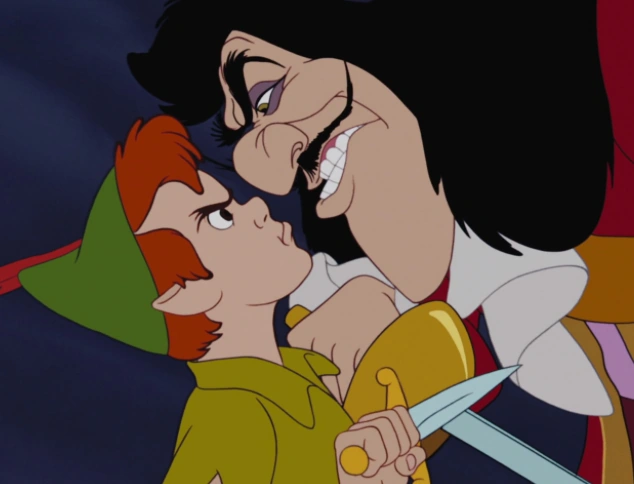
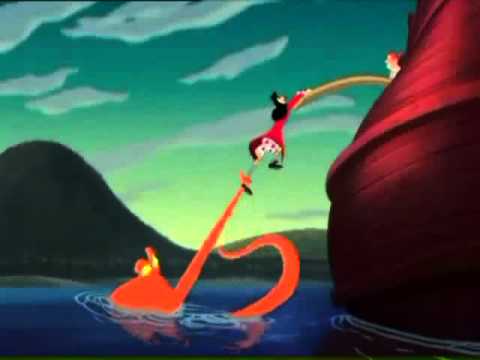
7. Return to Neverland – Captain Hook… what did they do to you?
I don’t know why they released this movie in theaters, but now, for all intents and purposes, it’s part of the official continuity. You know what? No it isn’t. It didn’t happen.
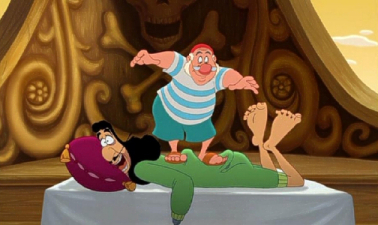
Actually, it could have been a tolerable continuation of the story if it just had a half-decent adventure in Neverland ready for the characters. And as we all know, a decent conflict needs a decent villain, which old Captain Hook has proven he’s more than capable of being. However, it seems the need for the oily menace, the deceptive cunning, and the blustering fury that Hook provided was all pushed aside in the writers’ minds by another thought, stemming from the character’s propensity for slapstick: “Dur… kids like HIJINKS!â€
Before:Â


After:

http/www.youtube.com/watch?v=91QMwmCawqk
Whoever Robin Budd is, I think I’m starting to wish bad things on him right now.
To say this is an insult to the character may sound a bit extreme, since we’re talking about a guy who spent half his screen time fighting his way out of a crocodile’s mouth, but darn it, yes, it’s an insult to the character. Sure, Hook had some pretty funny scenes before, but part of the fun was in how serious he was until he reached the end of his rope, like an angry Wile E. Coyote shrugging off blow after blow, only to walk into an even worse one without noticing. Heck, this is an insult to the original movie, the functioning brain cells of the audience, and the notion of even wanting to watch a movie about Peter Pan. Return to Neverland has about 10 seconds of swordplay, including flashbacks, but it made all the time in the world for Hook to prance around in modern heart-covered boxer shorts, make idiot faces while bouncing off of stuff, and moan like a man child whenever something goes wrong. If we just wanted to watch a lame sequel to Home Alone, we’d rent the lame sequels to Home Alone. Return to Neverland, I don’t care if you almost had a real film’s budget and you got your own theatrical release. You are, in the words of a friend and colleague of mine, just another Disney cheapquel.
6. Charlie and the Chocolate Factory – The “reimagined†kids
I’m sure if I’d asked you to guess, you would have said Johnny Depp’s Willy Wonka is my biggest gripe with this movie. Actually though, I’m 50/50 on that one. On one hand, he wasn’t Willy Wonka, not even in the broad purposes the character is meant to serve beyond handing out golden tickets. And he tried way too hard to make the character weird, just to make an impression. But on the other hand, he did pack his share of genuinely funny moments, and in a movie that found so many ways to be annoying and lame, that really was something to latch onto. No, what I’m singling out is the way director Tim Burton butchered reimagined the child characters, including Charlie.
In the book by Roald Dahl, and the original movie adaptation, the four bad kids learn deliciously harsh lessons about their greatest flaws, but both versions make sure the crimes are identifiable and the punishments fit them, keeping it all in scale. In Charlie and the Chocolate Factory, they’re all just obnoxious, selfish jerks trying to make us hate them as much as possible, with their original flaws only really used to tell them apart. Augustus Gloop is now a sadistic oaf who likes to mock Charlie for not being able to buy chocolate, Violet likes to call Charlie a loser because that’s something a character you’re not supposed to like would do, Mike Teavee is… whoever the bully in Burton’s sixth grade class was, and all of it is just so the movie has an excuse to savor their accidents as much as possible. If we want bad things to happen to them, the movie’s being effective, but if the movie wants bad things to happen to them, that’s just sadistic. Even the outcomes, which were supposed to demonstrate the lessons learned, are altered to be cruel ironies that solve nothing. (That is, except with Veruca Salt, whose gimmick was being selfish and obnoxious in the first place… meaning we’ve gone so over-the-top that the novel’s worst character actually fades into the background and gets off easy.)
In turn, Charlie’s goodness is overplayed every bit as much. Instead of a nice, hopeful kid working through tough times, he’s simply an angel incarnate (partly so we’ll hate the bad kids even more for being mean to him). He gives away his birthday presents, gushes on and on about the wonders of family and candy, alters the ending so he’s now solving Willy Wonka’s problems… I promise, movie, there is such a thing as overkill. We like seeing situations in which bad people fall and good people come out ahead, but we can tell when you’re just trying to play on that. On that note, we can also tell when you’re forcing in themes about daddy issues that have nothing to do with anything, but since I promised to stick to one creative decision per movie, moving on.
5. Harry Potter and the Prisoner of Azkaban – Making characters into doofuses who are only there to be laughed at.
These movies started out as faithful, if occasionally flat adaptations, and all in all, it was enjoyable. Still, there was room for improvement, which is what director Alfonso Cuarón realized upon taking over the series at its third chapter. His solution? Liven up Harry’s flat character moments by injecting lots and lots of melodrama, and just stop taking those other preteen character bits so seriously. Play ‘em up for laughs! In fact, why not just turn the whole thing into Harry Potter: The sitcom?
That may sound a bit harsh, but for me, this movie did to Malfoy, Wormtail, and to an extent, Ron what Return to Neverland did to Captain Hook. And I know it’s odd to claim the movie didn’t give Malfoy enough respect, but though he may be a little turd, I argue he’s the kind of little turd people actually encounter in the real world. He’s a punk who tries to bring you down to cover how pathetic he is, and he’s easy to hate. But getting the best of him is such a sweet feeling because, the reality is, it doesn’t always happen. Sometimes people like that do get away with what they came for. They can be challenging to deal with.
This Malfoy, on the other hand, is only there to be the butt of the joke, which makes it a pretty corny joke. The only purpose he serves is slapstick and cheap instant gratification. If he’d entered Hogwarts alongside the original Malfoy in his first year, he’d have given up on being Harry’s rival in the first few months and become the real Malfoy’s lackey. And if you think I’m exaggerating, watch the moment where Hermione hits him in the movie, making it look remarkably easy to get him to wet his pants twice in the same scene. Then go back and read it in the book, where his reaction was actually feasible, making it, on top of everything else, a much stronger Hermione moment. Speaking of Hermione…
4. Harry Potter and the Goblet of Fire – Making characters into perfect know-it-alls who are never allowed to be laughed at.
To my gradual relief, David Yates stepped in and slowly got the series back on track, but not before Mike Newell took over and gave the fourth movie most of the same traits I didn’t like about the third one (albeit, with some pretty cool action scenes that almost won me over on their own). But where my biggest issue with the third one was lame comedy, this one didn’t seem to know when certain characters could have benefited from a laugh at their expense.
Where to start? We have the scene in which Professor Mcgonagall confronts Professor Moody for turning Malfoy into a ferret, in which she was originally so aghast at his madman’s audacity that she was barely able to slow him down. In the movie, however, Professor Mcgonagall is the boss. She chews everybody out. Turning students into ferrets? Oh no you did-dent! Then there’s Harry, who becomes more of a Legolas, finishing whole strides ahead of the rest, unless he turns back to play the hero, in challenges that originally didn’t include “dramatic†risks any school would be shut down for allowing. (Now he really is the character Rita Skeeter tried to make him.) And poor Hermione, even under Yates, only partly escaped the trappings of a Mary Sue. I know the third and fourth movies found praise for their character development, but I have a tough time buying it when the traits we seem to come back to the most are “moron†and “drama queen.â€
3. X-Men: The Last Stand – Unceremoniously killing characters
I’m one of the ones who doesn’t hate Spiderman 3, believe it or not. Its emotional craft is weaker than the previous two, and it’s less satisfying, but if its biggest crime is delivering on the same front as the first two but not as well, I’d rather have it than not have it. It’s still giving me some of what I liked before and continuing the story. But the same can’t be said for the third X-Men movie. Like Spiderman 3, it’s bigger, shallower and less engaging, but it’s also something else: A complete betrayal of what we were invested in before.
You can tell this movie wants to be the big, bad final outing from how impressed it tries to sound with its own conflict, from the way it pretentiously tries to scale it up by bringing in characters we have no reason to care about, and from the way it so awesomely brings in a new big dog to make Professor X and Magneto look like nothing. But it crosses the line by killing off characters who really didn’t need to die, all for the sake of shock value and finality. Cyclops? Ha! No way some teacher’s pet with glasses is gonna distract the girl from Wolverine! Professor X? Man this is gonna be awesome! Just think how the little fanboys’ jaws are gonna drop when The Phoenix just blows him away!
It’s clear that when Bryan Singer left, the investment in the story, rather than just the plot points, went with him for the next couple outings. But I’m happy to report that the series’ recovery is now complete with his return. Now please keep the Rush Hour guy out of it!
2. Pirates of the Caribbean: At World’s End – The Pirate Lords
You may or may not have heard me rant about this one recently. There are several reasons that this movie was the one that fell through for me. But what really demonstrates the problem at the core is the idea of 9 “pirate lords†who come together to debate pirate laws and form a pirate army to fight in the name of pirates everywhere. Yar.
Come on, “pirate lords?†That doesn’t even make any sense. Don’t people become pirates because they want to stop living by the law? When did piracy become its own form of government? The first movie had about the level of law and order you’d think pirates would abide by, with a former captain trying to regain control of a ship from his mutinous first mate, each leading crews barely even loyal to them. Now they care about who’s in charge enough to dub them “lords†and give them the keys to their little club secret? (And we can only hope Jack, one of the lords, is the only example of how easy it is to be overthrown like that, because their super special league almost fell apart right there.)
Let’s be real here: This is the movie’s half-baked attempt to turn the pirates into the good guys. After all, if acknowledging that a pirate can be a good man was a fun bit of rebelliousness the first time, making them the full blown heroes must be even cooler, right? Yeah, all that murder and cruelty from Captain Barbosa and crew was nothing personal! Now they’re just the wacky group of fun-loving rule breakers who perform delightful hijinks for us to laugh at. Sure, it’s hard to care about anyone’s motivation now that we’re not compelled to root for or against anyone in particular, but at least we know that nobody likes Cutler Beckett, right? Yeah, at least the pirates would never give up their freedom to some tea-drinking SOB like him! What’s next, a pirate Justice League? The House of Representative Muggers? The Founding Serial Killers?
1. Alien 3 – Everyone is dead from the start
After Aliens wrapped up the story of Ripley so well, Alien 3 didn’t know how to handle it. It could have acknowledged that this chapter was complete and crafted another one, picking up some time later with or without Ripley. But that might have revealed that they didn’t have any ideas all that necessary to turn into a movie. It’s not like (they’d ever admit) this movie was just made for profit! So instead, they decided to find a way to extend the chapter we’d just finished. How? By undoing everything the last movie accomplished, killing off every member of the new makeshift family besides Ripley. That way, after finally winning an awesome struggle against the aliens to reclaim her life, we can hear the story of how she began living it by learning she was going to die in a couple days and spending them figuring out what to do about two more aliens. In space, no one can hear your face palm.
To work with this movie, you have to accept that everything about the last two, besides getting rid of the aliens, was for absolutely nothing. Is anyone willing to do that for what’s easily the least exciting and least interesting of the three original Alien movies? No, the idea that Alien 3 is, for all intents and purposes, part of the official continuity is such a turnoff that I will always maintain I have no idea what the first half of this sentence is talking about.
And with that, we’ve reached the end of the franchise moves that left me the coldest. Feel free to give me your spin on any of them in the comments section or list your own. I’m happy to listen, after indulging in so much time to vent.
I Don’t Hate Midi-chlorians: The Top 9 Things I DO Hate
July 24, 2014 in Uncategorized
To start with the elephant in the room, well, yeah, I never really found George Lucas’s big reveal that the force has to do with life forms inside blood cells to be all that bothersome. It passed over my head when I was 9, and even now “without them… we would have no knowledge of the force†doesn’t really kill the sense of wonder to the “energy field created by all living things†for me. I took them as just a measure of force potential, as though midi-chlorians are to the force as IQ is to knowledge. Does knowing that a character in Dragon Ball Z is more powerful because he has a bigger “chi†also take the wonder out of all the flying around and firing energy blasts? Actually, that may seem like a random example, but it does give me an idea for a way we all might get some enjoyment from midi-chlorians: http/www.youtube.com/watch?v=6YmcJKXWhQM
But on that note, I’m very often the guy saying “not that bad.†Superman Returns, Spiderman 3, Batman Returns… they may not be the stories you had in mind, but at least try to appreciate what they did bring to the table. Still, I can sympathize. Oh boy, can I. I’ll always understand the feeling, because I have my own list issues with different franchises, some being common complaints and some mostly just me. So here are the moments that are my equivalent of midi-chlorians, Twilight Sparkle becoming a princess, emo Peter Parker, and anything else you just can’t accept. As before, it’s the top 9, because do you really want to hear me complain more than that?
Spoilers
9. All Dogs Go to Heaven 2 – Carface goes to hell
This one is at the bottom of the list, because most people, including me, gave up on the movie long before this. It is essentially a completely different story that just happens to star the same characters, and it’s not a particularly good story at that. But changing the ambiguous fate of Carface from the first movie to him being dragged to hell – just for a would-be laugh at his expense – is pretty lame. Instead of the first one’s subtle message that there’s always hope for someone, this one opts for the instant gratification of nailing him for being the villain, after tossing him back into the that role for no particular reason in the first place. It feels like a retcon and a bad one at that.
8. A Nightmare on Elm Street 4: The Dream Master – The last of the dream warriors tossed out for new victims
Most horror movie sequels are uncertain of what to do with the survivors of the last movie. After all, most of them were just faces in a crowd of potential victims, so it might be awkward to validate them as our heroes in the same kind of movie. Their survival was a big part of the payoff, which is something nobody wants to give back, but if they outfox the killer for too long, it might start to seem like the – insert “memorable†weapon here – is getting dull. Still, I promise, on the list of purposes that fans would have been satisfied knowing the survivors of A Nightmare on Elmstreet 3: Dream Warriors went on to serve, this wasn’t one of them.
After the formal burial that Freddy’s mother assured us would get rid of him for good, he reappears for no clear reason and kill the three surviving “Elm Street†kids in standoffs only slightly more noteworthy than his average victims get. Okay… I don’t think you realize the significance of what you’ve done there, movie. Those were the last of the kids Freddy set out to kill for revenge against the parents who killed him. As in, you just let him complete his vengeance. It’s over. He won.
Hold on, what do mean he cares about the kids they just happened to be going to school with? You’re saying now he collects souls because they give him strength, and he just kinda likes getting stronger? Eh… no, sorry, you can’t just invent something new after the first act because you didn’t want to tell the old story anymore. It feels like we’re just watching Freddy do a victory lap, killing people because he can, which is actually kind of depressing. You’re lucky you found a strangely encouraging parallel arc to tell about this new girl Alice, or I’d hate the entire movie, instead of just that first act.
7. Return to Neverland – Captain Hook… what did they do to you?
I don’t know why they released this movie in theaters, but now, for all intents and purposes, it’s part of the official continuity. You know what? No it isn’t. It didn’t happen.
Actually, it could have been a tolerable continuation of the story if it just had a half-decent adventure in Neverland ready for the characters. And as we all know, a decent conflict needs a decent villain, which old Captain Hook has proven he’s more than capable of being. However, it seems the need for the oily menace, the deceptive cunning, and the blustering fury that Hook provided was all pushed aside in the writers’ minds by another thought, stemming from the character’s propensity for slapstick: “Dur… kids like HIJINKS!â€
Before:Â
After:
http/www.youtube.com/watch?v=91QMwmCawqk
Whoever Robin Budd is, I think I’m starting to wish bad things on him right now.
To say this is an insult to the character may sound a bit extreme, since we’re talking about a guy who spent half his screen time fighting his way out of a crocodile’s mouth, but darn it, yes, it’s an insult to the character. Sure, Hook had some pretty funny scenes before, but part of the fun was in how serious he was until he reached the end of his rope, like an angry Wile E. Coyote shrugging off blow after blow, only to walk into an even worse one without noticing. Heck, this is an insult to the original movie, the functioning brain cells of the audience, and the notion of even wanting to watch a movie about Peter Pan. Return to Neverland has about 10 seconds of swordplay, including flashbacks, but it made all the time in the world for Hook to prance around in modern heart-covered boxer shorts, make idiot faces while bouncing off of stuff, and moan like a man child whenever something goes wrong. If we just wanted to watch a lame sequel to Home Alone, we’d rent the lame sequels to Home Alone. Return to Neverland, I don’t care if you almost had a real film’s budget and you got your own theatrical release. You are, in the words of a friend and colleague of mine, just another Disney cheapquel.
6. Charlie and the Chocolate Factory – The “reimagined†kids
I’m sure if I’d asked you to guess, you would have said Johnny Depp’s Willy Wonka is my biggest gripe with this movie. Actually though, I’m 50/50 on that one. On one hand, he wasn’t Willy Wonka, not even in the broad purposes the character is meant to serve beyond handing out golden tickets. And he tried way too hard to make the character weird, just to make an impression. But on the other hand, he did pack his share of genuinely funny moments, and in a movie that found so many ways to be annoying and lame, that really was something to latch onto. No, what I’m singling out is the way director Tim Burton butchered reimagined the child characters, including Charlie.
In the book by Roald Dahl, and the original movie adaptation, the four bad kids learn deliciously harsh lessons about their greatest flaws, but both versions make sure the crimes are identifiable and the punishments fit them, keeping it all in scale. In Charlie and the Chocolate Factory, they’re all just obnoxious, selfish jerks trying to make us hate them as much as possible, with their original flaws only really used to tell them apart. Augustus Gloop is now a sadistic oaf who likes to mock Charlie for not being able to buy chocolate, Violet likes to call Charlie a loser because that’s something a character you’re not supposed to like would do, Mike Teavee is… whoever the bully in Burton’s sixth grade class was, and all of it is just so the movie has an excuse to savor their accidents as much as possible. If we want bad things to happen to them, the movie’s being effective, but if the movie wants bad things to happen to them, that’s just sadistic. Even the outcomes, which were supposed to demonstrate the lessons learned, are altered to be cruel ironies that solve nothing. (That is, except with Veruca Salt, whose gimmick was being selfish and obnoxious in the first place… meaning we’ve gone so over-the-top that the novel’s worst character actually fades into the background and gets off easy.)
In turn, Charlie’s goodness is overplayed every bit as much. Instead of a nice, hopeful kid working through tough times, he’s simply an angel incarnate (partly so we’ll hate the bad kids even more for being mean to him). He gives away his birthday presents, gushes on and on about the wonders of family and candy, alters the ending so he’s now solving Willy Wonka’s problems… I promise, movie, there is such a thing as overkill. We like seeing situations in which bad people fall and good people come out ahead, but we can tell when you’re just trying to play on that. On that note, we can also tell when you’re forcing in themes about daddy issues that have nothing to do with anything, but since I promised to stick to one creative decision per movie, moving on.
5. Harry Potter and the Prisoner of Azkaban – Making characters into doofuses who are only there to be laughed at.
These movies started out as faithful, if occasionally flat adaptations, and all in all, it was enjoyable. Still, there was room for improvement, which is what director Alfonso Cuarón realized upon taking over the series at its third chapter. His solution? Liven up Harry’s flat character moments by injecting lots and lots of melodrama, and just stop taking those other preteen character bits so seriously. Play ‘em up for laughs! In fact, why not just turn the whole thing into Harry Potter: The sitcom?
That may sound a bit harsh, but for me, this movie did to Malfoy, Wormtail, and to an extent, Ron what Return to Neverland did to Captain Hook. And I know it’s odd to claim the movie didn’t give Malfoy enough respect, but though he may be a little turd, I argue he’s the kind of little turd people actually encounter in the real world. He’s a punk who tries to bring you down to cover how pathetic he is, and he’s easy to hate. But getting the best of him is such a sweet feeling because, the reality is, it doesn’t always happen. Sometimes people like that do get away with what they came for. They can be challenging to deal with.
This Malfoy, on the other hand, is only there to be the butt of the joke, which makes it a pretty corny joke. The only purpose he serves is slapstick and cheap instant gratification. If he’d entered Hogwarts alongside the original Malfoy in his first year, he’d have given up on being Harry’s rival in the first few months and become the real Malfoy’s lackey. And if you think I’m exaggerating, watch the moment where Hermione hits him in the movie, making it look remarkably easy to get him to wet his pants twice in the same scene. Then go back and read it in the book, where his reaction was actually feasible, making it, on top of everything else, a much stronger Hermione moment. Speaking of Hermione…
4. Harry Potter and the Goblet of Fire – Making characters into perfect know-it-alls who are never allowed to be laughed at.
To my gradual relief, David Yates stepped in and slowly got the series back on track, but not before Mike Newell took over and gave the fourth movie most of the same traits I didn’t like about the third one (albeit, with some pretty cool action scenes that almost won me over on their own). But where my biggest issue with the third one was lame comedy, this one didn’t seem to know when certain characters could have benefited from a laugh at their expense.
Where to start? We have the scene in which Professor Mcgonagall confronts Professor Moody for turning Malfoy into a ferret, in which she was originally so aghast at his madman’s audacity that she was barely able to slow him down. In the movie, however, Professor Mcgonagall is the boss. She chews everybody out. Turning students into ferrets? Oh no you did-dent! Then there’s Harry, who becomes more of a Legolas, finishing whole strides ahead of the rest, unless he turns back to play the hero, in challenges that originally didn’t include “dramatic†risks any school would be shut down for allowing. (Now he really is the character Rita Skeeter tried to make him.) And poor Hermione, even under Yates, only partly escaped the trappings of a Mary Sue. I know the third and fourth movies found praise for their character development, but I have a tough time buying it when the traits we seem to come back to the most are “moron†and “drama queen.â€
3. X-Men: The Last Stand – Unceremoniously killing characters
I’m one of the ones who doesn’t hate Spiderman 3, believe it or not. Its emotional craft is weaker than the previous two, and it’s less satisfying, but if its biggest crime is delivering on the same front as the first two but not as well, I’d rather have it than not have it. It’s still giving me some of what I liked before and continuing the story. But the same can’t be said for the third X-Men movie. Like Spiderman 3, it’s bigger, shallower and less engaging, but it’s also something else: A complete betrayal of what we were invested in before.
You can tell this movie wants to be the big, bad final outing from how impressed it tries to sound with its own conflict, from the way it pretentiously tries to scale it up by bringing in characters we have no reason to care about, and from the way it so awesomely brings in a new big dog to make Professor X and Magneto look like nothing. But it crosses the line by killing off characters who really didn’t need to die, all for the sake of shock value and finality. Cyclops? Ha! No way some teacher’s pet with glasses is gonna distract the girl from Wolverine! Professor X? Man this is gonna be awesome! Just think how the little fanboys’ jaws are gonna drop when The Phoenix just blows him away!
It’s clear that when Bryan Singer left, the investment in the story, rather than just the plot points, went with him for the next couple outings. But I’m happy to report that the series’ recovery is now complete with his return. Now please keep the Rush Hour guy out of it!
2. Pirates of the Caribbean: At World’s End – The Pirate Lords
You may or may not have heard me rant about this one recently. There are several reasons that this movie was the one that fell through for me. But what really demonstrates the problem at the core is the idea of 9 “pirate lords†who come together to debate pirate laws and form a pirate army to fight in the name of pirates everywhere. Yar.
Come on, “pirate lords?†That doesn’t even make any sense. Don’t people become pirates because they want to stop living by the law? When did piracy become its own form of government? The first movie had about the level of law and order you’d think pirates would abide by, with a former captain trying to regain control of a ship from his mutinous first mate, each leading crews barely even loyal to them. Now they care about who’s in charge enough to dub them “lords†and give them the keys to their little club secret? (And we can only hope Jack, one of the lords, is the only example of how easy it is to be overthrown like that, because their super special league almost fell apart right there.)
Let’s be real here: This is the movie’s half-baked attempt to turn the pirates into the good guys. After all, if acknowledging that a pirate can be a good man was a fun bit of rebelliousness the first time, making them the full blown heroes must be even cooler, right? Yeah, all that murder and cruelty from Captain Barbosa and crew was nothing personal! Now they’re just the wacky group of fun-loving rule breakers who perform delightful hijinks for us to laugh at. Sure, it’s hard to care about anyone’s motivation now that we’re not compelled to root for or against anyone in particular, but at least we know that nobody likes Cutler Beckett, right? Yeah, at least the pirates would never give up their freedom to some tea-drinking SOB like him! What’s next, a pirate Justice League? The House of Representative Muggers? The Founding Serial Killers?
1. Alien 3 – Everyone is dead from the start
After Aliens wrapped up the story of Ripley so well, Alien 3 didn’t know how to handle it. It could have acknowledged that this chapter was complete and crafted another one, picking up some time later with or without Ripley. But that might have revealed that they didn’t have any ideas all that necessary to turn into a movie. It’s not like (they’d ever admit) this movie was just made for profit! So instead, they decided to find a way to extend the chapter we’d just finished. How? By undoing everything the last movie accomplished, killing off every member of the new makeshift family besides Ripley. That way, after finally winning an awesome struggle against the aliens to reclaim her life, we can hear the story of how she began living it by learning she was going to die in a couple days and spending them figuring out what to do about two more aliens. In space, no one can hear your face palm.
To work with this movie, you have to accept that everything about the last two, besides getting rid of the aliens, was for absolutely nothing. Is anyone willing to do that for what’s easily the least exciting and least interesting of the three original Alien movies? No, the idea that Alien 3 is, for all intents and purposes, part of the official continuity is such a turnoff that I will always maintain I have no idea what the first half of this sentence is talking about.
And with that, we’ve reached the end of the franchise moves that left me the coldest. Feel free to give me your spin on any of them in the comments section or list your own. I’m happy to listen, after indulging in so much time to vent.
Top 9 Unlikely Movie Sources of Inspiration
July 24, 2014 in Uncategorized
After a month of work, I finally got my video application for thatguywiththeglasses submitted (hey, I can dream), but let me tell you, pulling it off was one those great trials you remember for life. There was naturally the fact that I had to learn all about directing and editing as I went, but the real killer was that my equipment didn’t just give me trouble: It was actively fighting me. No less than four times, I came back to find all my progress had been ruined, and the first time alone was enough to make me question whether I could still get it done. Days’ worth of work was lost, and I had to start from square 1 more than once. (Safe to say if I do this again, I’ll be paying for some major upgrades.) At points, I was honestly convinced that a month’s worth of work would amount to nothing but a list of important things put on hold and a laughable story of failing to even get off the ground.
Well, when you’re in that deep of a hole, you might be surprised at what becomes your source of inspiration. There were a few great movie scenes that came to mind which made me want to keep trying, but they weren’t quite the typical Hollywood “yes you can!†iconic moments of epic proportions. Sometimes, I suppose, it’s the movies that don’t set out to create that effect per se which end up stumbling onto something even more identifiable, ringing even truer. So now, in return, here’s my tribute to the great scenes that at one point or another were my unlikely source of inspiration. As before, it’s the top nine, because less is more. (No, I’m still not giving that up.)
Spoilers ahead
9. Ed Wood – Orson Welles’ speech
This scene in Tim Burton’s biopic on Edward D. Wood Jr. is presumably an embellishment, but then again, how do we know who either Orson Welles or Ed Wood happened to run into in the random bars they visited?
Ed Wood, infamously known as the worst director of all time, has spent all morning arguing with his producers over such trivial details as the movie switching from day to night between shots, and he’s at the end of his rope. He stomps off to a bar in the comforting kind of angora sweater his mother used to dress him in, where he spots his hero, Orson Welles, whom he just has to meet. He politely introduces himself, and they strike up a little conversation, where Wood learns that the empathetic Welles is having similar problems, such as the studio asking him to cast Charlton Heston as a Mexican. (Even Wood can see why that would never work.) He asks Welles if it’s worth it, and Welles tells him it is, when it works.
“Visions are worth fighting for†says Welles. “Why spend your life making someone else’s dreams?â€
In this light, if Mr. Welles really ever said such a thing, he couldn’t have known how right he really was. Why not just go for it, to the best of your judgment? Even if the final product is garbage, at least it’s your garbage, meaning you’ve given the world a piece of yourself. That’s something it didn’t have before and won’t have again. And in the case of Ed Wood, though it was unfortunately after his death, the world did learn to appreciate that. Not exactly a rallying cry, but it helps me get excited to keep trying new things, and it’s one of the reasons Ed Wood is possibly my favorite Tim Burton movie.
8. Meet the Robinsons – The finale
Not the first time I’ve mentioned this one, but like Ed Wood, it’s just a nice bit of encouragement to keep going and not get caught up in the downside.
Lewis, the little orphan inventor who thought he’d never find a place, has just been through one zany time traveling adventure, discovering in the last act that he was having it with none other than his adopted family of the future, where he is a beloved success. Using what he’s learned along the way to save the day – at points succeeding where he failed before – he’s then repaid by his future son with a trip to the past to reach his goal from the beginning of the movie, meeting the mother who gave him up for adoption. He almost makes himself known to her but changes his mind, opting to stay out of sight until she leaves. When his son asks why he let her go, he answers “Because, I’ve got a family.â€
He then sets out to join said family where he left off, on the day he was adopted, and they proceed through a heartfelt closing montage encouraging viewers to keep moving forward. I’d mention the best part (again), but hey, you can just watch that for yourself.
7. The Muppets – The finale
Who’d have thought the Muppets could pull off something like this? The scene involves the Muppets putting on one more show together as a fundraiser to save their old theater from the likes of Tex Richman. They don’t even come close, earning about a tenth of the money they need (though due to a misplaced decimal, they believed they were right there until the last minute). They’re then forced to leave, with nothing left they can do, unsure of what to think.
That’s when Kermit steps up to lead them one more time with a speech about how they’ve got nothing to be ashamed of. They tried and failed together, which, as far as he’s concerned isn’t failing at all. As when they’re movies started to bomb, they’re losing their platform, but they haven’t lost the quality that made them winners in the first place, as long as they keep believing. So they walk out the door ready to work their way back up together, upon which we’re reminded of the very simple reason why Kermit was entirely correct: Literally every person in the world loves the Muppets.
So yeah, keep trying to share that special quality about you. Even if it falls through sometimes, isn’t it worth it just to connect with those who appreciate it?
6. Follow that Bird – Ain’t No Road Too Long
Now we’re getting to the real heat-of-the-moment motivators, and it couldn’t be much more unlikely than something from Sesame Street.
Big Bird, having realized that his new family, the Dodos, was no family at all, is on the run, hoping to get back to his real home on Sesame Street. He manages to secure a lift with Waylon Jennings, who is apparently having a slow year, having taken a job transporting turkeys. When Jennings tells Big Bird that Sesame street, even after the ride, is about three weeks away on foot (so all along, we should have been asking him how to get there), Big Bird fears he’ll never get home. But Jennings knows that’s no way to think and tells him to listen, kicking off a song about how no road is too long if you just keep going. Standard preschool lesson for toddlers, right? Well, what separates Ain’t no Road Too Long from something like, say, this is the way it injects meaning into every lyric. It paints a picture of just how the right attitude helps you overcome life’s way of being difficult, all sung in a memorable and reassuring tune that makes it more encouraging, in fact, than most similar lessons in adult movies. It helps you pack for the trip, instead of just trying to push you out the door.
But wait, isn’t a life lesson along those lines taking things more seriously than Sesame Street was really geared to do? Well, as it turns out, the gang searching for Big Bird each has their own spin to put on the song, and everyone but Super Grover actually does it pretty well. Yes, even on Sesame Street, it’s not always a sunny day, sweeping the clouds away, but even so, few creatures understand the value of positive thinking better than our favorite motley crew.
5. Eight Mile – Lose Yourself
How about that? I just went from Sesame Street to Eminem.
Eight Mile is a good movie that casts a sympathetic and intuitive light on its subjects, but its biggest legacy may still be Lose Yourself, the most pessimistic motivational song I’ve ever heard. The song describes Em’s character and his attempts to rise through the ranks, fighting not to be a loser by making his way through a very tough, superficial world that, in its own way, still places a lot of emphasis on respect. But where it really starts to do the trick is in the refrain and subsequent verses that make going for it sound, at very least, much better than the alternative:
You’d better lose
Yourself in the music, the moment
You own it
You better never let it go
You only get one shot
Do not miss your chance to blow
This opportunity comes once in a lifetime, yo
It’s pretty simple, once you hear it. Forget second guessing, forget one last look through the battle plan, and forget even thinking about it. When you get the chance to impress someone worth impressing, you need to take it, and you need to have nothing on your mind but the urge to nail that performance. It turns out to be a pretty easy notion to get behind.
4. Frozen – Let it Go
We’ve heard all about this one since it was first seen by audiences over half a year ago, and it’s still getting radio play. But there’s a reason people consider it so one-of-a-kind. The sequence starts by taking us down a road we know all too well, with a character we’d all seen before, showing us her despair after being erroneously branded a monster and cast out. Then it pulls the rug out from under us.
Do I even need to describe the rest? It’s all a pure burst of cathartic joy after the seemingly stoic and suffering Queen Elsa makes the decision of the generation: She’s not mad at herself, and she’s not ashamed of what she is. Her power over ice and snow, despite its seeming inability to exist safely in her life within the kingdom, is something she loves about herself, and now it’s time to let it go. With that, it suddenly becomes a hopeful song, quickly escalating into a power ballad about exploring and enjoying her talent, looking forward to a new life free of fear and suppression. And though it won’t always apply to situations that do demand a little concern, the sequence is a perfect answer to any time someone might have tried to get you down for holding to your own. If you’re ever feeling shame or regret over something you just couldn’t work with, well, let it go.
3. Holes – Don’t Give Up
I’m not entirely sure why this song was one of the first that came to mind, but it’s one I ended up listening to several times over the past month. It’s incredibly simple, it sends a message we’ve all heard too many times to count, and it has to be one my new favorite songs.
Holes, both the book and the movie adaption, covers a wide range of themes, but standing up to the odds isn’t exactly one of them. But for whatever reason, when Stanley is lost in the dessert with his best friend Zero and forced to carry him up a mountain, the movie decided to go all in, playing up their struggle and their determination with a montage. And the Eagle Eye Cherry number played with it resonates so much more than the moment probably deserved.
It’s like Cherry captured hope in a bottle and then injected it into a song about being borderline-down and out. It just finds the perfect tone, never losing the sense of hardship and struggle – so it doesn’t end at a point where you think “easy for you to say†– but still creating a sense of something to aspire to. It highlights the part of the struggle in which it’s easiest to not see a reason to keep going and then tells you why you should, as well as why you should be proud of it. Maybe tomorrow I’ll ask myself what I was thinking, but today, this song is a champion for inspiration in the face of hopelessness.
2. Kiki’s Delivery Service – “We fly with our spiritâ€
Here’s another one I might have mentioned before. This one became my impromptu motivator for finals week during the worst semester I ever had at college, just after I’d gotten used being noted as a decent student. Like many of Miyazaki’s movies, it’s a bit touchy-feely, but it’s even more intelligent, and the result is a virtuoso moment of subtle affection and inspiration.
After a string of mildly disappointing adventures, Kiki, the witch staying with a friendly baker for her training in a new town, has lost her powers overnight. She can no longer fly, effectively crippling her new delivery service and putting her training on hiatus. But as it sends her into even more of a depression, she’s offered an impromptu getaway by a painter she’d befriended named Ursula, who invites her to stay at her cottage for a while. Younger and less refined than most adults in Kiki’s life, Ursula also isn’t quite so nurturing at first, but her playful and optimistic demeanor is just the boost Kiki needed. Then she asks Kiki to pose for her newest painting and makes an interesting note on how her own artistic powers have abandoned her before, never worse than the time just after she started, when she found she loved it so much that she’d paint until she fell asleep at her easel.
“Then, one day, I just couldn’t paint anymore. Nothing I did seemed any good. They were copies of paintings I’d seen somewhere before and not very good copies either.â€
What she ultimately learned is that she had to rediscover what and why she wanted to paint. As she says when Kiki helps her find the words, her spirit wasn’t behind it, and that’s something everyone needs in order to perform, whether it’s the thing they were meant to do or not.
“That same spirit is what makes me paint and makes your friend bake.†Ursula tells her, gleeful at her own moment of insight. “But we each need to find our own inspiration Kiki.â€
It’s here that Kiki’s Delivery Service transcends the usual heights of Miyazaki’s slice-of-life movies and becomes my favorite film of his. It speaks to hope and self-acceptance in a way not quite like anything else I’ve ever seen. Unfortunately, there doesn’t seem to be a copy of the scene on hand, so instead, please enjoy the equally effective depiction of what happens when inspiration returns: http/www.animelyrics.com/anime/kiki/imgonnafly.htm
1. Rocky Balboa – Speech on moving forward
Now you may be wondering how I could put Rocky on a list of “unlikely†inspirational moments when the series is practically made of training montages and underdog championship fights. Well, first of all, nobody expected the story of Rocky getting back into the ring at age 50 to have much of anything new to say. And in spite of that, it ended up creating one of the most powerful moments in the entire series, not through the training montage but through a scene of Rocky’s son criticizing him for setting up another championship fight, claiming he’s sick of the shadow Rocky casts.
“Let me tell you something you already know,†says Rocky, getting to the point of his rebuttal. “The world ain’t all sunshine and rainbows. It’s a very mean and nasty place, and I don’t care how tough you are, it will beat you to your knees and keep you there permanently if you let it. You, me, or nobody is gonna hit as hard as life. But it ain’t about how hard ya hit. It’s about hard you can get hit and keep moving forward, how much you can take and keep movie forward. That’s how winning is done! Now if you know what you’re worth then go out and get what you’re worth. But you gotta be willing to take the hits, and not pointing fingers saying you ain’t where you wanna be because of him, or her, or anybody. Cowards do that and that ain’t you! You’re better than that!â€
I don’t think there’s much I can add to that. Just the praise that it’s always worth remembering. Even when you’re absolutely flat on your back, this speech has the reason that you should get up: Because doing so means you’re a winner. Period.
And so, with my favorite moments of inspiration covered, I hope you feel a little more up to whatever challenge you’re on at the moment. Personally, after a whole blog spent being inspirational, I think I’m ready for some lazy time, so I’m gonna go see what’s in the freezer. Ciao.
Top 9 Unlikely Movie Sources of Inspiration
July 24, 2014 in Uncategorized
After a month of work, I finally got my video application for thatguywiththeglasses submitted (hey, I can dream), but let me tell you, pulling it off was one those great trials you remember for life. There was naturally the fact that I had to learn all about directing and editing as I went, but the real killer was that my equipment didn’t just give me trouble: It was actively fighting me. No less than four times, I came back to find all my progress had been ruined, and the first time alone was enough to make me question whether I could still get it done. Days’ worth of work was lost, and I had to start from square 1 more than once. (Safe to say if I do this again, I’ll be paying for some major upgrades.) At points, I was honestly convinced that a month’s worth of work would amount to nothing but a list of important things put on hold and a laughable story of failing to even get off the ground.
Well, when you’re in that deep of a hole, you might be surprised at what becomes your source of inspiration. There were a few great movie scenes that came to mind which made me want to keep trying, but they weren’t quite the typical Hollywood “yes you can!†iconic moments of epic proportions. Sometimes, I suppose, it’s the movies that don’t set out to create that effect per se which end up stumbling onto something even more identifiable, ringing even truer. So now, in return, here’s my tribute to the great scenes that at one point or another were my unlikely source of inspiration. As before, it’s the top nine, because less is more. (No, I’m still not giving that up.)
Spoilers ahead
9. Ed Wood – Orson Welles’ speech
This scene in Tim Burton’s biopic on Edward D. Wood Jr. is presumably an embellishment, but then again, how do we know who either Orson Welles or Ed Wood happened to run into in the random bars they visited?
Ed Wood, infamously known as the worst director of all time, has spent all morning arguing with his producers over such trivial details as the movie switching from day to night between shots, and he’s at the end of his rope. He stomps off to a bar in the comforting kind of angora sweater his mother used to dress him in, where he spots his hero, Orson Welles, whom he just has to meet. He politely introduces himself, and they strike up a little conversation, where Wood learns that the empathetic Welles is having similar problems, such as the studio asking him to cast Charlton Heston as a Mexican. (Even Wood can see why that would never work.) He asks Welles if it’s worth it, and Welles tells him it is, when it works.
“Visions are worth fighting for†says Welles. “Why spend your life making someone else’s dreams?â€
In this light, if Mr. Welles really ever said such a thing, he couldn’t have known how right he really was. Why not just go for it, to the best of your judgment? Even if the final product is garbage, at least it’s your garbage, meaning you’ve given the world a piece of yourself. That’s something it didn’t have before and won’t have again. And in the case of Ed Wood, though it was unfortunately after his death, the world did learn to appreciate that. Not exactly a rallying cry, but it helps me get excited to keep trying new things, and it’s one of the reasons Ed Wood is possibly my favorite Tim Burton movie.
8. Meet the Robinsons – The finale
Not the first time I’ve mentioned this one, but like Ed Wood, it’s just a nice bit of encouragement to keep going and not get caught up in the downside.
Lewis, the little orphan inventor who thought he’d never find a place, has just been through one zany time traveling adventure, discovering in the last act that he was having it with none other than his adopted family of the future, where he is a beloved success. Using what he’s learned along the way to save the day – at points succeeding where he failed before – he’s then repaid by his future son with a trip to the past to reach his goal from the beginning of the movie, meeting the mother who gave him up for adoption. He almost makes himself known to her but changes his mind, opting to stay out of sight until she leaves. When his son asks why he let her go, he answers “Because, I’ve got a family.â€
He then sets out to join said family where he left off, on the day he was adopted, and they proceed through a heartfelt closing montage encouraging viewers to keep moving forward. I’d mention the best part (again), but hey, you can just watch that for yourself.
7. The Muppets – The finale
Who’d have thought the Muppets could pull off something like this? The scene involves the Muppets putting on one more show together as a fundraiser to save their old theater from the likes of Tex Richman. They don’t even come close, earning about a tenth of the money they need (though due to a misplaced decimal, they believed they were right there until the last minute). They’re then forced to leave, with nothing left they can do, unsure of what to think.
That’s when Kermit steps up to lead them one more time with a speech about how they’ve got nothing to be ashamed of. They tried and failed together, which, as far as he’s concerned isn’t failing at all. As when they’re movies started to bomb, they’re losing their platform, but they haven’t lost the quality that made them winners in the first place, as long as they keep believing. So they walk out the door ready to work their way back up together, upon which we’re reminded of the very simple reason why Kermit was entirely correct: Literally every person in the world loves the Muppets.
So yeah, keep trying to share that special quality about you. Even if it falls through sometimes, isn’t it worth it just to connect with those who appreciate it?
6. Follow that Bird – Ain’t No Road Too Long
Now we’re getting to the real heat-of-the-moment motivators, and it couldn’t be much more unlikely than something from Sesame Street.
Big Bird, having realized that his new family, the Dodos, was no family at all, is on the run, hoping to get back to his real home on Sesame Street. He manages to secure a lift with Waylon Jennings, who is apparently having a slow year, having taken a job transporting turkeys. When Jennings tells Big Bird that Sesame street, even after the ride, is about three weeks away on foot (so all along, we should have been asking him how to get there), Big Bird fears he’ll never get home. But Jennings knows that’s no way to think and tells him to listen, kicking off a song about how no road is too long if you just keep going. Standard preschool lesson for toddlers, right? Well, what separates Ain’t no Road Too Long from something like, say, this is the way it injects meaning into every lyric. It paints a picture of just how the right attitude helps you overcome life’s way of being difficult, all sung in a memorable and reassuring tune that makes it more encouraging, in fact, than most similar lessons in adult movies. It helps you pack for the trip, instead of just trying to push you out the door.
But wait, isn’t a life lesson along those lines taking things more seriously than Sesame Street was really geared to do? Well, as it turns out, the gang searching for Big Bird each has their own spin to put on the song, and everyone but Super Grover actually does it pretty well. Yes, even on Sesame Street, it’s not always a sunny day, sweeping the clouds away, but even so, few creatures understand the value of positive thinking better than our favorite motley crew.
5. Eight Mile – Lose Yourself
How about that? I just went from Sesame Street to Eminem.
Eight Mile is a good movie that casts a sympathetic and intuitive light on its subjects, but its biggest legacy may still be Lose Yourself, the most pessimistic motivational song I’ve ever heard. The song describes Em’s character and his attempts to rise through the ranks, fighting not to be a loser by making his way through a very tough, superficial world that, in its own way, still places a lot of emphasis on respect. But where it really starts to do the trick is in the refrain and subsequent verses that make going for it sound, at very least, much better than the alternative:
You’d better lose
Yourself in the music, the moment
You own it
You better never let it go
You only get one shot
Do not miss your chance to blow
This opportunity comes once in a lifetime, yo
It’s pretty simple, once you hear it. Forget second guessing, forget one last look through the battle plan, and forget even thinking about it. When you get the chance to impress someone worth impressing, you need to take it, and you need to have nothing on your mind but the urge to nail that performance. It turns out to be a pretty easy notion to get behind.
4. Frozen – Let it Go
We’ve heard all about this one since it was first seen by audiences over half a year ago, and it’s still getting radio play. But there’s a reason people consider it so one-of-a-kind. The sequence starts by taking us down a road we know all too well, with a character we’d all seen before, showing us her despair after being erroneously branded a monster and cast out. Then it pulls the rug out from under us.
Do I even need to describe the rest? It’s all a pure burst of cathartic joy after the seemingly stoic and suffering Queen Elsa makes the decision of the generation: She’s not mad at herself, and she’s not ashamed of what she is. Her power over ice and snow, despite its seeming inability to exist safely in her life within the kingdom, is something she loves about herself, and now it’s time to let it go. With that, it suddenly becomes a hopeful song, quickly escalating into a power ballad about exploring and enjoying her talent, looking forward to a new life free of fear and suppression. And though it won’t always apply to situations that do demand a little concern, the sequence is a perfect answer to any time someone might have tried to get you down for holding to your own. If you’re ever feeling shame or regret over something you just couldn’t work with, well, let it go.
3. Holes – Don’t Give Up
I’m not entirely sure why this song was one of the first that came to mind, but it’s one I ended up listening to several times over the past month. It’s incredibly simple, it sends a message we’ve all heard too many times to count, and it has to be one my new favorite songs.
Holes, both the book and the movie adaption, covers a wide range of themes, but standing up to the odds isn’t exactly one of them. But for whatever reason, when Stanley is lost in the dessert with his best friend Zero and forced to carry him up a mountain, the movie decided to go all in, playing up their struggle and their determination with a montage. And the Eagle Eye Cherry number played with it resonates so much more than the moment probably deserved.
It’s like Cherry captured hope in a bottle and then injected it into a song about being borderline-down and out. It just finds the perfect tone, never losing the sense of hardship and struggle – so it doesn’t end at a point where you think “easy for you to say†– but still creating a sense of something to aspire to. It highlights the part of the struggle in which it’s easiest to not see a reason to keep going and then tells you why you should, as well as why you should be proud of it. Maybe tomorrow I’ll ask myself what I was thinking, but today, this song is a champion for inspiration in the face of hopelessness.
2. Kiki’s Delivery Service – “We fly with our spiritâ€
Here’s another one I might have mentioned before. This one became my impromptu motivator for finals week during the worst semester I ever had at college, just after I’d gotten used being noted as a decent student. Like many of Miyazaki’s movies, it’s a bit touchy-feely, but it’s even more intelligent, and the result is a virtuoso moment of subtle affection and inspiration.
After a string of mildly disappointing adventures, Kiki, the witch staying with a friendly baker for her training in a new town, has lost her powers overnight. She can no longer fly, effectively crippling her new delivery service and putting her training on hiatus. But as it sends her into even more of a depression, she’s offered an impromptu getaway by a painter she’d befriended named Ursula, who invites her to stay at her cottage for a while. Younger and less refined than most adults in Kiki’s life, Ursula also isn’t quite so nurturing at first, but her playful and optimistic demeanor is just the boost Kiki needed. Then she asks Kiki to pose for her newest painting and makes an interesting note on how her own artistic powers have abandoned her before, never worse than the time just after she started, when she found she loved it so much that she’d paint until she fell asleep at her easel.
“Then, one day, I just couldn’t paint anymore. Nothing I did seemed any good. They were copies of paintings I’d seen somewhere before and not very good copies either.â€
What she ultimately learned is that she had to rediscover what and why she wanted to paint. As she says when Kiki helps her find the words, her spirit wasn’t behind it, and that’s something everyone needs in order to perform, whether it’s the thing they were meant to do or not.
“That same spirit is what makes me paint and makes your friend bake.†Ursula tells her, gleeful at her own moment of insight. “But we each need to find our own inspiration Kiki.â€
It’s here that Kiki’s Delivery Service transcends the usual heights of Miyazaki’s slice-of-life movies and becomes my favorite film of his. It speaks to hope and self-acceptance in a way not quite like anything else I’ve ever seen. Unfortunately, there doesn’t seem to be a copy of the scene on hand, so instead, please enjoy the equally effective depiction of what happens when inspiration returns: http/www.animelyrics.com/anime/kiki/imgonnafly.htm
1. Rocky Balboa – Speech on moving forward
Now you may be wondering how I could put Rocky on a list of “unlikely†inspirational moments when the series is practically made of training montages and underdog championship fights. Well, first of all, nobody expected the story of Rocky getting back into the ring at age 50 to have much of anything new to say. And in spite of that, it ended up creating one of the most powerful moments in the entire series, not through the training montage but through a scene of Rocky’s son criticizing him for setting up another championship fight, claiming he’s sick of the shadow Rocky casts.
“Let me tell you something you already know,†says Rocky, getting to the point of his rebuttal. “The world ain’t all sunshine and rainbows. It’s a very mean and nasty place, and I don’t care how tough you are, it will beat you to your knees and keep you there permanently if you let it. You, me, or nobody is gonna hit as hard as life. But it ain’t about how hard ya hit. It’s about hard you can get hit and keep moving forward, how much you can take and keep movie forward. That’s how winning is done! Now if you know what you’re worth then go out and get what you’re worth. But you gotta be willing to take the hits, and not pointing fingers saying you ain’t where you wanna be because of him, or her, or anybody. Cowards do that and that ain’t you! You’re better than that!â€
I don’t think there’s much I can add to that. Just the praise that it’s always worth remembering. Even when you’re absolutely flat on your back, this speech has the reason that you should get up: Because doing so mean you’re a winner. Period.
And so, with my favorite moments of inspiration covered, I hope you feel a little more up to whatever challenge you’re on at the moment. Personally, after a whole blog spent being inspirational, I think I’m ready for some lazy time, so I’m gonna go see what’s in the freezer. Ciao.
The Movie Reviewer Dictionary
July 24, 2014 in Uncategorized
On the offhand chance that you enjoy reading reviews from professional movie critics as I do, there’s something I’ve come to realize that you might find useful: Certain terms can take on new definitions when used in their reviews. At times, it’s best to consider a broader meaning of the term that more accurately conveys their reaction, so here, for your convenience, are several such terms redefined:
 Shallow: This movie is not a drama.
Offensive: This is a horror movie, a comedy, or both.
Plotless/Plot-lite: This movie has special effects.
Escapist: This movie has special effects. I liked it.
Gritty: This movie uses the shaky camera technique
Shaky cam: I’m sick of movies using the shaky camera technique
Pretentious: This movie thinks it’s smarter than I am.
Stupid: I believe I am older and/or more mature than the intended audience for this movie (see shallow).
Fanboys: I’m a bit insecure about being one of the people reviewing this movie.
Overrated/underrated: My opinion on this movie is outnumbered, and I don’t like that it’s outnumbered, so what I want you all to do is pretend that everyone else just… doesn’t count.
Agenda: This movie contradicts my political beliefs.
Preachy: This movie really contradicts my political beliefs.
Objectively: Stop saying it’s just my opinion. I’m right!
Unpretentious: This movie doesn’t make me feel bad for liking violence, swearing, and fart jokes.
Besotted: Hello, my name is Armond White. I am smarter than you are.
…I must be in a cynical mood today.


