

@the-second-opinion

When Directors Clash: Hayao Miyazaki vs. Don Bluth
July 24, 2014 in Uncategorized
Round 1: Strong Openers
The Castle of Cagliostro vs. The Secret of NIMH
 Doing the Source Material Proud
  Before Disney movies were constantly matched or upstaged byDreamWorks, Pixar (if they still count as separate), and other up-and-comingbrands, they went uncontested for a long time. But in the late seventies/earlyeighties, two passionate animators began their careers as directors, creatingsome of the first companies outside the Disney brand to make multiplesuccessful animated films for children. One was the Japanese Hayao Miyazaki,who was able to take anime films to new heights and put them on the map inAmerica. The other was Don Bluth, an ex-Disney animator who had left thecompany with a handful of fellow employees to start his own and beat them attheir own game. They both did some great work and, conveniently, they both havehad exactly ten theatrical features to date. So then, without further delay,who is the better director? Who reached the highest heights? Who sunk to thelowest depths?
          The Castle of Cagliostro: Early in his career, Hayao Miyazaki acted as co-director of thefirst anime TV series starring Arsène Lupin III, a character born from the ideaof “what if Arsène Lupin (a popular ‘gentleman thief’ character in France) hada punk/goofball grandson who was every bit as good a thief?†In 1979, he got todirect the second film appearance of Lupin III, his first feature-length movie,and though he wouldn’t direct another one for five years, it probably didn’thurt his career to have helmed one of the best outings of the already popularcharacter.
Though The Castle of Cagliostro is not really the type of movie Miyazaki is known for,it is definitely an enthusiastic and energetic adaptation. Lipin III is as muchfun as any anti-hero in recent memory, a breezy, comical-yet-confidentshowboater who enjoys every minute of his job, while wielding all the skills ofa perfect action hero. Miyazaki also expands his “gentleman thief†mentality(which he originally lacked), showing us his sweeter, more sympathetic side ashe embarks on a chivalrous mission to free the unwilling bride-to-be of the evil Count Cagliostro.
Though this isthe first movie of the franchise released in theaters, it makes few attempts toplay catch-up to any newcomers. It was a good call. When the old companions ofLupin III and his best friend Daisuke Jigen make an entrance, it’s not simplefan service, save perhaps for Goemon Ishikawa, the master samurai and part-timethird wheel on the team. Each one of them has an important role to play. Whothey are is made clear in passing, and this seems as good a time as any to meetthem, at least to a newcomer such as myself. After seeing the movie for the firsttime, I probably could have summarized most of them, from the affectionatelyantagonistic Inspector Zenigata, to the dubious ally/enemy/love interest FujikoMine. That all of them have had these adventures together before, and willagain, adds a nice effect. Lupin is a thief, but his escapades, never about the(usually absent) reward, are what those around him, Zenigata included, seem tolive for. Perhaps they provide the sense of purpose most of them wouldotherwise be missing. And they’re not about to stop anytime soon.
This one,however, may well be the best. The Count, with his castle full of outlandishtraps and henchmen wielding unbelievable equipment, is a true opponent forLupin. Even Lady Clarisse, the plucky,if entirely submissive, captive fiancé has trouble believing that her hero cansave her. In fact, sometimes Lupin is forced to resort to tricks that only workseamlessly in movies such as this, and to say the least, I’d have to call hishilarious leap to Clarisse’s tower a stroke of luck. Sometimes he seems alittle overmatched (enjoying himself all the more), but an old-fashionedunlikely partnership puts him right back in the game for round two.
 The Castle of Cagliostro is not one of Miyazaki’s biggest trademarkachievements, nor is it his most deep or meaningful film. But I’d behard-pressed to say when I’ve ever had more fun with another animated movie. Iexpected to like it. I didn’t expect it to end up on my animation favoriteslist. I guess that spot is just one more item on the list of things no onethought Lupin could steal.
Final score: 9 out of 10
The Secret of NIMH: Most who’ve heard the title probablyknow that The Secret of NIMH was originally the Newbery award-winning Mrs.Frisby and the Rats of NIMH, the story of a mouse widow who, to save herson, seeks help from the mysterious group of rats who considered her deceasedhusband a hero. The list of movies cashing in on Newbery winners has sincegrown longer, and several recent attempts have been shallow failures. But DonBluth didn’t have to make this. He didn’t have to leave Disney. He could havestuck around and probably had a satisfactory career as one of their best guys.But the man has true artistic drive, and he just couldn’t be happy with the cheapershortcuts Uncle Walt’s successors had taken to using. With his small companyformed around a handful of fellow ex-Disney animators who felt the same way, hewanted nothing less than to revive the golden age of animation with this movie.With little advertising, it barely made any money at all, yet through sheerquality it impressed people (namely Steven Spielberg) enough to jump-startBluth’s career. It’s not remembered as his masterpiece for nothing.
While Bluth isone of the most respected animators in the country, his detractors oftencriticize his ability as a storyteller. He understands the value of not shyingaway from dark material, but this seems to lend more strength to hischaracterizations, as his plotlines don’t always build on themselves as well asthey could. But with The Secret of NIMH, the award-winning story wasalready there, and Bluth adapted with respect to the source material while alsoworking in his own style.
Even as we findout the truth about the rats, and what made Mr. Brisby (apparently Wham-O justcouldn’t let “Frisby†slide) such an admired hero, Bluth’s trademark mysticalaspect keeps us wondering. The imagery really is something to behold; I’d haveto say the sheer quality of the animation is as impressive as most-anythingI’ve ever seen. And humble little Mrs. Brisby is a hero to root for. It’s notoften that your good-soul-in-a-shadow protagonist is one who really doesn’tcare about getting out of it. Her biggest flaw is that, for all her bravery,she’s a little too timid for her own good. Through the wholesomewhat-complicated adventure, she still gets a character arc, and the payoffis grand and satisfying.
The Secret of NIMH is among the cream of the crop in the long list of children’s moviesand deserves to be called an animation classic. What keeps it off my list ofselect favorites is that there’s nothing really pushing it over the edge. Asengaging, lovable, and thought-provoking movies go, it’s a good example of allof the above. There’s just not an overriding sense of anything in particularthat really makes it one of a kind.
Final score: 8.5 out of 10
 Winner: Thebetter animation is pretty much in Bluth’s offering this time. But where The Castle of Cagliostro is great, The Secret of NIMH is only good. It’snot as thoughtful as Bluth’s offering, but Lupin’s trips through the count’scastle and clock tower are even more exciting than Mrs. Brisby’s visit to thespider-ridden nest of the great owl or the underground fortress of the rats.And while Mrs. Brisby works as a protagonist, Lupin III makes everything aroundhim work better. As far as I’m concerned, The Castle of Cagliostro is a(slightly) better movie. Still, on sheer significance, The Secret of NIMH has an edge. It could be called the first real step in the renaissance ofanimation, starting off Bluth’s projects of quality animation that wouldeventually force Disney to rise to the challenge. Call it a tie?
The Five Worst Goosebumps Covers
July 24, 2014 in Uncategorized
I admit, I missed covering the rather-significant downside of the original Goosebumps series in my 31 Days of Halloween blog. So now, to strike while the iron is hot, it’s time to take a look at where to save yourself the trouble if you ever feel like picking up the series. Today, we’ll begin our show with a look at those instances in which the covers failed to terrify.
Honestly, the covers were by far the most consistently good part of the series. Even the more benign pictures have a certain quality to them. But there were just a few times in which not even Mr. Jacobus could do much with the goofy premise he was trying to portray. And once or twice, he was just off his game. It’s enough for a little top 5 list.
5. How I Learned to Fly

You might have had a hunch, despite the cover’s attempt to hide it, that this really isn’t a horror story. And upon confirming this, you might be wondering why the cover attempted to hide it in the first place, instead of at least promising us something worthwhile. I had no idea what to make of seeing just the kid’s feet when I first saw this cover, and now it seems like a cop out. The kid can’t be scared that he’s in the air, since that’d be lying, and he can’t be happy about it, cause then Goosebumps readers would think there’s been a mistake and not buy it. So now, we get a picture that vaguely suggests he was just catapulted out of a Loony Tunes episode. Still doesn’t seem like a Goosebumps book? Well, what if it added “scary†birds?

4. Egg Monsters From Mars

To his credit, Jacobus clearly put his best foot forward in trying to work with an idea like this, coming up with something that at least doesn’t make me burst out laughing every time I see it. In fact, to the author’s very relative credit, the book isn’t worse than you’d expect, after book #41, right before it. But none of the above should give you much reason to want to read this. The egg creature sort of demands to be taken seriously in spite of itself, but it comes across more as gross than anything else, and it’s nothing to convince you that a story about egg monsters from mars won’t be every bit as dumb as it sounds.
3. Why I’m Afraid of Bees

Here’s another one that isn’t much of a horror story, but with that title, you’d think the cover could have done at least a little better at hiding it this time. I was 10 years old the first time I saw it, and even then, between the cover and the blurb, I was able to predict a poor man’s cross between Honey I Shrunk the Kids and the standard tale of swapping bodies to make the characters more grateful people. It’s entirely hand-drawn, but it still sort of looks like just a boy’s head photoshopped onto a bee.
2. Chicken Chicken

Pretty much the same problem as Why I’m Afraid of Bees here. It’s a girl’s head on a chicken, which doesn’t exactly leave one eager to learn the story behind it. To be fair, this one does look a little better than if they’d just photoshopped it together. Yet I give it a worse ranking than Why I’m Afraid of Bees, because it conveys just a little of how the book is disturbing in all the wrong ways.
1. Bad Hare Day

“Not you, Wesley, you’re a rabbit for heaven’s sake!†(http /www.youtube.com/watch?v=gdj_DNvNlWw 1:12-1:31)
Signs like this make you realize how much the series ran out of ideas in the middle of its run. It’s trying to sell us on the notion of an evil rabbit. Not a comically evil rabbit, or an underplayed evil rabbit, oh no, this cover gives its rabbit a giant mouth with huge buck teeth and expects us to find it scary. Next to worrying about whether the ending would be a huge letdown, premises like these were the most distressing part of collecting the series, back in the day. It’s as though somewhere along the way, someone decided that all they technically needed in their product for pre-teens was any old thing in their everyday reality made uglier, more unpleasant.
And now, because I couldn’t resist bringing this back, three of the options below were runners-up for this worst list, at least convincing me that something about them worked, while the other three are here for a belated honorable mention for “best cover.†Can you pick out the rest of the weaker covers and avoid the horrific wrath of their peers? Click on your choices:
Â
Â
Â
Â
Â
Need a hint? Here they are:


With that said and done, if you enjoyed yourself, come back next time when we finish out with the 10 worst books in the original series.

The Five Worst Goosebumps Covers
July 24, 2014 in Uncategorized
I admit, I missed covering the rather-significant downside of the original Goosebumps series in my 31 Days of Halloween blog. So now, to strike while the iron is hot, it’s time to take a look at where to save yourself the trouble if you ever feel like picking up the series. Today, we’ll begin our show with a look at those instances in which the covers failed to terrify.
Honestly, the covers were by far the most consistently good part of the series. Even the more benign pictures have a certain quality to them. But there were just a few times in which not even Mr. Jacobus could do much with the goofy premise he was trying to portray. And once or twice, he was just off his game. It’s enough for a little top 5 list.
5. How I Learned to Fly
You might have had a hunch, despite the cover’s attempt to hide it, that this really isn’t a horror story. And upon confirming this, you might be wondering why the cover attempted to hide it in the first place, instead of at least promising us something worthwhile. I had no idea what to make of seeing just the kid’s feet when I first saw this cover, and now it seems like a cop out. The kid can’t be scared that he’s in the air, since that’d be lying, and he can’t be happy about it, cause then Goosebumps readers would think there’s been a mistake and not buy it. So now, we get a picture that vaguely suggests he was just catapulted out of a Loony Tunes episode. Still doesn’t seem like a Goosebumps book? Well, what if it added “scary†birds?
4. Egg Monsters From Mars
To his credit, Jacobus clearly put his best foot forward in trying to work with an idea like this, coming up with something that at least doesn’t make me burst out laughing every time I see it. In fact, to the author’s very relative credit, the book isn’t worse than you’d expect, after book #41, right before it. But none of the above should give you much reason to want to read this. The egg creature sort of demands to be taken seriously in spite of itself, but it comes across more as gross than anything else, and it’s nothing to convince you that a story about egg monsters from mars won’t be every bit as dumb as it sounds.
3. Why I’m Afraid of Bees
Here’s another one that isn’t much of a horror story, but with that title, you’d think the cover could have done at least a little better at hiding it this time. I was 10 years old the first time I saw it, and even then, between the cover and the blurb, I was able to predict a poor man’s cross between Honey I Shrunk the Kids and the standard tale of swapping bodies to make the characters more grateful people. It’s entirely hand-drawn, but it still sort of looks like just a boy’s head photoshopped onto a bee.
2. Chicken Chicken
Pretty much the same problem as Why I’m Afraid of Bees here. It’s a girl’s head on a chicken, which doesn’t exactly leave one eager to learn the story behind it. To be fair, this one does look a little better than if they’d just photoshopped it together. Yet I give it a worse ranking than Why I’m Afraid of Bees, because it conveys just a little of how the book is disturbing in all the wrong ways.
1. Bad Hare Day
“Not you, Wesley, you’re a rabbit for heaven’s sake!†(http/www.youtube.com/watch?v=gdj_DNvNlWw 1:12-1:31)
Signs like this make you realize how much the series ran out of ideas in the middle of its run. It’s trying to sell us on the notion of an evil rabbit. Not a comically evil rabbit, or an underplayed evil rabbit, oh no, this cover gives its rabbit a giant mouth with huge buck teeth and expects us to find it scary. Next to worrying about whether the ending would be a huge letdown, premises like these were the most distressing part of collecting the series, back in the day. It’s as though somewhere along the way, someone decided that all they technically needed in their product for pre-teens was any old thing in their everyday reality made uglier, more unpleasant.
And now, because I couldn’t resist bringing this back, three of the options below were runners-up for this worst list, at least convincing me that something about them worked, while the other three are here for a belated honorable mention for “best cover.†Can you pick out the rest of the weaker covers and avoid the horrific wrath of their peers? Click on your choices:
Â
Â
Â
Â
Â
Need a hint? Here they are:
With that said and done, if you enjoyed yourself, come back next time when we finish out with the 10 worst books in the original series.
Fill Your 31 Days of Halloween… With Goosebumps!
July 24, 2014 in Uncategorized

On this, the second day of October, for the second entry of Halloween month, here’s The Second Opinion on one of horror’s most unlikely icons.
http/www.youtube.com/watch?v=-4Y3n3ysVLQ
If you’re a child of the 90s, there’s a good chance your introduction to the concept of a scary story involved three trademark details; a title and tagline you probably didn’t know was supposed to be humorous, an unnerving and unforgettable cover, and the line “reader beware, you’re in for a scare.†In a world with no shortage of mass marketed pre-teen trends to consume all of our time, R.L. Stine’s Goosebumps books stood out for one key difference: they didn’t promise us that everything would be okay.
Like the action hero cartoons or the generations of My Little Pony that grown men and women didn’t form cults around, it was very much a gimmick trend of its time. The author didn’t have the most impressive achievements under his belt, and even the youngest readers could probably tell that he wasn’t aiming for “good literature.†But like a handful of its fellow trends that are still carrying on now, twenty years later, there was something to it, some spark that appealed to the imagination. Goosebumps sold themselves as the sort of nighttime horrors the readers were hiding from under the covers just a few years prior, inviting them to imagine just how wild and scary the monsters lurking in the dark could be. And while as many entries as not were mediocre or worse, it managed to draw out that potential on just a few occasions.
If you have a few Goosebumps books lingering on your shelf, Halloween is good time to take them out. If you’re reading to a group of grade-school kids, or to your little brother or sister, or just looking for a little holiday spirit yourself, their creepy, cheesy, sometimes sloppy, and always strange appeal definitely fits the bill. And today, we’re looking back on the original series to find the best of the best-suited for the Halloween season. (Although, I’d like to slip the Choose Your Own Nightmare spinoff series in too, in a way.)
First, let’s take a brief look back on each entry and separate the real monsters from the little gremlins. Look for through your old favorites, look through the ones mentioned here, or just look through the ones that catch your eye, but be warned, reading all of them at once is a doom slide. The original series so long, I couldn’t even fit it in this blog: http/www.manic-expression.com/apps/blog/show/33384489-goosebumps-the-original-series

Here’s a warm up question. How many books are in the original series?
– If you think 62, click hereÂ
– If you think 74, click hereÂ
To pick the best, let’s start with the unforgettable little detail that we all took into account first: The Covers. More often than not, even if the book was good, the cover was the scariest part. The illustrator, whose name was
A.) Tim Jacobus
B.) Jacob Timmons
not only knew his craft, he knew more about the rules of horror than most. Here are the ten best:
10. Deep Trouble

I shaved a point off for its obvious source of inspiration, but it cleverly brings in its own unique vision. It reverses the shot from Jaws in which we see only the victim’s perspective, and maybe a fin, so instead we see only the predator’s perspective, emphasizing just how vulnerable such a victim really is. Add back the subtracted point for the great coloring that makes the creature seem like some kind of hammerhead-killer whale.
9. You Can’t Scare Me!

You can tell this one is going to be a little bit offbeat. The series has made up its own monsters before (see Egg Monsters from Mars for one particularly bad attempt), but this is one time where it really works. These mud creatures are ominous enough to stand alongside ghosts, werewolves, and other classics, and they’re twice as interesting for the fact that we don’t know what they are. Add to that the fact that the title gives us no hint, instead sounding like famous last words, and this one definitely comes across as a must-read. (Granted, you shouldn’t, as the story ended up being different for the worse, but no points off for that in this category.)
8. How to Kill a Monster

Right after a string of weird little titles, with covers depicting bizarre but not in the least scary creatures, here was a cover that promised us a step back to basics, with a simple scenario of full force terror. And while the book only half-delivered, this cover embodied all of its strengths. Look at the dark room it’s emerging from. Look at the detail on those fingers. That’s not a Pixar monster. It makes us imagine that we can’t imagine how terrible whatever’s about to come through that door really is. It’s basic, and we’ll see that even this series has done it better, but it’s still, without doubt, an effective rendition.
7. The Blob that Ate Everyone

It’s a bit cartoonish, to be sure, but this is one of those times where it works, creating one of the series’ most memorable covers. It goes for the exact opposite of subtlety, making its monster overwhelming. Even the title helps. This monster is so offbeat, unsettling, and threatening, that it probably deserved a bigger role in a book that would have been better as the story of the destructive rampage the cover promised. (Save the reality-warping typewriter plot for a more subtle monster, some kind of shadowy spook.) It’s another story that can’t live up to its cover, but we should be grateful we at least have the image of the titular blob as a pulsing, enormous tumor. The TV show version was just an indistinct mishmash that proves someone clearly didn’t know the difference between a “blob†and a “glob.â€
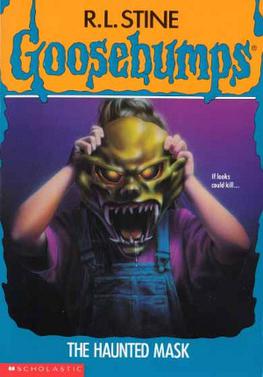
6. The Haunted Mask

If you can’t see what’s so great about this one, just compare it to the cover of the sequel. This mask isn’t just ugly. It isn’t just a monster. That is a face consumed by fearsome viciousness. And it’s not just sitting passively over the face of the little girl trying it on. It expresses dark corruption in one frame, a perfect set up for a story which explores just that.
5. The Curse of Camp Cold Lake

For what it is, this image is a perfect knockout punch. And once again, the title helps. This image is freezing. We’re not just seeing a lake; we’re seeing shiny, dark, ice-cold water, with a cold, dead, fog-laden background. It’s not just some zombie/ghost waiting below the surface. This thing has cold, dead flesh with no nose, shiny, lifeless hair, and the red beady eyes of a monster with a goal as shuddering as the rest of it. It’s perfectly realized. But while it’s clear that Camp Cold Lake is an icy place of dread, it’s hard to be sure what this image means – what we should be afraid of – so it doesn’t draw us in like some of these other covers.
4. The Barking Ghost

The title on its own is sort of silly. Don’t we already have werewolves and such to bring out everything that’s scary in dogs? The only ghost-dogs I remember were supposed to be cute pets of benevolent “human†ghost. This, as is, sounds like a second-grader’s idea. What made anyone think this was a good choice to terrify the protagonists?
For the answer, simply look at that cover. Not only is that thing just about the most vicious dog I could imagine, but the fact that it’s a “ghost†really does make it even worse. The shiny, blue-white fur and angry red eyes say that this is an unshakable otherworldly monster, from which even a hellhound would turn tail and run. With that image, the title becomes just another reason the cover is so memorable. (Ironically, the cover had the right idea much more than the story, which, after some build up, turned its ghost dogs back into the kind of lame, nonsensical villains you’d expect in the first place.)
3. Don’t Go to Sleep

This image deserved such a better story. Change it from day to night, and it would be the ultimate embodiment of a little kid’s monster-under-the-bed terror. As is, it’s not much less. Kids have such fears because they know how vulnerable they are while lying in bed, in the middle of the night. This image promises their worst fears realized, creating the same effect as How to Kill a Monster, and promising, not just a monster, but a monster that’s come to do its worst.
2. Monster Blood

Easily the best cover in this four-book series, this image is a masterwork of understatement. We can assume what “monster blood†is, but we can only guess what it means in this image. Is that really blood? Is there a monster at the top of the stairs? Or is this a sign that something even worse is waiting in the dark? Do the pair of glasses mean that we’re only seeing the aftermath of the horrors that took place? Or is nobody home yet to witness the worst that’s yet to come?
This is perhaps the most ominous of all Goosebumps covers, and it’s likely the real reason why the so-so book got so many sequels.
1. Stay Out of the Basement

Not every cover could make a title like that intimidating, especially with an image that simple, but in this case, the two aspects combine for the most menacing Goosebumps cover I’ve ever seen. In theory, this would be silly, but that hand just goes to show you how the right details can make all the difference. It’s not a cartoonish image. That, to the eye, is a real, human hand, with tendons, knuckles, and fingernails. That it’s so clearly some kind of plant at the same time is almost disturbing. The thing around the corner on the cover of How to Kill a Monster is probably horrifying, but at least we’re prepared for what a monster is supposed to look like. Whatever’s reaching out of the basement in this picture can only be some kind of sickening freak of nature that none of us would want to meet.
And at the same time, all we know from the title is that we should “Stay Out of the Basement.†Is this thing just a precursor to the real horror waiting in the dark? Stay Out of the Basement may have been one of the stronger stories in the series, but this is a cover perhaps no story could live up to. Then again…
Speaking of covers, do you know which one was accidentally reversed when first printed?
C.) Chicken Chicken
Now, with that potential scale-tipper out of the way, let’s look at four other more exclusive categories, from least important to most, and see which Goosebumps book rules Halloween:
– Best villains
It’s not as important as how the story plays them, but kids need a good boogeyman to really drive the tale into their imaginations. (A hero list, with what we’re given, would be a waste of time, rest assured.)
1. Night of the Living Dummy: Slappy, the evil dummy, clearly made his mark on the series, and for proving himself a creepy, vile, unforgettable antagonist in every entry of his trilogy, even the sub-par third outing, he takes the trophy.
2. Stay out of the Basement: When your dad, the man who can control every aspect of your life, may be the monster after you, it doesn’t take long to realize what immense jeopardy you’re really in. Add to that the fact that he’s a mad scientist who bleeds green blood and has leaves growing out of his head, and Dr. Brewer falls short of Slappy only by virtue of one great appearance against three. (Well, maybe two and a half?)
3. Welcome to Camp Nightmare: Almost as bad as an evil parent, the summer camp director who runs a summer camp like Big Brother, refuses to “pamper†his boys with such commodities as a nurse to look at snake bites, and insists they call him Uncle Al is hard to forget. I have a very specific image of Uncle Al, and I have a feeling Stine did too. Later books in a spinoff series have a villain named Big Al, and though it’d been years since I’d read his story, Uncle Al’s picture came right back up in my mind when I read it. He instantly became Big Al to me and played that role just as well.
4. Attack of the Jack O’Lanterns: We don’t know much about these two when they appear, but suffice to say that two pumpkin-headed creatures who kidnap trick-or-treaters, ask them to trick-or-treat forever, and force them to keep going with a circle of fire are hard to forget. And the cheesy twist ending somehow makes them even more awesome.
5. The Curse of Camp Cold Lake/The Haunted School: Both parties here have been through some difficult scenarios and show it with some horrible antics. The insane children from The Haunted School are downright disturbing, worshipping colorlessness with a bizarre celebration of playing in strange ink, spitting it into each other’s faces, and other strange frolicking. Della, meanwhile, is like an anti-Jason Vorhese, mocking, talkative, drawing people in rather than chasing them away, but ultimately a deadly predator, hunting people at the camp she died in.
– Most Tied-in to Halloween
A good story is a good story, but it goes a lot farther if your Halloween tale really was meant to go with the big day itself.
1. The Haunted Mask: This book isn’t just tied into Halloween. It explores such themes as altering one’s identity through a costume and growing from being scared on Halloween to embracing the scariness. It takes full advantage of the holiday
2. Attack of the Jack O’lanterns: The group in this story starts out with a goal similar to the girl in The Haunted Mask, but it doesn’t tie into the holiday quite as essentially with its story of friends and rivals alike kidnapped by real Halloween creatures. Still, with lots of pranks intended to scare, the ultimate night of trick-or-treating, and the classic scenario of meeting that one strange creature we find out, too late, isn’t a costume, this one checks a lot off the list.
3. Werewolf Skin: That it takes place on Halloween is almost told in passing, but that works in its own way in simply lending some gravitas to the story. Add to that the extended scenes of a boy fleeing for his life from people dressing up as real monsters, and this one pays its own effective tribute to Halloween.
– Best-Written
Some entries showed better writing and plotting than others, and it went a long way in how well they worked.
1. The Ghost Next Door: Probably as close as this series came to good literature, this one features effective buildup that explores the protagonist, a great twist – if unwisely telegraphed early on, briefly – and a bittersweet ending that cements a weighty relationship between the central characters, even plucking the heartstrings a bit.
2. The Haunted Mask: Tying in to Halloween so well scores big in more than just the last category. This book uses Halloween for one of the best character studies in the entire series, of little scaredy-cat Carly Beth. Unlike the equally incapable protagonist of the awful Be Careful What You Wish For…, sweet Carly Beth is ready and willing to strike back, and we’re with her every step of the way, even after she becomes rather scary herself. It only gets better with the horrifyingly reveal that she’s lost her own, ahem, face along the way.
3. Welcome to Dead House/Welcome to Camp Nightmare/Werewolf Skin: I had a little trouble making up my mind, if you can’t tell. All of these books have at least one weak or silly aspect in the writing, but in the end, I decided that all of them achieve the arc that exemplifies the series at its best. They all set up uncomfortable, ominous scenarios, gradually build the threat and the mystery and close with a full-force, high-stakes climax, complete with a great closing twist. Granted, each one does one of those things better than the rest, but in the end, they’re all equally as worthy.
Goosebumps books were originally written more for:
A. Boys
B. Girls
C. Both
– Scariest
Plain and simple, nothing is more key than their ability to spook their child audience on Halloween. And in this category, sometimes superior writing is just outrun when the story knows what to throw at its audience and how to play it.
1. Welcome to Dead House: Looking back, this one does lose a little bit of ground on some of its fellow entries here for not specializing in fast-paced tension. This, however, merely made me pause before awarding it 1st place. The scope of Welcome to Dead House is bigger than almost all the other Goosebumps books, and the story can support it. It’s moody, weighty, and unfolds in a way that convinces us of the horror behind its conflict. And the grand finale ends with a bang, placing our heroes in a true do-or-die situation, in which they are forced to realize what they could lose.
2. Werewolf Skin: I didn’t actually read this one when I was younger, but even with nostalgia goggles, I have to recognize that it’s probably the most high-tension entry, and it plays its mystery well. It’s another example of scoring points on a relatively simple story, which is that somebody in town is a werewolf.
3. The Girl Who Cried Monster/The Haunted Mask/Attack of the Jack O’Lanterns: Sorry I couldn’t resist another tie, but once again, each one makes a case. The Girl Who Cried Monster puts something of a ticking clock on its hero’s dilemma and adds a few tense scenes of her alone in the library with a monster. The Haunted Mask, as I’ve said, does a heckuva job portraying Carly Beth’s descent into a monster, until that terrible moment when she realizes how far gone she really is. And Attack of the Jack O’Lanterns pulls its characters through a disturbing predicament with two spooky figures, until a finale that threatens them with something more disturbing still. All worth a mention.
And with that, we come to our five finalists. Now let’s see how well you’ve been following. Take your best guess at our winner:
– Attack of the Jack O’LanternsÂ
Winner:
And now that my first Halloween special draws to a close, I hope you all enjoyed it and are ready for the great month to follow on Manic Expression. Tomorrow, please give a warm welcome to our good friend Moviefan. Because he might not be as gentle with you.

Fill Your 31 Days of Halloween… With Goosebumps!
July 24, 2014 in Uncategorized
On this, the second day of October, for the second entry of Halloween month, here’s The Second Opinion on one of horror’s most unlikely icons.
http/www.youtube.com/watch?v=-4Y3n3ysVLQ
If you’re a child of the 90s, there’s a good chance your introduction to the concept of a scary story involved three trademark details; a title and tagline you probably didn’t know was supposed to be humorous, an unnerving and unforgettable cover, and the line “reader beware, you’re in for a scare.†In a world with no shortage of mass marketed pre-teen trends to consume all of our time, R.L. Stine’s Goosebumps books stood out for one key difference: they didn’t promise us that everything would be okay.
Like the action hero cartoons or the generations of My Little Pony that grown men and women didn’t form cults around, it was very much a gimmick trend of its time. The author didn’t have the most impressive achievements under his belt, and even the youngest readers could probably tell that he wasn’t aiming for “good literature.†But like a handful of its fellow trends that are still carrying on now, twenty years later, there was something to it, some spark that appealed to the imagination. Goosebumps sold themselves as the sort of nighttime horrors the readers were hiding from under the covers just a few years prior, inviting them to imagine just how wild and scary the monsters lurking in the dark could be. And while as many entries as not were mediocre or worse, it managed to draw out that potential on just a few occasions.
If you have a few Goosebumps books lingering on your shelf, Halloween is good time to take them out. If you’re reading to a group of grade-school kids, or to your little brother or sister, or just looking for a little holiday spirit yourself, their creepy, cheesy, sometimes sloppy, and always strange appeal definitely fits the bill. And today, we’re looking back on the original series to find the best of the best-suited for the Halloween season. (Although, I’d like to slip the Choose Your Own Nightmare spinoff series in too, in a way.)
First, let’s take a brief look back on each entry and separate the real monsters from the little gremlins. Look for through your old favorites, look through the ones mentioned here, or just look through the ones that catch your eye, but be warned, reading all of them at once is a doom slide. The original series so long, I couldn’t even fit it in this blog: http/www.manic-expression.com/apps/blog/show/33384489-goosebumps-the-original-series
Here’s a warm up question. How many books are in the original series?
– If you think 62, click hereÂ
– If you think 74, click hereÂ
To pick the best, let’s start with the unforgettable little detail that we all took into account first: The Covers. More often than not, even if the book was good, the cover was the scariest part. The illustrator, whose name was
A.) Tim Jacobus
B.) Jacob Timmons
not only knew his craft, he knew more about the rules of horror than most. Here are the ten best:
10. Deep Trouble
I shaved a point off for its obvious source of inspiration, but it cleverly brings in its own unique vision. It reverses the shot from Jaws in which we see only the victim’s perspective, and maybe a fin, so instead we see only the predator’s perspective, emphasizing just how vulnerable such a victim really is. Add back the subtracted point for the great coloring that makes the creature seem like some kind of hammerhead-killer whale.
9. You Can’t Scare Me!
You can tell this one is going to be a little bit offbeat. The series has made up its own monsters before (see Egg Monsters from Mars for one particularly bad attempt), but this is one time where it really works. These mud creatures are ominous enough to stand alongside ghosts, werewolves, and other classics, and they’re twice as interesting for the fact that we don’t know what they are. Add to that the fact that the title gives us no hint, instead sounding like famous last words, and this one definitely comes across as a must-read. (Granted, you shouldn’t, as the story ended up being different for the worse, but no points off for that in this category.)
8. How to Kill a Monster
Right after a string of weird little titles, with covers depicting bizarre but not in the least scary creatures, here was a cover that promised us a step back to basics, with a simple scenario of full force terror. And while the book only half-delivered, this cover embodied all of its strengths. Look at the dark room it’s emerging from. Look at the detail on those fingers. That’s not a Pixar monster. It makes us imagine that we can’t imagine how terrible whatever’s about to come through that door really is. It’s basic, and we’ll see that even this series has done it better, but it’s still, without doubt, an effective rendition.
7. The Blob that Ate Everyone
It’s a bit cartoonish, to be sure, but this is one of those times where it works, creating one of the series’ most memorable covers. It goes for the exact opposite of subtlety, making its monster overwhelming. Even the title helps. This monster is so offbeat, unsettling, and threatening, that it probably deserved a bigger role in a book that would have been better as the story of the destructive rampage the cover promised. (Save the reality-warping typewriter plot for a more subtle monster, some kind of shadowy spook.) It’s another story that can’t live up to its cover, but we should be grateful we at least have the image of the titular blob as a pulsing, enormous tumor. The TV show version was just an indistinct mishmash that proves someone clearly didn’t know the difference between a “blob†and a “glob.â€
6. The Haunted Mask
If you can’t see what’s so great about this one, just compare it to the cover of the sequel. This mask isn’t just ugly. It isn’t just a monster. That is a face consumed by fearsome viciousness. And it’s not just sitting passively over the face of the little girl trying it on. It expresses dark corruption in one frame, a perfect set up for a story which explores just that.
5. The Curse of Camp Cold Lake
For what it is, this image is a perfect knockout punch. And once again, the title helps. This image is freezing. We’re not just seeing a lake; we’re seeing shiny, dark, ice-cold water, with a cold, dead, fog-laden background. It’s not just some zombie/ghost waiting below the surface. This thing has cold, dead flesh with no nose, shiny, lifeless hair, and the red beady eyes of a monster with a goal as shuddering as the rest of it. It’s perfectly realized. But while it’s clear that Camp Cold Lake is an icy place of dread, it’s hard to be sure what this image means – what we should be afraid of – so it doesn’t draw us in like some of these other covers.
4. The Barking Ghost
The title on its own is sort of silly. Don’t we already have werewolves and such to bring out everything that’s scary in dogs? The only ghost-dogs I remember were supposed to be cute pets of benevolent “human†ghost. This, as is, sounds like a second-grader’s idea. What made anyone think this was a good choice to terrify the protagonists?
For the answer, simply look at that cover. Not only is that thing just about the most vicious dog I could imagine, but the fact that it’s a “ghost†really does make it even worse. The shiny, blue-white fur and angry red eyes say that this is an unshakable otherworldly monster, from which even a hellhound would turn tail and run. With that image, the title becomes just another reason the cover is so memorable. (Ironically, the cover had the right idea much more than the story, which, after some build up, turned its ghost dogs back into the kind of lame, nonsensical villains you’d expect in the first place.)
3. Don’t Go to Sleep
This image deserved such a better story. Change it from day to night, and it would be the ultimate embodiment of a little kid’s monster-under-the-bed terror. As is, it’s not much less. Kids have such fears because they know how vulnerable they are while lying in bed, in the middle of the night. This image promises their worst fears realized, creating the same effect as How to Kill a Monster, and promising, not just a monster, but a monster that’s come to do its worst.
2. Monster Blood
Easily the best cover in this four-book series, this image is a masterwork of understatement. We can assume what “monster blood†is, but we can only guess what it means in this image. Is that really blood? Is there a monster at the top of the stairs? Or is this a sign that something even worse is waiting in the dark? Do the pair of glasses mean that we’re only seeing the aftermath of the horrors that took place? Or is nobody home yet to witness the worst that’s yet to come?
This is perhaps the most ominous of all Goosebumps covers, and it’s likely the real reason why the so-so book got so many sequels.
1. Stay Out of the Basement
Not every cover could make a title like that intimidating, especially with an image that simple, but in this case, the two aspects combine for the most menacing Goosebumps cover I’ve ever seen. In theory, this would be silly, but that hand just goes to show you how the right details can make all the difference. It’s not a cartoonish image. That, to the eye, is a real, human hand, with tendons, knuckles, and fingernails. That it’s so clearly some kind of plant at the same time is almost disturbing. The thing around the corner on the cover of How to Kill a Monster is probably horrifying, but at least we’re prepared for what a monster is supposed to look like. Whatever’s reaching out of the basement in this picture can only be some kind of sickening freak of nature that none of us would want to meet.
And at the same time, all we know from the title is that we should “Stay Out of the Basement.†Is this thing just a precursor to the real horror waiting in the dark? Stay Out of the Basement may have been one of the stronger stories in the series, but this is a cover perhaps no story could live up to. Then again…
Speaking of covers, do you know which one was accidentally reversed when first printed?
C.) Chicken Chicken
Now, with that potential scale-tipper out of the way, let’s look at four other more exclusive categories, from least important to most, and see which Goosebumps book rules Halloween:
– Best villains
It’s not as important as how the story plays them, but kids need a good boogeyman to really drive the tale into their imaginations. (A hero list, with what we’re given, would be a waste of time, rest assured.)
1. Night of the Living Dummy: Slappy, the evil dummy, clearly made his mark on the series, and for proving himself a creepy, vile, unforgettable antagonist in every entry of his trilogy, even the sub-par third outing, he takes the trophy.
2. Stay out of the Basement: When your dad, the man who can control every aspect of your life, may be the monster after you, it doesn’t take long to realize what immense jeopardy you’re really in. Add to that the fact that he’s a mad scientist who bleeds green blood and has leaves growing out of his head, and Dr. Brewer falls short of Slappy only by virtue of one great appearance against three. (Well, maybe two and a half?)
3. Welcome to Camp Nightmare: Almost as bad as an evil parent, the summer camp director who runs a summer camp like Big Brother, refuses to “pamper†his boys with such commodities as a nurse to look at snake bites, and insists they call him Uncle Al is hard to forget. I have a very specific image of Uncle Al, and I have a feeling Stine did too. Later books in a spinoff series have a villain named Big Al, and though it’d been years since I’d read his story, Uncle Al’s picture came right back up in my mind when I read it. He instantly became Big Al to me and played that role just as well.
4. Attack of the Jack O’Lanterns: We don’t know much about these two when they appear, but suffice to say that two pumpkin-headed creatures who kidnap trick-or-treaters, ask them to trick-or-treat forever, and force them to keep going with a circle of fire are hard to forget. And the cheesy twist ending somehow makes them even more awesome.
5. The Curse of Camp Cold Lake/The Haunted School: Both parties here have been through some difficult scenarios and show it with some horrible antics. The insane children from The Haunted School are downright disturbing, worshipping colorlessness with a bizarre celebration of playing in strange ink, spitting it into each other’s faces, and other strange frolicking. Della, meanwhile, is like an anti-Jason Vorhese, mocking, talkative, drawing people in rather than chasing them away, but ultimately a deadly predator, hunting people at the camp she died in.
– Most Tied-in to Halloween
A good story is a good story, but it goes a lot farther if your Halloween tale really was meant to go with the big day itself.
1. The Haunted Mask: This book isn’t just tied into Halloween. It explores such themes as altering one’s identity through a costume and growing from being scared on Halloween to embracing the scariness. It takes full advantage of the holiday
2. Attack of the Jack O’lanterns: The group in this story starts out with a goal similar to the girl in The Haunted Mask, but it doesn’t tie into the holiday quite as essentially with its story of friends and rivals alike kidnapped by real Halloween creatures. Still, with lots of pranks intended to scare, the ultimate night of trick-or-treating, and the classic scenario of meeting that one strange creature we find out, too late, isn’t a costume, this one checks a lot off the list.
3. Werewolf Skin: That it takes place on Halloween is almost told in passing, but that works in its own way in simply lending some gravitas to the story. Add to that the extended scenes of a boy fleeing for his life from people dressing up as real monsters, and this one pays its own effective tribute to Halloween.
– Best-Written
Some entries showed better writing and plotting than others, and it went a long way in how well they worked.
1. The Ghost Next Door: Probably as close as this series came to good literature, this one features effective buildup that explores the protagonist, a great twist – if unwisely telegraphed early on, briefly – and a bittersweet ending that cements a weighty relationship between the central characters, even plucking the heartstrings a bit.
2. The Haunted Mask: Tying in to Halloween so well scores big in more than just the last category. This book uses Halloween for one of the best character studies in the entire series, of little scaredy-cat Carly Beth. Unlike the equally incapable protagonist of the awful Be Careful What You Wish For…, sweet Carly Beth is ready and willing to strike back, and we’re with her every step of the way, even after she becomes rather scary herself. It only gets better with the horrifyingly reveal that she’s lost her own, ahem, face along the way.
3. Welcome to Dead House/Welcome to Camp Nightmare/Werewolf Skin: I had a little trouble making up my mind, if you can’t tell. All of these books have at least one weak or silly aspect in the writing, but in the end, I decided that all of them achieve the arc that exemplifies the series at its best. They all set up uncomfortable, ominous scenarios, gradually build the threat and the mystery and close with a full-force, high-stakes climax, complete with a great closing twist. Granted, each one does one of those things better than the rest, but in the end, they’re all equally as worthy.
Goosebumps books were originally written more for:
A. Boys
B. Girls
C. Both
– Scariest
Plain and simple, nothing is more key than their ability to spook their child audience on Halloween. And in this category, sometimes superior writing is just outrun when the story knows what to throw at its audience and how to play it.
1. Welcome to Dead House: Looking back, this one does lose a little bit of ground on some of its fellow entries here for not specializing in fast-paced tension. This, however, merely made me pause before awarding it 1st place. The scope of Welcome to Dead House is bigger than almost all the other Goosebumps books, and the story can support it. It’s moody, weighty, and unfolds in a way that convinces us of the horror behind its conflict. And the grand finale ends with a bang, placing our heroes in a true do-or-die situation, in which they are forced to realize what they could lose.
2. Werewolf Skin: I didn’t actually read this one when I was younger, but even with nostalgia goggles, I have to recognize that it’s probably the most high-tension entry, and it plays its mystery well. It’s another example of scoring points on a relatively simple story, which is that somebody in town is a werewolf.
3. The Girl Who Cried Monster/The Haunted Mask/Attack of the Jack O’Lanterns: Sorry I couldn’t resist another tie, but once again, each one makes a case. The Girl Who Cried Monster puts something of a ticking clock on its hero’s dilemma and adds a few tense scenes of her alone in the library with a monster. The Haunted Mask, as I’ve said, does a heckuva job portraying Carly Beth’s descent into a monster, until that terrible moment when she realizes how far gone she really is. And Attack of the Jack O’Lanterns pulls its characters through a disturbing predicament with two spooky figures, until a finale that threatens them with something more disturbing still. All worth a mention.
And with that, we come to our five finalists. Now let’s see how well you’ve been following. Take your best guess at our winner:
– Attack of the Jack O’LanternsÂ
Winner:
And now that my first Halloween special draws to a close, I hope you all enjoyed it and are ready for the great month to follow on Manic Expression. Tomorrow, please give a warm welcome to our good friend Moviefan. Because he might not be as gentle with you.
Video Games: Art or Something Else?
July 24, 2014 in Uncategorized
Since Roger Ebert ignited this debate into a flame in 2005, arguments have been thrown back and forth until they seemed to be reaching the heart of the matter. Then they grew so passionate that rhetoric, long-winded and sometimes hyperbolic speeches, and finger-pointing accusations of ulterior motives entered the picture, and the whole thing fell into seething disarray once again. Great minds have thought the issue through in more depth than perhaps I ever could, and I do not write this article in the hopes that I can solve it. But with so many average consumers seeing the claim as an attempt to invalidate their pastime and feeling slighted, I think it’s important to illuminate and try to answer the questions at the center of the issue for the public, so we can come to our own conclusions while respecting all perspectives.
When I first heard the debate, there were two thoughts that came to mind. The first was that I really didn’t care if my occasional afternoon pastime was worthy of the term “art.†The second was that there are artistic people applying their visions to video games, such as Don Bluth and his revolutionarily “Dragon’s Lair†(1983), a sort of interactive movie that helped validate giving video games the best animation available. How would he feel about the notion that this creation was less artful than his self-described most frustrating and least productive ventures into movies, such as The Pebble and the Penguin (1995)?
In this line of thought, we recently had a very thoughtful look into the debate from Doug Walker, who pointed out that the definition of “art†does not depend on quality and that, with this in mind, the only question remaining is whether video games are high art. Like many before him, he argued that video games were still in their early stages of development, but the craft was improving. From there, he compared them to the recent graphic novels that have achieved breakthrough levels of acclaim and concluded that video games could indeed rise to such levels of greatness one day. He also added that he did not respect Roger Ebert any less for claiming they “never have been, never will be†but argued that the critic might not have considered what progress over an era could do for the medium.
This, however, was not entirely an accurate summary of Ebert’s argument. Quality was indeed part of his point, and you can admittedly sense some contempt in the way he emphasized that point above all others (though he still made interesting points on whether the format, intent, and desires usually served by video games made them inherently inferior to widely accepted artistic mediums). But Ebert did admit, through his follow-up arguments, that such shortcomings could be improved, even to the point where he conceded that – though not in this lifetime and not so much that they would overtake the progress made in other artistic fields – video games could indeed become great works of art one day. But there was another point in his and many other arguments that pointed out why video games might not fit the definition of art, low or high, in the present: Video games have rules. They can be won. Their structure isn’t just a different way of expressing the creator’s vision. It creates an experience in which whatever personal expressions of the creator it contains might not be the foremost purpose.
Video games betray this fact with their very name, video games. If they fit the definition of art, do board games as well? Word searches? Puzzles? You can argue, for example, that a finished puzzle might show a picture that was conceived by an artist, but is the picture really the point? It may be art on its own, but isn’t the puzzle just drawing from it to enhance the experience of the challenge it was created to present? And isn’t a challenge that you can conclusively succeed or fail at the work of, say, a “designer†or an “innovator,†rather than an “artist?†For if a challenge is the work of an artist, wouldn’t football, tag, and competitive auctions be works of art as well? Without drawing a line, you could extend it to every slightly innovative action performed by people every day.
All of the above challenges serve purposes, some of them great, but while acknowledging that the definition of “art†will always be debated, I will make my stand and say that a challenge, in and of itself, is not art. By any definition of the term useful as a distinguisher, it is not. At the very least, the primary purpose of art must be an expression, not a test. An artist can present challenges to a viewer through their work, but something designed explicitly for the purpose of definitively being solved is not, in and of itself, art.
Where does this leave video games? I’ve already alluded to the fact that video games can contain artistic aspects, such as the animation, but if it is first and foremost a game, with artistic aspects merely used to enhance the experience, I would say, as a whole, it is not art. And this does disqualify a good number video games, undoubtedly such classics as “Donkey Kong†and “Pac Man.â€
But are all video games not art in this line of thinking? I refer you again to Don Bluth’s “Dragon’s Lair.†It could be argued that everything in this game is designed to enhance the story being told, not the challenge. Each scene is given a wide and thoughtful array of details, portrayed through Bluth’s typically superb animation. And the challenge presented to the player, to hit the right button on cue at the end of each scene, does as much to draw them into the action as it does to challenge their reflexes. More, you could argue, as most players had to depend on memorization rather than reflexes to succeed. Is this video game art? Perhaps not of the highest caliber, but by definition, I would have to say that it is. It can be won, but the effect of this emphasizes more that you have experienced the entire story than that you have trumped the creators’ puzzle. And there are several video games that you could argue also use the interactive aspect to draw you into the story more than to challenge you (not that they can’t still be challenging).
So then, some types of video games are art and others are not. But to reach this conclusion leads to another question (and, if it ever enters the mainstream debate, another angry backlash from a group of fans feeling threatened): Are video games in the former category superior to those in the latter? From what I just described, is “Donkey Kong†inferior to “Dragon’s Lair?†And to this, I ask, is watching a football game “inferior†to watching Remember the Titans (2000)? Something may not fit the definition of “art,†but this does not necessarily make the positive emotions stemming from it less valid, and it does not mean that you must prefer all artistic experiences – or any, for that matter – to it. Having reached my own conclusion on whether video games are art, and hopefully done something to the benefit of yours, I now concede to the endlessly complicated world of preference and perspective. Even if we gain a qualification for whether a video game is art, it can still only meet that qualification in the eyes of the beholder. And this does little to determine which games are preferred by which players regardless.
I have no idea how the quality of video games will accelerate or if the acceptance they find as art will ever become too limited or too generous. But improve they will, and maybe someday, those that qualify as art will achieve the greatness of masterpieces and classics in today’s most respected mediums. And someday, probably much sooner, perhaps those that qualify as challenges will improve to the point where they join sports and game shows as society’s favorite and most widely popular competitions.
The Top Ten Most Triumphant Endings in Movie History (part 2)
July 24, 2014 in Uncategorized
Last week, we looked at the movie endings that did away with anything bittersweet or reigned-in and gave us some of the most joyful triumphs in cinema history. (http/www.manic-expression.com/apps/blog/entries/show/27846119-the-top-ten-most-triumphant-endings-in-movie-history-part-1v) Here, now, is part two, the five most triumphant finishes I’ve ever seen (spoilers):
Â
 5. Rudy: For every inspirational sports movie about a one-in-a-million triumph over the odds, there’s a crowd of cynical people rolling their eyes. “It was nice to see a story be honest and say ‘no, sometimes you can’t do it,’†said one of the guys in my literature class after reading The Chocolate War. (Strange how nobody seems to question a contrived and forced ending when it’s done so the bad guys win, for those of you who haven’t had the, ahem, pleasure of reading that particular literary classic.) But here, read-‘em-and-weep, is a near-irrefutable testament to the value of optimism and following your dream, because, one, Rudy is a true story, and, two, it’s a story about the only kind of dream worth following, which is never just a quest for wealth or glory. Rudy is about a man’s journey to be a part of something he loved, however much or little he could.
Daniel “Rudy†Ruetigger was the undersized son of a steelworker, of average academic intelligence and “hardly a speck of athletic ability,†who wanted nothing more than to attend The University of Notre Dame and play football. His journey could have ended at various stages – the nearby college he studied at to gain acceptance to Notre Dame, his first tryout for the team – but, as the movie gently stresses, what he achieved while working to overcome each roadblock was worth his while regardless. Instead, however, it took him all the way to his senior year with the Notre Dame Fighting Irish, whose players decided that they wanted their hardest-working teammate to suit up with them for the last game, instead of one of the more talented substitutes.
The Fighting Irish, pulling off one of their most impressive victories over Georgia Tech, starts to wonder, now, if their biggest source of inspiration could be given the chance to do more than watch from the sidelines. They encourage the crowd, interspersed with Rudy’s friends and family – who no longer doubt him – to begin cheering his name. With seconds to go, the skeptical coach relents and puts Rudy in for the kickoff, even allowing him to stay on for Georgia Tech’s final desperation play. With the crowd cheering harder than ever, Rudy bursts through the line at full steam and sacks the quarterback, ending the game. The joyous team picks him up and carries him off the field, the first of two times this ever happened to a player in Notre Dame Football. There you have it; in pursuing your dream for the right reasons, you have nothing really to lose and everything to gain – and to give.
I would go so far as to call this, as sports movies go, my favorite moral with my favorite delivery. But I only give the ending 5th place, because by this point, we all know Rudy had won long before we got here. This is merely where he proves it to the rest of the world.
Â
 4. Kiki’s Delivery Service: You might remember my old series on Hayao Miyazaki vs. Don Bluth. In the round matching Kiki’s Delivery Service against All Dogs Go To Heaven, I ranked them as my favorite movies from their respective director and noted their endings as two of my favorites, in animation or otherwise. I also, to the annoyance of some, declared the polarizing All Dogs Go To Heaven the superior of the two. But matching the endings plays to the strengths of Kiki, which is only one of the better examples of Miyazaki’s standard until it reaches one of the strongest third acts I’ve ever seen. And where All Dogs Go To Heaven is equal parts triumphant and bittersweet at the end, Kiki’s Delivery Service is an overwhelming victory.
One of Hayao Miyazaki’s greatest talents is his ability to capture the “magic†of everyday life, as seen in My Neighbor Totoro and, less frequently, Ponyo. In Kiki’s Delivery Service, he explores some of life’s most dismaying challenges, such as adolescence and falling out of touch with one’s talents. It leads to an inspiring triumph that will make you believe living life is a blessing.
Kiki, the young witch in training, has lost her powers, but spending time with a friend has left her encouraged that she will find them again. Her heart just might not be in it for the time being. But she finds herself in a dire situation when a dirigible accident leaves the craft flying out of control and her friend Tombo clinging to it by a rope, several hundred feet in the air.
Summoning everything she can, Kiki borrows a push broom and tries to fly once more. After a moment, she achieves her first takeoff in weeks, though she’s still not as steady as she once was. She races to the rescue, barely preventing herself from spiraling out of control, and finds Tombo, who she manages to catch in midair, just short of the ground. They touch down to safety, and what she’s done begins to sink in. Kiki has found her strength, not just to fly, but in all aspects of her life, where insecurity was holding her back before. We move on to a beautiful end montage of Kiki in the town, following the rescue, looking up to enjoy the simple pleasures of each day, as put into words by the heartfelt song I’m Gonna Fly. (Yes, I know it wasn’t the song in the original dub, and, yes, I think Disney made an improvement with that particular change.) The shy little delivery witch has learned to see life for the possibilities, not the detriments, and it is glorious.
Â
 3. Jerry McGuire: This movie delivered some of the most pessimistic hurdles to its main character of any movie in recent memory. Jerry McGuire, fired and written off as a loser after he dared object to (not oppose, just object to) the way sports agents such as himself act as sharks in suits. He ends up married to the woman who was willing to walk away with him, though both are unsure soon afterwards if they did it for the right reasons. Meanwhile, the only client he’s managed to hold onto is a skilled but small (and cocky) wide receiver named Rod Tidwell, who isn’t a fan favorite and is unable to net a decent contract with the Arizona Cardinals before his current one expires.
Part of the movie’s strength is that you don’t know where it’s going. Jerry may be able to work with Rod as a friend, the type of agent work he’d wanted to do from the start, but he’s far more worried about his career – just a hair away from crashing – than he is grateful. He never wanted to be the rebel going against the grain, but it’s the only role he has left to play, and it doesn’t look like it can work. The movie also makes a point of the likelihood of Rod getting hurt before he can secure a new contract, which would end Jerry’s career, and in the Cardinal’s final game, with Jerry on his last legs, we’re all but counting down the time until it happens. And then it does.
Rod catches a pass in the end zone and gets hit so hard that he’s summersaulted through the air, coming down on the back of his head. Paramedics gather around, Rod’s wife, watching from home, calls Jerry in a near-panic over, and Rod doesn’t move. After several minutes, they manage to stir him and he opens his eyes, which they see as the go-ahead to get him off the field. Rod, however, tells them “just let me enjoy this moment.â€
Rod slowly gets to his feet on his own. Then he takes off his helmet and raises it into the air, and the crowd loves it. Then he begins some end zone dancing that says he could take another ten hits like that without slowing down, and the standoffish, undersized receiver becomes a fan favorite, just the way his agent suggested. The media flocks to him, his next contract is both his and Jerry’s dream come true, and following his family, Jerry is the first person he wants to thank in the interviews. This is great publicity, of course, but it has one curious effect in particular: It has some of the other players wondering why they don’t have that kind of a relationship with their agents. But before the big night comes to a close, Jerry realizes something is missing.
He races home to his wife, who is hosting her weekly support group for divorced women, now on the verge of joining them herself. He comes in and tells her that their little business had a great night, but it wasn’t complete without her. He’s not complete without her, in this cynical world that we live in. She stops him, however, telling him “you had me at ‘hello.’â€
 Jerry Maguire is the kind of movie that may leave you with tear in your eye to go with that smile, because you believe it. We see exactly what Jerry was up against, and how close he was to a very real failure, but thankfully, director Cameron Crowe wanted to prove what’s right, not just what’s easy. That goes a whole lot further.
Â
 2. Rocky: Now here is a whole series that specialized in triumphant endings (with the exception of the failed attempt in Rocky 5). If this were a list of the most “epic†endings of all time, Rocky 2, which put all of its chips in the ending sequence, would probably take the win. However, as far as a sheer triumph goes, there’s no topping the one that did it first and did it best (even with the trivial detail of whether our hero actually won the fight).
Rocky, the club boxer who trained as hard as he could just to see if he could go the distance with the heavyweight champion of the world, fights the fight of his life. After a brutal 14th round, both corners are considering stopping the match, but both Rocky and the champion, Apollo Creed, refuse. They go out tagging each other with everything they have left, and it’s Rocky who wins out, pounding Apollo against the ropes with the last of his strength before the bell sounds.
The trumpets blare and the crowd rushes in to congratulate both men. The announcer begins declaring the winner, but who cares about that? (It’s probably Apollo.) The only thing Rocky wants now is to be with his girlfriend, Adrian, and sure enough, she makes her way through the crowd and into the ring. They embrace and declare their love for each other, and we know that every second Rocky spent training, every ounce of faith he put in himself, was worth it. The story of Rocky boils down to a hero investing himself 100% in the chance to prove himself, and that’s exactly what he has done. As the final movie in the series, Rocky Balboa, put it so well, “you get through that and you find the only kind of respect that matters in this world, self-respect.â€
Â
 1. It’s a Wonderful Life: I don’t think I need to bother building this one up. (And if I do, please stop reading and go watch this classic that you’ve clearly been missing out on for far too long.) After breaking down the triumphant aspects of 9 movies, I feel like I’d be doing this one a disservice with any description that could possibly come across as more of the same. No movie before or since has dared close with such a celebration, such a reward, for goodness and decency, probably because no movie has locked on to some deep, innate truth so well; no movie could convince its audience the same way that what we’re seeing at the end is just… right. It’s a Wonderful Life is the ultimate testament to looking on the bright side, and, oh, look at that, I started building it up anyway without even realizing. I guess I love it that much without even trying.
When George Bailey finds what his life would be like if he’d never been born, it’s not just the memorable gimmick (George revisits an earlier plot point that is now worse than before) that keeps us invested. What seems to register most to George is how alone in the world he is now, how everything he’d built has left both himself and his loved ones isolated and detached. He keeps trying to turn to something he can latch onto, only to be shot down every time by a loved one who no longer knows him.
When his prayers to live again are answered, we know exactly what he’s won back, because George is even happier about it than we are, running through the streets and blessing everything, good or bad, in his life. He’s finally seen the full extent of his own goodness, which is its own reward. But when he gets home, it turns out that his wife has managed to convince everyone to rescue the man who stood behind them so many times from his financial troubles, and just this once, they are able to give him the reward he deserves. George Bailey has indeed lived a wonderful life, as has everyone who lives each day inclined to simple acts of goodness.
 Honorable Mention:
Â
 Spiderman 2: Still one of my favorite superhero movies, with what I would argue is the most triumphant ending of all the ones to date. Cynics accused the romance between Peter and Mary Jane of being predictable, but just because we can guess that it will probably end well doesn’t mean that we’re not invested in the dynamic and how this could earnestly work out for the both of them. Mary Jane is finally the one to save Peter, asking him to respect her when she says she wants to be with him, Spiderman dangers and all. It’s probably the single greatest joy that any superhero, burdened with great power and great responsibilities, has achieved at the end of any movie, but it’s not as weighty as the ones I decided to put on the list.
Â
 Secretariat: The record-setting Belmont run from history’s greatest race horse is one of the greatest moments in sports history, and the movie plays it just about perfectly. Still, the set up to it, like much of the movie, is filled with melodrama that was almost too artificial to swallow, and, besides, it’s hard to believe that there’s much to add when you’ve already broken the record on the other two essential races, as much as the movie tried to convince us otherwise.
Â
 The Karate Kid: A great sort of teenage Rocky movie, with a fun and endlessly watchable payoff, in which the bullied hero proves his karate prowess. The ending, in which he overcomes an injury to win with the memorable “crane kick†is certainly triumphant, but there’s not much more to it than the self-explanatory aspects.
Â
 WALL-E: My personal favorite Pixar movie (and that’s saying something) ends with my personal favorite resolution (and that’s also saying something). The human race has returned to earth to learn that living, not just surviving, is a blessing, and WALL-E is saved from deletion by his gently intimate relationship with another robot. It’s a great happy ending capped off by a great song, but somehow “triumphant†just feels like the wrong word to describe it. It’s just too… delicate?
Â
 Singing in the Rain: I have Les to thank for reminding me of this one. It’s not quite what I was looking for, but it is a very happy and satisfying victory, in which the hero exposes his parasitic fraud of a leading lady, gets the woman he loves all the recognition she deserves, and finally turns the two of them into stars in the new world of talking pictures. Singing in the Rain is almost a happy-enough song to describe it.
The Top Ten Most Triumphant Endings in Movie History (part 1)
July 24, 2014 in Uncategorized
There are many great endings in movie history, but asking for the most triumphant narrows it down a bit. There are many films with warm and fuzzy happy endings or beautifully bittersweet moral victories, but this is the category featuring the relatively few that gave us a no-holds-barred victory and succeeded. No compromises, no attempt to reign it in, just our heroes in their finest moment. These endings had us leaving the theater a little more hopeful than before, making us believe, where so many clichéd resolutions fail to stick, that there really are nuggets of gold to be found mining in the stream of life. (SPOILERS AHEAD.)
10. Meet the Robinsons: What have I done, you might ask? With the greatest movies of all time to choose from, the movie in 10th place is taken straight from the middle of the lineup of Disney’s early throwaway attempts to transition to CGI? Well, I promised myself I’d be honest here, and so, yes, that’s what I’m saying. I think this humble little feature managed to take its loony plot threads and tie them together into a victory even more significant that much of what they’ve dreamed up in “the happiest place on earth.â€
Now that Lewis, the little time-traveling genius, has learned not to judge his worth based on past failures and discovered that the future holds a happy life with a new family, he takes the chance to do what he’d wanted to do in the beginning; find the woman who put him up for adoption. In one last trip to the past, he goes with his future son to watch his mother leave him on the doorstep of the place he grew up, giving him one last embrace and slipping away. He looks on with no confliction and goes back to the present. When his son asks him why he didn’t want to stop her, he answers “Because, I’ve got a family.â€
Where so many of Disney’s wonderful movies seem to accomplish all they really wanted to do after the climactic struggle, signing off with a simple scene of the characters enjoying the “fruits of their labor,†this one actually seemed to care more about the resolution than the conflict. It’s not what he has conquered; what Lewis has learned, and exactly what he has won, rings loudly in the final scene of his adoption, well-earning a closing quotation:
“Around here, however, we don’t look backwards for very long. We keep moving forward, opening up new doors and doing new things, because we’re curious… and curiosity keeps leading us down new paths.†– Walt Disney
Keep moving forward
9. Return of the Jedi: Yeah, I would have to give a nod to Star Wars. After one of the most resounding defeats of all time in Empire Strikes Back, the heroes regroup and transcend themselves to defeat the dark side once and for all. (Or at least until 2015.)
This is iconic. Luke faces his father, one of the greatest villains of all time, in the rematch of the “long time ago†era, Han and Leia declare their love for each other, and Vadar redeems himself, destroying the dark side of the force at last. Nobody learns anything in particular, and there’s no particular message to take away. It’s simply one of the most well-earned and iconic triumphs of good over evil in the history of cinema.
8. Aliens: After a slow, suspenseful, and tightly crafted first outing, the sequel to Alien (aptly titled, as it does deliver on the promise of more than one) matched its predecessor’s greatness with a visceral battle of thrills and chills, every bit as horrific as the original. But it also continues to develop Ripley, who, we learn, drifted through space for over fifty years in her escape pod.
She wakes up to learn that all of her loved ones have passed on, and there is not much left for her in the world. She decides, with nothing more worthwhile to do, that she should come on board as an advisor when more of the creatures that wiped out her crew are discovered. The movie has her getting to know the unruly soldiers, saving a little girl who has also, thanks to the aliens, lost everything, fighting for all of their lives, and, something we didn’t expect, winning a second chance at life.
The Alien Queen has cornered Newt, Ripley’s surrogate daughter, when the gate behind them opens and Ripley, well, does this: http/www.youtube.com/watch?v=01NO-0lASUw
The alien and Ripley then square off in a fight which has both of them evading death by a hair, until Ripley manages to suck the monster into space, and close the open hatch with all of our heroes hanging just on the edge of it. Newt embraces Ripley as “mommy,†and the two of them proceed to the ship with their friends, having survived against the odds and, what’s more, won back their lives together. (Alien 3, you say? Never heard of it.)
7. Pinocchio: I said that many Disney movies don’t quite have what I’m looking for, but there are a few exceptions, including Peter Pan and Beauty and the Beast. I had to think long and hard about the entry to represent the Disney name, and I finally settled on Pinocchio, because, what did he triumph over in the end? Being dead.
Pinocchio has drowned saving his father from the whale named Monstro and is being mourned like no Disney character before or since. But as the Blue Fairy’s voice is heard one last time, it goes from a sad scene, to a gentle and delicate moment, to an overjoyed celebration of the fact that Pinocchio has, as the immortal phrase goes, become a real boy. His father/creator sets every noisemaker he’s ever carved on full volume and dances around the room with his boy, while Jiminy Cricket steps outside to look up at the stars and thank the fairy, only to find that he has not been forgotten either. The movie fades out with his legendary song, leaving us with the type of ending that Disney magic is made of.
6. The Truman Show: Despite creating some of the more dimensional (and, frankly, funnier) stories of all the crude comedic actors of the 90s, Jim Carrey didn’t reach his highest heights until he started pursuing drama. The Truman Show may or may not be his best dramatic work, but it definitely features his most triumphant ending, in which Truman finally learns the truth about his world that always seemed like it was trying to keep him confined.
Truman has made it to the edge of the set that he’s lived in all of his life and discovered the exit door to the real world. The man responsible for his lifelong predicament talks to Truman over the speaker system and explains that he has created this world especially for Truman. Truman has every reason to fall apart right now. He’s been used all of his life, and now he’s also being told that there’s no more truth outside than in. Truman thinks for a moment as his captor demands he say something, then looks up and gives his audience the final curtain call:
“In case I don’t see you, ‘good afternoon, good evening, and good night.†Bowing to his audience, he steps outside, soon to be reunited with the only woman he ever really loved.


