
@james

by James

Constellation (en Français) – original song
July 29, 2026 in James' Corner
https://jamesdanielwalsh.substack.com/p/constellation-en-francais-original
by James
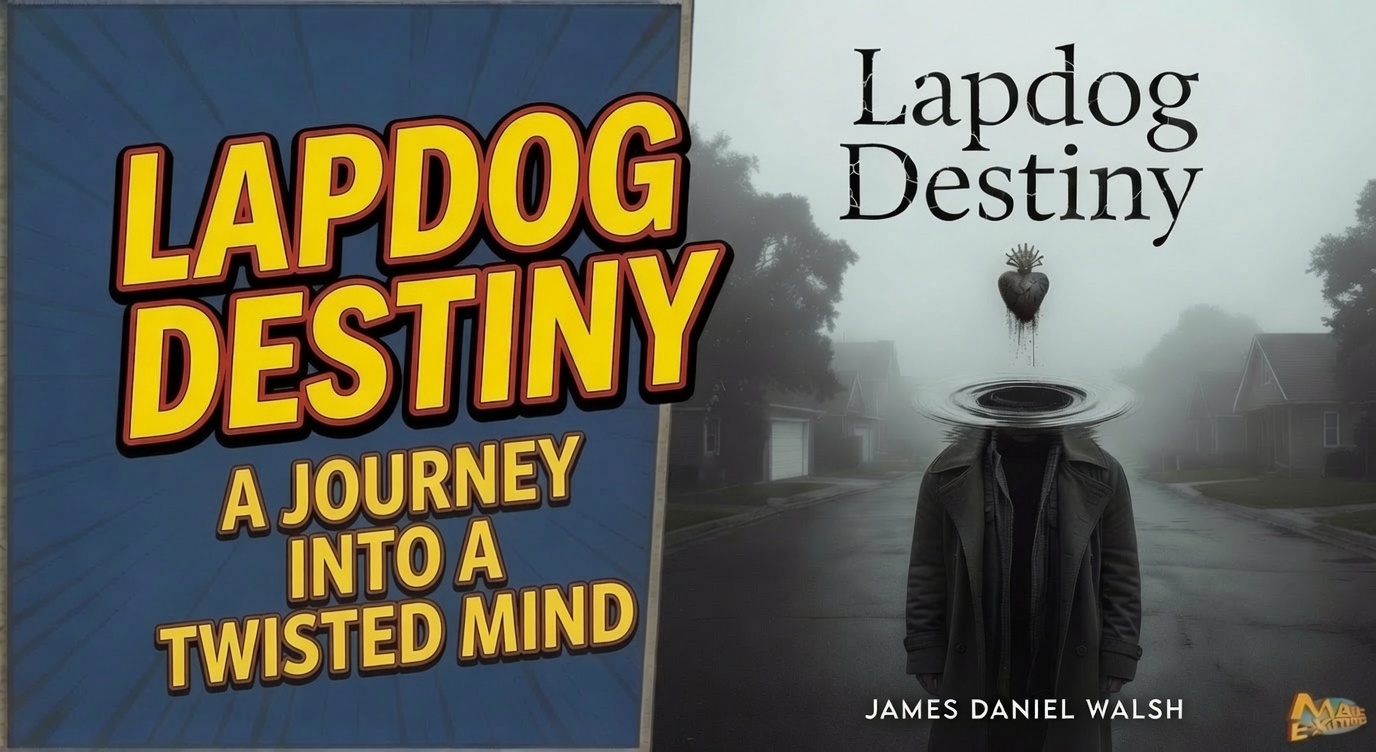
Lapdog Destiny: A journey into a twisted mind
July 28, 2026 in James' Corner
I started writing when I was five years old. From that moment on, I rarely let a day pass without putting pen to paper. Everything I wrote back then fit neatly into genres: horror, comedy, drama. I didn’t yet know there was a world beyond those tidy categories.
Then, at eighteen, fresh out of high school and burning with rage at the world, I wrote Lapdog Destiny: A Manic Expression Story. What poured out was something that refused to stay in any single box. Part revenge tale, part tender romance, part coming-of-age story, part horror, and part meditation on God and abandonment, this story is a raw descent into madness—existing as its own strange creation rather than conforming to genre conventions.
What Lapdog Destiny is about: Fresh out of high school and trapped in an abusive home, Charlie Edwards is a ghost in his own life. Abandoned by his friends after a failed suicide attempt, he drifts through a world that refuses to see him—until the day he discovers he can shed his skin and become anyone he wants.
What begins as a desperate search for happiness curdles into a violent hunt for retribution against everyone who turned their backs on him. But as the body count rises, a flicker of light appears: a girl who sees the man behind the masks and offers him a path back to humanity. Now Charlie faces a final, terrifying choice—embrace the love that could save his soul, or surrender to the destiny that promises him the power of a god.
The long, strange road to this release: Lapdog Destiny was my first real attempt at making a movie. In the fall of 1998, armed with a cheap consumer-grade digital camera, I started filming with myself in the lead role of Charlie. That version never got past the halfway mark of production. I tried again in 2001, this time focused more on directing (though I did play the supporting role of Steve). I finished that shoot, but the lack of budget and experience meant it was never festival-worthy.
When I decided to adapt Lapdog Destiny into a novella for the Manic Expression collection, I faced an interesting dilemma. At twenty-six, I was no longer the seething teenager who wrote the original. While I still understood Charlie’s pain, I also found myself thinking, “Jesus, kid… calm down!” I asked myself a difficult question: should I soften the rage and violence, or let my younger self speak unfiltered?
In the end, I chose not to censor the story. Softening Charlie or lecturing him felt like invalidating the very real pain I was processing when I originally wrote the story. Lapdog Destiny is a time capsule. It’s a portrait of a disaffected loner who lashes out at a world that ignored him. Charlie was never written to be a hero.
Many readers today will see Charlie as the textbook definition of an “incel.” I’ve never liked that word, even if I don’t agree with the behavior of those it applies to. A lot of young men enter the world filled with rage. I was fortunate enough to have writing as an outlet. Not everyone is so lucky.
I stand by Lapdog Destiny, even if I’m no longer as sympathetic to Charlie as I once was. Reading it now takes me straight back to a dangerous crossroads in my life. I hope it gives you some understanding of young men like him—toxic and broken as they may be.
Grab your copy today!
I’d love to hear your thoughts—do you enjoy stories with deeply unsympathetic protagonists, or do you prefer clearer heroes and villains?
See you next week for another dive into the Manic Expression universe.
James Daniel Walsh
by James
by James
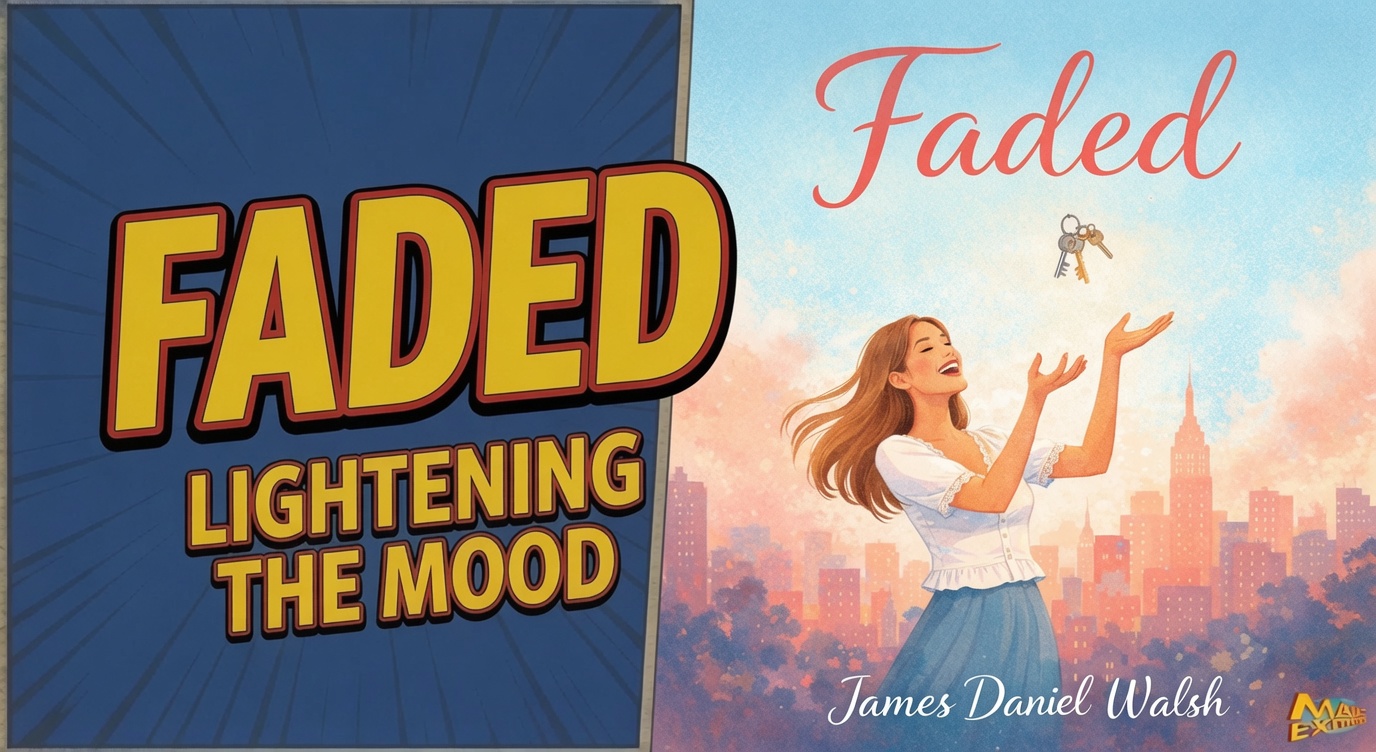
Faded: Lightening the Mood
July 21, 2026 in James' Corner
I have a reputation for telling darker, more serious stories—and yes, a lot of my work is bleak. But I also have a lighter side. Whether I’m playing a heightened version of myself in the Manic Expression animated movie or just shooting the shit with fellow Expressionists on a podcast, I know how to keep things fun.
Faded: A Manic Expression Story is a romantic comedy — one of three that live in the Manic Expression universe. While the other two lean into the male perspective, this one belongs entirely to Gabby Vasquez: a reluctant Hollywood screenwriter who’s been cashing big checks for mindless blockbusters while quietly longing to write something that actually matters.
If you’ve been following the releases so far, Faded will feel like a deliberate left turn. That’s the beauty of this universe—there really is something for everyone. Life is never just one genre. Bloodshot was a dark surreal thriller. The Last Spike was a gritty historical drama. Next to those, Faded might look like fluff… but trust me, there’s more weight to this one than it first appears.
What Faded is about: Ten years after escaping Lakewood High, Gabby Vasquez returns for her high school reunion as the most successful graduate of the Class of 1998 — at least on paper. She’s rich, respected, and completely hollow. The only reason she came home is to find the boy who once inspired her: Matt Stamper, her high-school best friend and the brilliant writer she always believed would change the world.
Instead she finds a broke single father washing dishes, cut off from everyone who once believed in him. Gabby offers him a lifeline — a place to live, time to write, and a shot at the dreams they both abandoned. As the two finally chase the future they once imagined, they discover their connection was never just friendship.
The long, strange road to this release: Faded started life as a screenplay that I wrote my senior year of high school. I had fallen in love for the first time, and I had fallen hard. She was my best friend at the time, and though the attraction was mutual things just didn’t work out. The timing was off for us, so I wrote a story where I projected myself a decade into the future, when the graduating class of 1998 would all regroup at Lakewood High School for our reunion. Funnily enough, no such reunion actually took place in 2008.
What did happen in 2008 was the first release of Manic Expression: A Collection. Faded became one of the stories from that original release, written now not by a teenager imagining adulthood, but by an adult deeply disappointed by how life turned out. This new version of Faded was a bit of wish fulfillment for me, giving a happy ending to a high school romance that, if I’m honest, I had not fully recovered from yet.
Of course, by the time I was Gabby and Matt’s age, I had a child in tow, something absent from my original vision of the story. At seventeen I had envisioned Matt as someone who never quite reached his potential. Revisiting the story in my late twenties, he became a single father, crushed under the weight of his responsibilities. Gabby wasn’t just taking on a romance here, she was taking on the prospect of becoming a mother.
Faded is also a story about artistic integrity, and what “selling out” actually looks like for an artist. Gabby writes dumb action movies because the pay is good. She feels like a fraud, one selling the public the poison of mediocrity. But Gabby’s sin isn’t writing blockbusters, its writing work she doesn’t actually believe in. Personally, I love a good brainless action movie, but you can always tell the ones that were made with love and the ones that were made for a quick buck.
Thirty years after I first dreamed it up in my childhood bedroom, Faded remains one of my favorite stories. It’s about reaching out a hand to someone in need, and how that single generous act can end up changing not only their life but yours in the best possible ways.
Grab your copy today!
Let me know when you start reading. I’d love to hear your thoughts — and especially how your own first love shaped the person you became.
See you next week for something truly weird!
James Daniel Walsh
by James
Constellation (original song)
July 15, 2026 in James' Corner
Constellation © James Daniel Walsh 2026
All lyrics written by James Daniel Walsh.
Realized using Suno AI by Seth Jentzsch.
From the album Sketches
by James
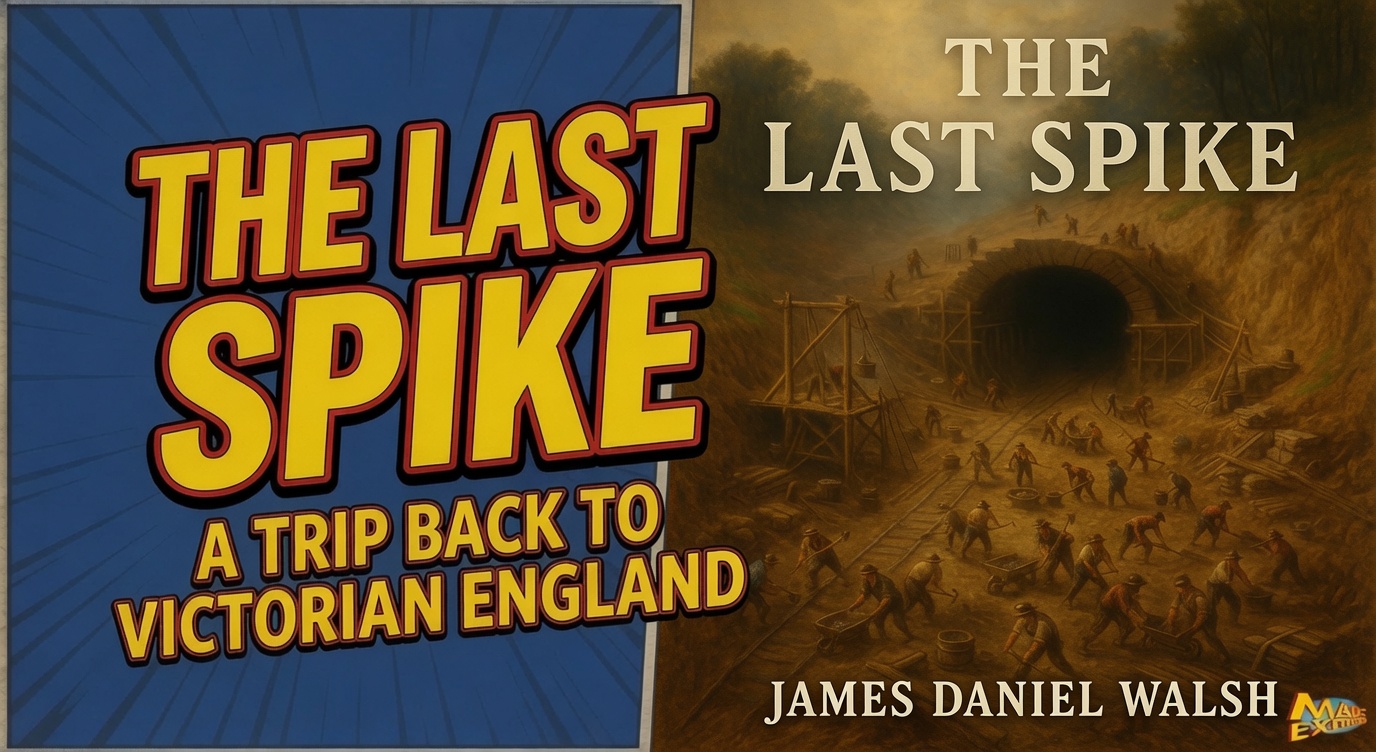
The Last Spike: A Trip Back to Victorian England
July 14, 2026 in James' Corner
While most of the stories being released in the coming months will be polished-up new edits of Manic Expression stories that have been in print dating back as far as twenty years, 10 new short stories are making their debuts. The Last Spike is the first.
Written in 2024, The Last Spike is the culmination of an idea that dates back to junior high school for me. A historical drama set in Victorian England, this story concerns the men who built the British railroad, better known as navvies (short for navigators).
If you bought Bloodshot last week, The Last Spike will offer you the first glimpse at the connections this shared universe has to offer. Every story, whether grand in scale or an intimate character piece, is part of the same millennium-spanning cosmology. While the bulk of the stories are set in the 21st century, there are many, like The Last Spike, that explore the past of this alternate timeline.
What The Last Spike is about: Set in 1843, The Last Spike tells the story of Edward Collins, a loving husband and father who wants to provide a better life for his family. Leaving his wife and children behind, he sets off from Ireland to England to seek his fortune as a railway navvy. Working in dangerous conditions and living in squalor, Edward tries to hold on to some sense of dignity.
The long, strange road to this release: Inspiration can come from the most unlikely of places. I first became fascinated with the railway navvies when I was 12 years old. I had just discovered the band that still to this day remains my favorite of all time—Genesis. They had just released their fourteenth studio album, We Can’t Dance, upon which was the sprawling ten-minute-long track “Driving the Last Spike.” This rousing epic quickly became one of my favorites, though I had no idea what the song was about. I assumed at first that it was about going off to war, only to discover in the liner notes that it was actually about… building a railroad?
Huh!?
But when I started thinking about it, laying track in the 1840s would have been like going off to war. This was dangerous work: blasting through mountains, moving tons of earth, all without modern construction equipment. These were unskilled workers being taken advantage of by an industry that saw them as expendable.
I had always wanted to write my own tale of the navvies, but the sheer scale of the story staggered me. I envisioned a grand historical novel with a cast of hundreds. At some point the story wound up on the scrap heap, as it felt too daunting to tackle.
Then, in 2024, I made the decision to write several new stories set in the Manic Expression universe. Given that framework, I suddenly saw how to tell my navvy story in a way that fit my writing style—a character study with the railway as the backdrop. I wasn’t writing an epic; I was writing a quiet story of one man searching for his own self-worth.
To tie The Last Spike into the larger Manic Expression universe, I decided to weave in the living emotions from Bloodshot and its sequels. My everyman lead would be Edward, who chronologically appears next in the story Day’s End as the incarnation of Courage. I even decided there was room in the story to include a cameo from Cindy, my villainous Bloodshot temptress, sowing the seeds of doubt 160 years before her encounter with Will Stevenson.
I also wove in a piece of my own family history — my great-great uncle was a renowned fiddle player in Ireland. Giving Edward that same talent and using it as his emotional anchor to home felt incredibly meaningful, a piece of my heritage I was finally able to explore.
To all you aspiring writers out there: Don’t let the scale of a story constrain you. I let the size of The Last Spike intimidate me for decades, but I am so happy I made it my own instead of what I felt it “should” be.
And now, more than thirty years after Genesis introduced me to the world of the navvies, I’m proud to release, for the first time, my love letter to those brave souls who worked and died to build the future.
Grab your copy today.
Let me know what you think of this new story. Did any of you have relatives who worked on the railroad? I’d love to hear your stories!
See you next week for something a little lighter.
James Daniel Walsh
by James
by James
Bloodshot: The Beginning of Everything
July 7, 2026 in James' Corner, Uncategorized
Bloodshot is not only the official launch of this independent rollout of all my work — it was the launch of me as a writer. Though it wasn’t the first story I ever wrote, it was easily the most important to my development as a storyteller.
Initially written in 2002 when I was only 22 years old, Bloodshot is the portrait of a young expectant father in extremis. My marriage was on shaky ground, I was grinding away in a dead-end job, and I felt woefully unprepared to raise a child.
The original concept was very different. I thought I was writing a vampire story — hence the title Bloodshot. But as the work progressed, the story of Will and Megan Stevenson evolved into something deeper and more existential. They don’t battle bloodsuckers. Instead, they confront the embodiments of their own emotions: the seductive Cindy (Doubt) and the haunting Smoke (Fear). You can read it as literal supernatural encounters, or as metaphors for the voices we all carry inside our heads.
What Bloodshot is about: Megan and Will Stevenson are young parents with big dreams, but their hopes are slowly being crushed under the weight of bills, responsibilities, and quiet resentment.
Then, into each of their lives, a stranger appears with the promise of renewed passion.
For Megan, it is Smoke — a phantom whose whispers push her to the edge of sanity.
For Will, it is Cindy — a siren who offers the ultimate liberation.
One night will force them to choose between the broken life they know… and the beautiful oblivion that waits just beyond.
The long, strange road to this release: Bloodshot started life as a screenplay. Cameras rolled in 2003, with me directing and starring as Will. My wife at the time played Megan, and our newborn daughter played baby Joy. We shot for six grueling months… only for most of the footage to be stolen by our editor. I foolishly didn’t have backups, and a huge chunk of the film was lost forever.
In 2006 I tried again. To legitimize a new production, I adapted the screenplay into a novella and self-published it through Xlibris so I could tell potential backers it was “based on a novel.” That edition came out in early 2006. Incidentally, do not buy that version of the book, which is still available. If you’re searching for this new release, it’ll be called Bloodshot: A Manic Expression Story.
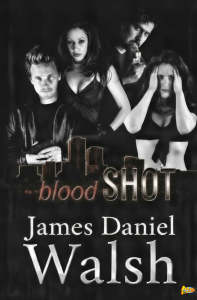
We cast the film with the incredible actors you now see on the new cover: Elizabeth Williams as Megan, Josh McDermott as Will, Mor Vick as Cindy, and Yuri Balder as Smoke. I even got a soft “maybe” from Willem Dafoe’s agent for him to play Sergio. An initial meeting with Christopher Münch (director of the award-winning The Hours and the Times) seemed promising, but he was ultimately unable to commit. I went with Leo Zanis (Approaching Heaven) to direct.
Meetings with producers followed throughout 2006, but every offer came with the same catch: they loved my cast for (unpaid) workshopping… but planned to replace them with bigger names once the money was real. I couldn’t do that to people I’d come to see as friends. I wound up walking away from three potentially lucrative but highly unethical opportunities.
Bloodshot went on to become the lead story in the first Manic Expression two-volume collection in 2008 — the nexus point for the entire connected universe. I’ve been building on that foundation ever since.
In 2012, Manic-Expression.com launched and exploded in popularity. In 2013, a dozen incredibly talented members helped me turn Bloodshot into a full audio drama — finally giving the story the cast performance I’d always envisioned.
Twenty-five years after I first tried to tell Will and Megan’s story, I’m still here. Still pursuing the dream. Bloodshot is a story about not giving up on your dreams — even when the world (and your own doubts) tell you to quit.
And now it’s back, in a new edition, as the first release of my full catalog: 50 short stories, 7 collections, 3 novels, a children’s book, and more.
If you’ve ever felt trapped between responsibility and the life you imagined… if you’ve ever fought your own inner demons of doubt and fear… this one’s for you.
Reply and let me know when you start reading — I’d love to hear your thoughts.
Thank you for being here at the very beginning of this rollout. New releases every week!
Here’s to never giving up,
James Daniel Walsh
by James
My Writing Philosophy
June 30, 2026 in James' Corner
In the summer of 2024, I stood at a crossroads.
My short story collection had been rejected outright by literary agents. My first novel earned me representation but couldn’t find a publisher, despite generous praise from editors at all the major houses. My agent then rejected my second novel and promptly ghosted me. Meanwhile, the animated Manic Expression movie had dragged on for years longer than expected. Consequently, I hadn’t written a word since 2021.
Out of sheer creative boredom, I started tearing apart and reassembling my short stories. There were forty-one of them, all set in the same interconnected universe spanning a thousand years. I wondered what would happen if I rearranged them into chronological order and turned them into chapters of a single book. Almost immediately I saw gaps, so I wrote nine new stories to fill them.
Because I was playing in a sandbox I already knew held zero appeal to agents, I stopped worrying about what they might think. The creative paralysis that had gripped me for three years finally lifted. I felt free.
More than free—I felt the full weight and scope of what I’d built. Nearly thirty years of work. Not commercial, especially not in the age of the algorithm. But ambitious. Bold. Audacious. For some, those words are synonyms for “no damn good.” For me, they started to feel like something worth sharing.
In the fall of 2025, I decided to go for broke. I would give every single thing I’d ever written one final, uncompromising pass. Using a site called Atticus, I formatted it all into clean, professional editions: fifty short stories, a children’s book, two novels, six collections, and the newly chronological Manic Expression book. I was going to release everything—permission from the gatekeepers be damned.
That left only one unfinished piece: my third novel, Backstabber.
I’d been tinkering with it since 2019, but I’d lost my nerve. I knew the story I wanted to tell, but I kept trying to tell it in a way that might please agents—edgy but not too edgy, thrilling but not too thrilling, original but not too original. I would stare at the screen for hours at a time, agonizing over single words, trying to guess what they wanted.
In late January of this year, with everything else finally in order, nothing stood between me and the book anymore. So I sat down and wrote Backstabber without a single thought for what an agent might find acceptable. I knew it would be published no matter what—traditionally or as part of my independent rollout. That certainty gave me room to breathe. For the first time in years, I stopped second-guessing myself.
I won’t spoil Backstabber here (its release is still a year away), but I will say this: it’s not for everyone. It’s a horror novel braided with family drama, where the supernatural elements remain deliberately ambiguous—real or psychological, the reader decides. It offers no easy answers. I won’t claim it’s brilliant; that will be up to you. But I will say it’s challenging.
By the end of the first chapter, I knew my chances of landing an agent with this book were close to zero. One of the central characters is a teenage boy who brutally bullies an autistic classmate. The language he uses is vulgar and ugly because that’s who he is. Certain words appear not for shock value, but because they’re necessary to show the rot inside him. I knew most agents would stop reading right there. So be it.
I have never shied away from the world’s ugliness in my writing. I use stories to try to understand cruelty, and that requires confronting it head-on. There was a time when that kind of honesty was celebrated. Today, the algorithm has made publishers, studios, and producers timid. They want safe, bland, inoffensive work. Their caution doesn’t seem to be improving sales.
Writing Backstabber wasn’t easy. The words didn’t flow the way they once did. I had to unlearn years of received “wisdom” from industry insiders. I wasn’t setting out to break rules—just to ignore them. I pushed myself, stretched my imagination, and finally wrote the story I needed to write.
I finished the first draft in late April. I’ve read it through a couple of times and will read it many more. I’ve also begun querying agents. So far, silence—as expected. It doesn’t matter. Backstabber has a release date: July 13, 2027. One way or another, it’s coming out.
To every young writer reading this, here is the advice I wish someone had given me sooner:
Write the story you actually want to write. Edit it relentlessly. Read it until you’re sick of it, then read it again. Let others read it, and listen to their criticism. Polish it until it shines. Craft a rock-solid query letter. Then, every single day, submit to one agent on Query Tracker—just one, to avoid burnout.
Do this for a full year.
While the rejections roll in, keep polishing. Format the book professionally with Atticus. And at the end of that year, if no agent has said yes, self-publish.
By then you will have queried 365 agents. If none of them wanted it, it’s time to go it alone.
And when you do, don’t just upload to Amazon and hope. Start a Substack. Build a presence on Instagram, TikTok, YouTube, Patreon—wherever your people are. You are now your own agent, your own manager, your own champion. Don’t say “I think this book is pretty good.” Sell it like you mean it. Call it bold. Riveting. Spellbinding. Enthralling. Believe in it fiercely, because if you don’t, no one else will.
The gatekeepers don’t want you thinking this way. Their business model depends on you believing they’re the only path to an audience. But we don’t need their permission anymore.
Not every book will become a bestseller. Many will disappear into the noise. But they will exist. They will have a chance to reach someone, somewhere, someday. That’s infinitely more than they’ll ever have sitting forever on your hard drive, waiting for someone else to declare you good enough.
You’re good enough right now.
Join me back here on July 7 for Day One of the big launch, when I’ll roll out the first story in this wild universe: Bloodshot.
James Daniel Walsh
by James
From Querying Hell to Creative Freedom
June 23, 2026 in James' Corner
In 2018, the Loft Literary Center in downtown Minneapolis held its annual writers’ conference. For anyone unfamiliar, a writers’ conference is where literary agents from across the country gather to give lectures and take pitches from aspiring authors. It’s not cheap. I paid $500 to attend.
I arrived confident and prepared. I was no longer a nobody—I was the founder of Manic-Expression.com. The year before, I had expanded my short story collection into a six-volume series, an interconnected universe of tales spanning a full millennium. I wasn’t just bringing a book to this conference; I was bringing an entire cosmology. Surely these agents would be clamoring for something so original.
…Right?
Not quite. My first pitch on day one was a disaster. Before I could even finish, the agent cut me off: “No one reads short story collections.” I’ve told that story many times since, and I’m always met with stunned looks from people who insist they love short story collections.
Worse, she repeated something I had already heard twice that day in lectures from two other agents: “I’m looking for The Hunger Games.” She didn’t mean the actual book, of course. She meant the next Maze Runner or Divergent—a slick imitation. As the other agents had been quick to note in their sessions, they wanted their Katniss to be a girl of color, or trans, or a lesbian. I got the distinct impression they didn’t want me writing those books.
That night, I rewrote my pitch. The next day, I no longer led with a six-volume collection. Instead, I pitched just the first book and compared it to the fractured, layered world of Cloud Atlas. The agent liked that. She asked for sample pages.
The third agent was indifferent, but I didn’t care. I had a “maybe” from a real literary agent. This was it. The beginning!
Again… not quite. After reading the pages, she passed. It wasn’t enough like Cloud Atlas for her taste. Rather than feeling crushed, I felt something click: if I wanted an agent, I needed to give them what they actually wanted—a novel.
That winter, I sat down to write Hurt. I had never attempted a full novel before, and the prospect was intimidating. But once I started, the pages came easily. I crossed 300 pages without much trouble. Despite how it may come off as I attempt to sell my stories, I’m brutally critical of my own writing. I can edit something for thirty years—literally—and still feel it’s not quite right. So when I say Hurt is the best thing I’ve ever written, you can trust that I mean it.
I went all in. I did deep research, conducted extensive interviews with people in the fields I was writing about, and paid for two professional edits before querying. I polished my query letter with help from critically acclaimed author William Kent Krueger, who generously responded to a cold email. A full year after that writers’ conference, I felt as prepared as any writer could be.
What followed was more than 100 rejections.
Then, in May 2020, in the middle of a global lockdown, an agent—we’ll call her Kathy—reached out. While sheltering at her summer home, her daughter had read Hurt. She came to her mother in tears and said, “This is the one. You must represent this book.”
I was floored. It was finally happening!
Well… not quite.
Kathy sent Hurt to all the major publishers—Penguin, HarperCollins, Simon & Schuster, and the rest. They all passed. But she forwarded their rejection letters and urged me to “focus on the positive.” There was a lot of positive. The emails dripped with praise:
“Hurt is an amazing piece of work. The writer’s voice is so original. The characters jump off the page. The setting is unlike anything we’ve seen. It’s wonderful… magnificent… No, thank you.”
While Kathy tried to keep my spirits up, the effect was the opposite. I kept hearing those agents from the conference: “We want The Hunger Games.” They had been more serious than I realized.
Undaunted, I wrote my second novel—an adaptation of Mozart’s Don Giovanni transplanted to 1970s Los Angeles. Where Hurt was grounded and gritty, this one was big, splashy, and operatic. If they didn’t know how to market Hurt, surely a neon-drenched gothic story with built-in name recognition would click.
I never got the chance to find out. Kathy rejected Don Giovanni. She seemed almost insulted by it. She told me I was free to submit it elsewhere, but if I did, she would drop me as a client. By then, I suspect she had already made up her mind. The emails stopped. That was five years ago. I never heard from her again—no “this isn’t working out,” no goodbye. The agent I had signed a contract with simply ghosted me.
My confidence shattered. I had planned to dive straight into my third novel, Backstabber, but suddenly saw no point. I spent a few months sending both my novels to other agents, but after another wave of rejections, my heart wasn’t in it. There’s a reason they call your query a “submission.” You grovel in carefully crafted letters to strangers, pretending to be awed by them, all while knowing your odds are worse than winning the lottery.
I didn’t write anything for three years. I tried repeatedly to start Backstabber, but I was paralyzed. I no longer knew how to write what they wanted. Backstabber wasn’t The Hunger Games. I was terrified of saying the wrong thing—of offending people who seemed more interested in virtue signaling than in a compelling story. So I gave up.
Then, in 2024, out of sheer boredom, I returned to my Manic Expression universe. I re-ordered the stories chronologically and wrote nine new ones I had been carrying in my head for years. I knew no agent would touch them. If these stories were ever going to reach an audience, it would be because I released them myself.
That realization was incredibly freeing. I was writing for me, not for a gatekeeper. This work was mine. I owned it. I decided its fate.
It took me a full year to edit the new, massive chronological version of Manic Expression. A year of reading my life’s work from beginning to end. A year of sharing the stories with others and hearing how much they moved them. I learned something important in that year: I had created something truly impressive. A vast interconnected collection of short stories, two highly original novels, and many other pieces I could be proud of—even if they never landed me a traditional deal.
And so, free from the pressure of impressing an agent, I turned my full attention to Backstabber and to launching my life’s work on my own terms. But we’ll talk about that next week…
We’re just two weeks away from the first release in this rollout. Thank you for joining me on this journey.
James Daniel Walsh
by James
My Journey as a Writer
June 16, 2026 in James' Corner
In three weeks, I begin a 66-week journey: one chapter of my life’s work released every single week.
Books. Music. Movies. Everything I’ve poured myself into for three decades, laid bare, week after week.
Most of you know me as the founder of Manic-Expression.com. Today I want to introduce myself properly—as a storyteller—and show you exactly why I’ve made this my life’s obsession.
It started on a rainy afternoon in 1985. I was five years old, stuck inside at my grandparents’ house, restless and bored. My grandmother handed me a pad of blue paper to keep me occupied. On the back of a Batman comic, there was a clever ad for the brand-new striped Chips Ahoy cookies—twelve panels showing the colorful stripes slowly melting down the cookies as they baked.
I cut every panel out, pasted them into my blue pad, and wrote a short story about a kid impatiently waiting for his mom to finish baking cookies. That silly little experiment lit the first spark.
Two years later, in the summer of 1987, the spark caught fire. My teacher held a year-end raffle and I won another blank pad of paper. I’d planned to draw a comic book, but I was never much of an artist. So instead, I started writing the story I wanted to tell.
Once the words started flowing, I couldn’t stop. By the end of that sunny August afternoon, the entire pad was full—and I had made a decision: I wanted to grow up to be a writer.
I wrote constantly for the next eight years. Nothing profound, just the kind of messy tales kids tell when they’re figuring out the world. Then, in 1993, everything changed. I discovered Clive Barker. For the next two years I devoured his work—often books that were probably too mature for me, but they stretched my imagination and gave me something worthy to chase. That fire produced my first two “novels”: Architect of Destruction (1995) and Backstabber (1996).
Looking back, they weren’t masterpieces. But for a teenager, they were wildly ambitious. And to my shock, people actually responded. Friends praised them. Kids I had never met tracked me down with Xeroxed copies, telling me how much they loved the stories. My creative writing teacher even read Architect of Destruction aloud to the entire class as a way to inspire them, to show them what the too might achieve.
For the first time, I had an audience. The feeling was addictive.
After high school, I chased the exploding indie film scene of the late ’90s. Over five years I made five short films and two features. Technology and money were constant barriers, but one project refused to die: a deeply personal story called Bloodshot.
When the original film fell apart in post-production, I couldn’t let it go. In 2006 I adapted the script into a novella, self-published it, and used it as a calling card to relaunch the project properly—with professional actors, a director, and even a soft “maybe” from Willem Dafoe’s agent for a small role.
We got meetings. We got interest. But I quickly saw the ugly machinery of Hollywood at work—the casual willingness to exploit the very actors who had trusted me. I walked away from several tempting offers rather than sell them out.
Bloodshot didn’t set the world on fire as a book, so plans for a trilogy felt pointless. Instead, I decided to publish all three stories together. But if this was going to be my final bow in publishing, I wanted to include other stories I loved—stories that spanned horror, romance, science fiction, and more.
To make the collection feel cohesive, I set them all in the same shared universe. The wild tonal shifts became a feature, not a bug. I called the book Manic Expression.
By 2010 I was writing a popular weekly column on That Guy With The Glasses under the screen name Manic Expression. When the site’s blog section was sidelined, I nearly walked away in protest. Then my friend Megan Wessels (the FanFic Critic) quietly built me a website and named it Manic Expression.
I gathered a crew of talented cast-offs from TGWTG, and word spread. Creators from around the world joined our supportive, chaotic, beautiful community.
Manic Expression reignited my love of writing. I wrote scripts for our audio dramas, expanded the original collection, and released a much more ambitious six-volume edition in 2017. In 2018 I took the leap and attended my first major writers’ conference, ready to pitch to agents and chase the big leagues.
What happened next… well, that’s a story for another week.
This 66-week series is my way of opening the vault. No more waiting for permission. No more perfect timing. Just the work—raw, honest, and finally free.
I hope you’ll join me for the ride.
James Daniel Walsh
by James
The Complete Works of James Daniel Walsh – Release Schedule
June 10, 2026 in James' Corner
Bloodshot (novella) – July 7
The Last Spike (short story) – July 14
Faded (novella) – July 21
Lapdog Destiny (novella) – July 28
Debt (short story) – August 4
Pine Avenue (novella) – August 11
Keeping Out the Real World (short story) – August 18
Manic Expression: A Collection – Reflections (collection of the previous 7 stories)— August 21
Nothing (short story) – August 25
Unbound (novella) – September 1
The Curious Demise of Mister Poe (short story) – September 8
Futility (short story) – September 15
Requiem (novella) – September 22
Spoiled Meat (short story) – September 29
Jupiter Sacrifice (short story) – October 6
Day’s End (novella) – October 13
Manic Expression: A Collection – Ghosts (collection of the previous 8 stories) – 10/16
El Cazador (short story) – October 20
Night Fire (novella) – October 27
The Moldau (short story) – November 3
Director’s Cut (novella) – November 10
Memorial Day (novella) – November 17
The Destiny Factor (novella) – November 24
Pomegranate Sky (short story) – December 1
Manic Expression: A Collection – Heroes (collection of the previous 7 stories) – 12/4
Another Time (short story) – December 8
Grim (novella) – December 15
Peep Show (novella) – December 22
The Price of Fame (short story) – December 29
Blink (short story) – January 5
Ripples (novella) – January 12
Mind Games (short story) – January 19
Night and Day (novella) – January 26
Burning Daylight (short story) – February 2
Manic Expression: A Collection – Obsessions (collection of the previous 9 stories) – 2/5
Pictures at an Exhibition (short story) – February 9
Sea Legs (short story) – February 16
Sweet Nothing (novella) – February 23
Prayer for a Holocaust (short story) – March 2
Baptism (novella) – March 9
Vows (short story) – March 16
The Ten Loves of Peter Collins (short story) – March 23
Programmed for You (short story) – March 30
Dark Heart (novella) – April 6
Tragedy (short story) – April 13
Manic Expression: A Collection – Tenderness (collection of the previous 10 stories) – 4/16
Consumed (short story) – April 20
Lapdog Dynasty (novella) – April 27
Confessions of a Soon-to-be-Zombie (short story) – May 4
Plastic Libertine (short story) – May 11
The Quitters (short story) – May 18
Afterglow (short story) – May 25
Beyond Zero (short story) – June 1
Entangled (short story) – June 8
Never More (novella) – June 15
Manic Expression: A Collection – Apocalypse (collection of the previous 9 stories) – 6/18
Manic Expression: Millennium (collection of all Manic Expression stories) – June 22
Manic Expression: The Visual Guide (companion book for Manic Expression: Millennium) – June 29
Backstabber (novel) – July 13
Dreamland After Dark (children’s book) – July 27
Sketches (EP album) – August 3-6
Don Giovanni (novel) – August 10
Millennium (short story prologue to the Manic Expression universe) – August 24
Technicolor (EP album) – August 31 – September 3
Hurt (novel) – September 7
Manic Expression (animated feature film) – September 17


