@james

by James

by James
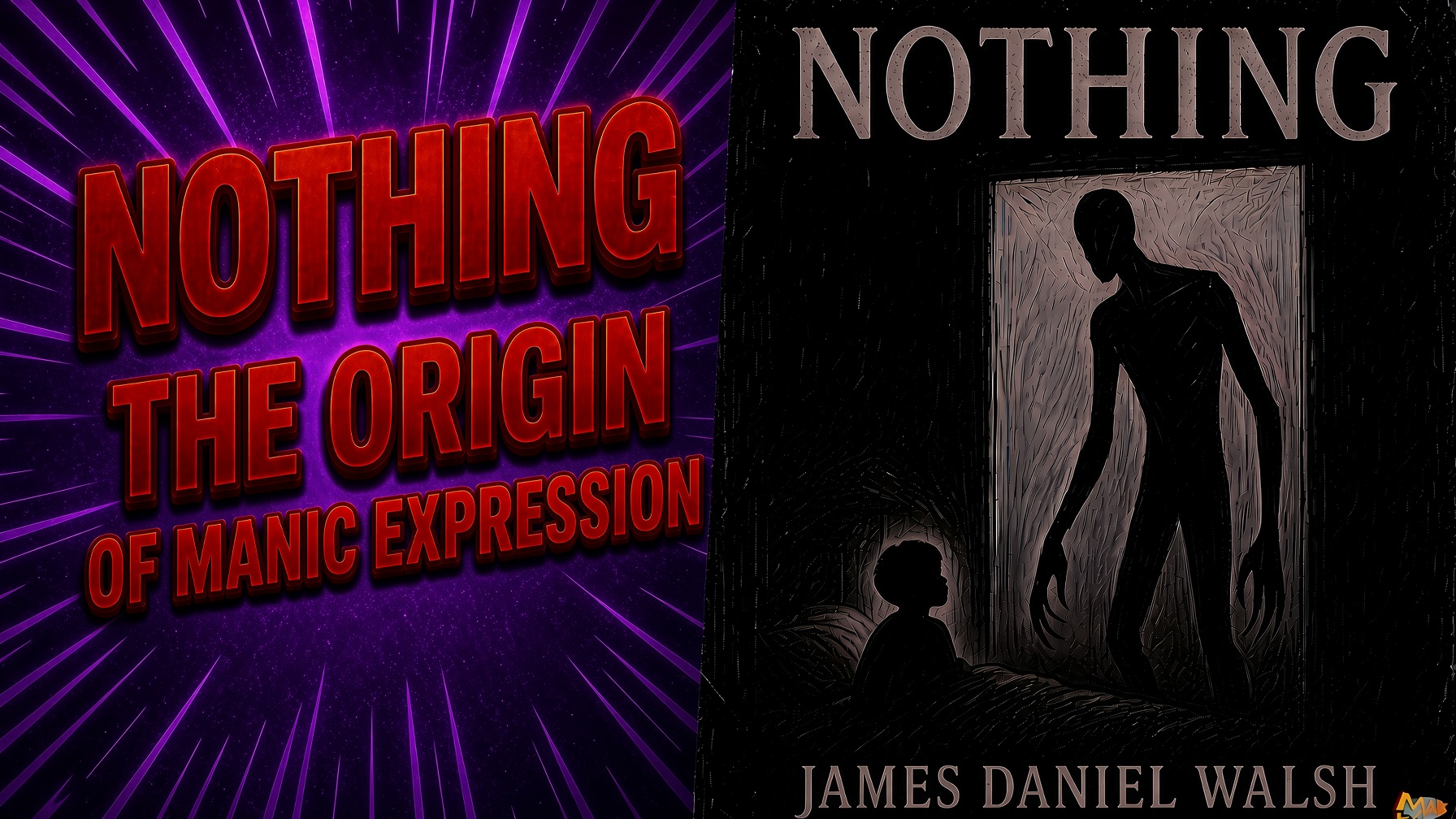
Nothing: The origin of Manic Expression
August 25, 2026 in James' Corner
Welcome to Phase Two!
Today I’m taking you all the way back to 1997—my senior year of high school. I sat in class doing what I usually did in school: writing instead of paying attention to the lesson. On that particular autumn day, I began the short story that would become Nothing: A Manic Expression Story, with no idea I was laying the foundation for my life’s work.
Outside of minor tweaks over the years, Nothing has remained largely untouched from the version I wrote thirty years ago. There is a raw, teenage angst to it that I wouldn’t want to neuter through an adult lens. I still consider it one of the best things I’ve ever written—the moment I truly stepped up my game as a writer.
While my original concept for the character of Nothing was a metaphor for depression, over time that ghostly figure emerged as the big bad of the entire Manic Expression universe. When the stories are read chronologically, we begin with Nothing and we end with Nothing. Its sinister influence weaves through the millennium, whether our characters realize it or not.
What Nothing is about: The story follows Timothy from age five to twenty-one. As a young boy he is haunted by a specter that manipulates his senses and sends him into nightly panics. Throughout childhood and adolescence, he feels the presence of this being, which he comes to call Nothing. Inspired by the haunting, Timothy gains a reputation as a gifted painter and finds friends and admirers. But Nothing always lingers at the edge of his vision, waiting to take everything away.
The long, strange road to this release: As I mentioned, I view Nothing as a metaphor for depression, but the first few pages—set when Timothy is five years old—are entirely autobiographical. The voices. The shrinking room. The shadowy figure in my parents’ bedroom. Those are all real memories, written exactly as I remembered them.
Do I believe my childhood home was haunted? Probably not. I suffered from insomnia at a very young age, and my imagination was overactive. Still, I don’t entirely rule out the possibility that my personal Nothing was real. As long as I lived in that house, I remained scared to enter that back bedroom in the dark.
By the time I wrote those memories down and built a story around them, I was trying to exorcise the demon I would later recognize as clinical depression. I wasn’t diagnosed until my late thirties, but my adolescence was plagued by dark thoughts and suicidal ideation. Nothing was a panicked, desperate cry for help. I genuinely believed I was on the same tragic path as Timothy and would inevitably share his fate.
Over the years I’ve made many revisions across the Manic Expression stories. Nothing has always required the fewest changes. That teenage voice is authentic, raw, and strangely assured. As I say that, I feel like I’m praising someone else entirely. The author of Nothing is not the man I am at forty-six. I could never write that story today. It belongs to the seventeen-year-old hunched over his school desk, ignoring his teacher while trying to make sense of the storm inside him.
Nothing is the first story of Phase Two. While the previous releases led to the collection Reflections, this one kicks off Volume Two—Ghosts.
Grab your copy today!
Let me know what you think of this new story. I’d love to hear any ghost stories (or childhood nightmares) from your own youth.
See you next week for another new release!
James Daniel Walsh
by James
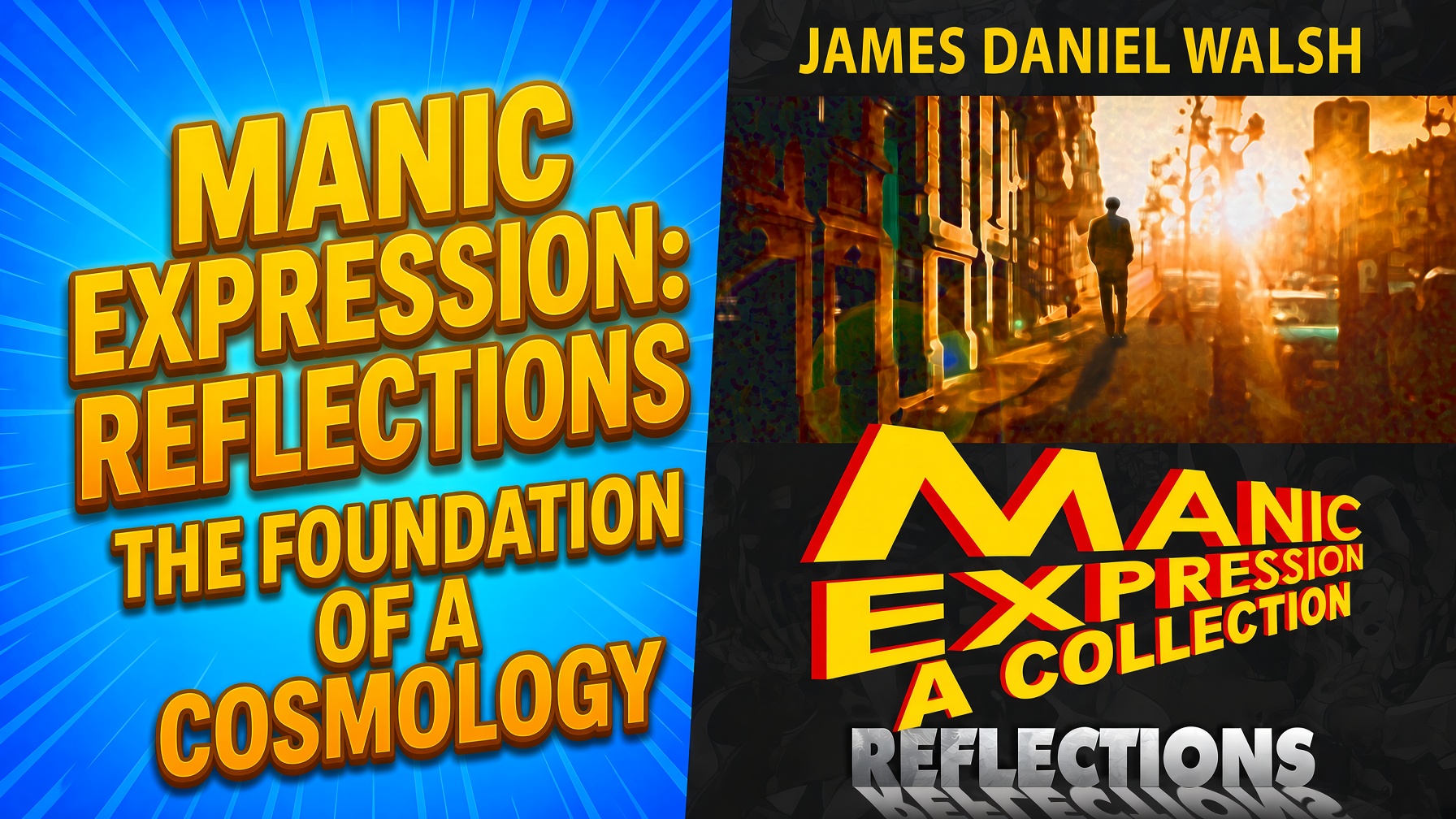
Reflections: The foundation of a cosmology
August 21, 2026 in James' Corner
Phase One of this massive release slate has officially come to an end. Seven interconnected stories, gathered together in a single volume—and this is only the beginning.
Manic Expression: A Collection – Reflections brings together Bloodshot, The Last Spike, Faded, Lapdog Destiny, Debt, Pine Avenue, and Keeping Out the Real World as the opening book in a six-volume anthology.
What Reflections Is About: At its heart, Reflections follows a tight-knit group of childhood friends as they navigate the rocky road to adulthood. Some find joy. Others encounter only sorrow. As they journey from lost boys to struggling fathers, each must confront extraordinary circumstances in their search for meaning, love, and identity. Together with the volumes still to come, these stories form a sweeping saga of families, friends, lovers, murderers, monsters, and gods.
The Long, Strange Road to This Release: The decision to weave all my stories into one shared universe started as simple necessity. The original 2006 release of Bloodshot didn’t exactly set the world on fire, so I scrapped my plan for standalone sequels and decided to publish them as a collection instead.
I was also deeply attached to Lapdog Destiny and wanted to include it in case this turned out to be my last hurrah in publishing. The only problem? It had nothing to do with the Bloodshot trilogy. That’s when the idea struck: tie everything together in a single shared universe. Why stop there? I began pulling in other stories I felt deserved to be published. From that spark, Manic Expression was born.
The first edition appeared in 2008 as two volumes. By 2017, I had written enough new material to expand the project into six distinct volumes, each with its own theme. Reflections became the most personal of them all—the stories closest to my own life and the characters most rooted in my journey.
The name Manic Expression eventually came to define far more than a book series. It led to the online community that has meant the world to me, and soon it will appear on an animated film as well. Twenty years ago I could never have imagined where those two simple words would take me.
Grab your copy today!
Hit reply and let me know when you start reading—I’d love to hear your thoughts and reactions.
Thank you for being part of this journey. Come back next week as we kick off Phase Two!
James Daniel Walsh
by James
by James

Constellation: Star Crossed Love in three forms
August 19, 2026 in James' Corner
The Irish have a saying: a face without freckles is like a night without stars. In Gaelic, the affectionate word for freckles is bricíní, meaning “little stars.”
“Constellation” is the first song I’ve released, in three distinct forms. I was drawn to the modern myth that the gods sprinkled the Gaels with freckles—little stars—so they would never forget the heavens on their misty island. That image became the perfect metaphor, in my mind, for star-crossed lovers.
Finding someone who truly loves you—someone who is a genuine positive force in your life—and then not being able to be with them could easily make for a bitter song. I wanted “Constellation” to feel different. It is about counting the blessing of having met someone that special, even when the relationship you want isn’t possible.
When Seth Jentzsch and I first started bringing my lyrics to life with Suno, I immediately saw the chance to show how arrangement and performance can change the meaning of the same words. Each of my ten songs will eventually appear in three versions across the albums Sketches, Translations, and Technicolor.
Here’s how the three versions of “Constellation” differ:
Sketches: This is the closest to my original vision. An achingly romantic love song filled with gratitude even in the face of separation. It begins quietly—just voice and guitar—then builds into something more rousing. I especially love the whistle that runs through it. It feels like pure joy at having found someone so wonderful.
Translations: The idea for a foreign-language album hit me while listening to “Constellation” specifically. I thought, This would be fantastic in French. My most unabashedly romantic track felt right in the language most associated with romance. The whistle is gone, but the lyrics soar more than in any other version. The narrator belts the chorus with sweeping passion. This may be the most purely romantic take of the three.
Technicolor: I call this the “coffee house take.” Played acoustically, it conjures a small café and someone on a stool in the corner with a guitar. Where the Sketches and Translations versions carry a bittersweet edge, this one is pure optimism—someone singing with real joy in their voice, simply glad to have found the love of their life, even if they can’t be together.
Which version of “Constellation” did you prefer? And have you ever had a romance that didn’t quite work out, but you’re still grateful to have known that person?
Let me know in the comments.
Next week I’ll drop a brand new song. Hope to see you then.
James Daniel Walsh
by James
Keeping Out The Real World
August 18, 2026 in James' Corner
If you’ve been picking up my stories week after week, you’ve probably caught the subtle Easter eggs scattered throughout the Manic Expression collection. Most have been quiet nods—nothing that pulls you out of the moment. Today, though, the previous six stories all collide.
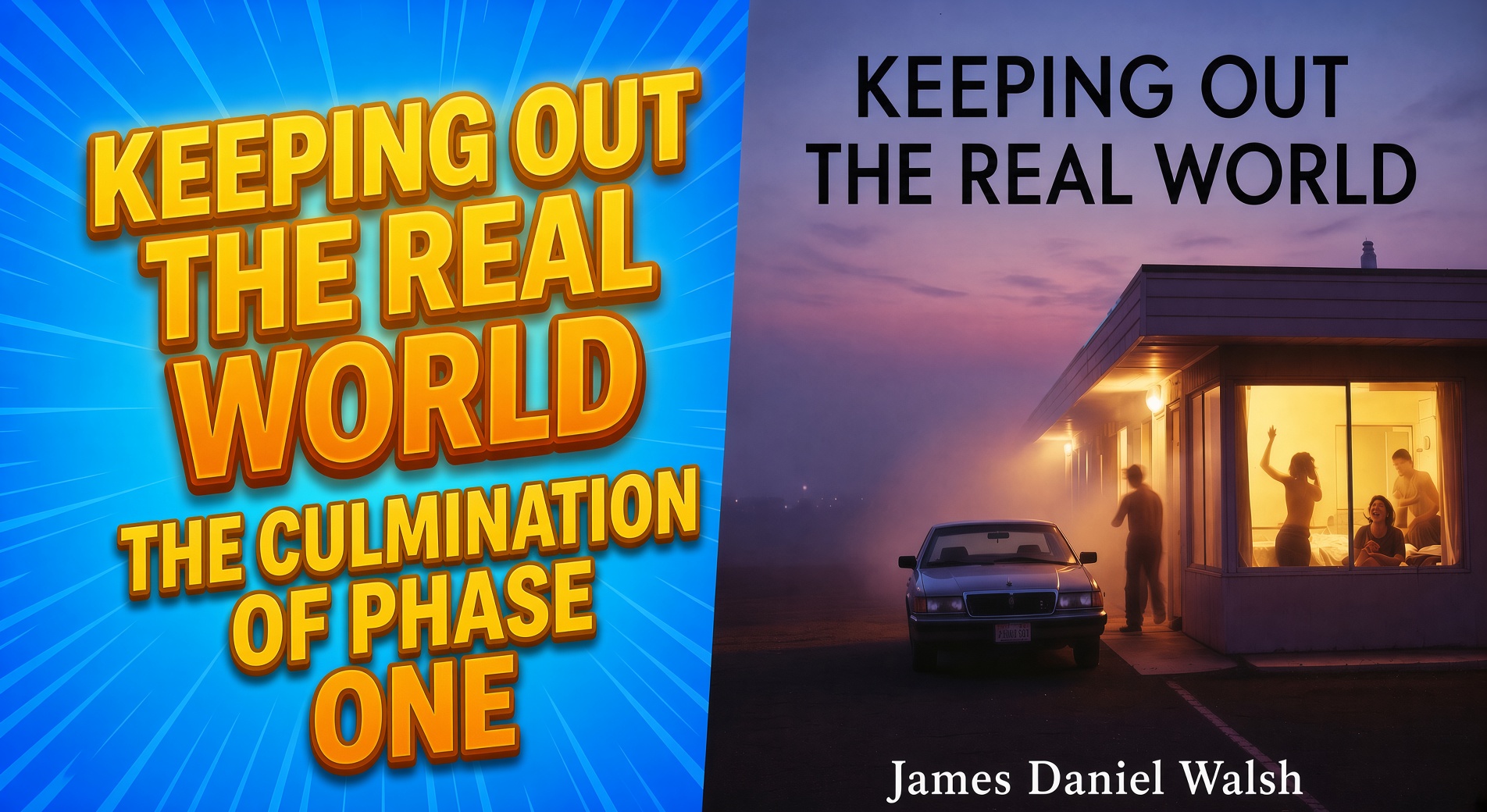
Keeping Out the Real World: A Manic Expression Story is a short, comedic piece starring younger versions of Will (Bloodshot), Matt (Faded), Frank (Debt), and Peter (Pine Avenue). Set in 1999 when the four friends are just nineteen, it follows one wild road trip that sends each of them down the paths we’ve come to know.
What Keeping Out the Real World is about: Matt, Will, Peter, and Frank are high-school friends struggling to find their footing as adults. They head to Santa Barbara for a concert, then hole up in a cheap hotel room with plenty of weed and booze to keep the real world at bay. But when shocking news hits, each of them is forced to confront the same big question: What is life about—and what am I going to do with mine?
The long, strange road to this release: Keeping Out the Real World began life as a short film I shot in college around 2000. My friends and I rented a hotel room, used real alcohol and weed, and made a ten-minute movie on the cheap. The result… Well, it wasn’t great.
By 2006, while assembling the stories for Manic Expression: A Collection, I saw an opportunity to resurrect that failed student film. I replaced the four nameless stoners with younger versions of my recurring characters, used a pivotal scene from Lapdog Destiny as the crux of this story, and explored how these four became the men readers meet in their later stories.
As is probably obvious, these four characters are the ones I relate to most. They’re all pieces of who I was in my twenties—young men without parental support, trying to figure out how to survive. The romantic (Peter). The artist (Matt). The fighter (Frank). The burnout (Will). Putting these four versions of myself in a smoky hotel room, half-drunk and very high, trying to figure out the meaning of life, felt like the perfect way to tie their stories together.
Nearly three decades have passed since we shot that terrible student film. I hope Keeping Out the Real World has evolved into something deeper while still capturing that wild, exuberant spirit of youth right before adulthood swallows you whole.
Grab your copy today!
I’d love to hear your thoughts—what was a moment from your youth that changed everything?
Look for Manic Expression: A Collection – Reflections (the complete set of all seven stories from Phase One) on sale this Friday!
James Daniel Walsh
by James
by James
by James
Pine Avenue: A Love Letter to my Hometown
August 11, 2026 in James' Corner
For some people, a hometown is just the place they grew up. For me, Long Beach, California, is a central part of my identity. It’s the beating heart of Manic Expression—the backdrop for most of the fifty stories in the collection. From the beginning, I wanted to do for Long Beach what Woody Allen did for New York: make the city itself a living, breathing character.
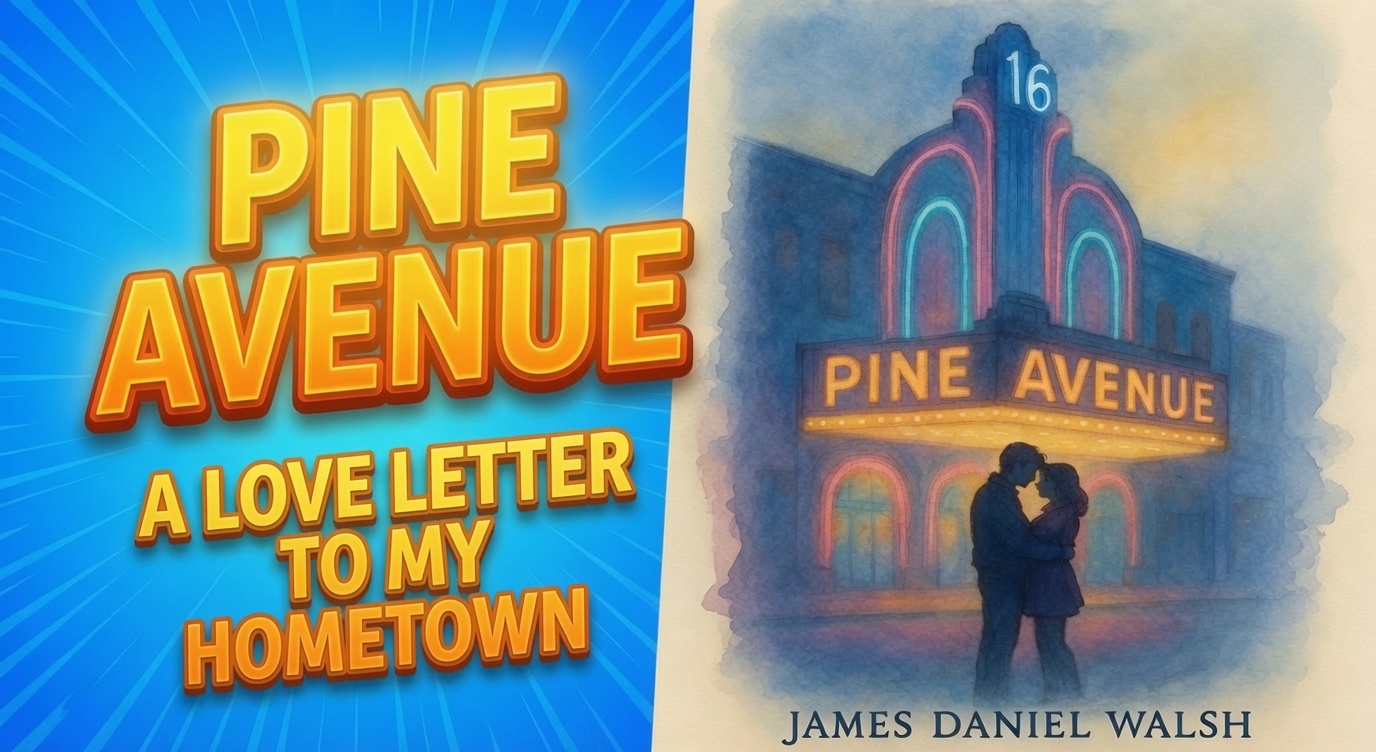
Nowhere is that truer than in Pine Avenue: A Manic Expression Story, a coming-of-age drama set in three different time periods—2015, 2005, and 1995. We follow a man staring down the barrel of middle age as he reflects on the dreams that now seem out of reach, as well as the childhood love that still haunts him. The title of the story takes its name from Long Beach’s premier party street, a stretch of several blocks that captured my imagination at a young age and never let go.
What Pine Avenue is about: Peter Collins is 35 years old and rotting away in Bakersfield, California. A stay-at-home dad who once dreamed of rock stardom, Peter now spends his days taking care of a partner and their three daughters, none of whom seem to notice he exists anymore.
One day while dropping his kids off at school, Peter notices a girl that looks impossibly like his first love—the one who got away. Overwhelmed by the news that he’s about to become a grandfather, Peter makes the reckless decision to reach out to this mysterious girl, putting everything at risk in a desperate bid to reclaim the person he once was, and the dream of who he might become.
The long, strange road to this release: I began work on Pine Avenue in 2003. Intending to write the whole thing chronologically, I stalled out after finishing the high school section set in 1995. I returned to the concept in 2007 as I assembled what would become Manic Expression: A Collection. At the time, 2015 was still many years away, so I had to guess at where I would be in life and what the world would be like. I missed the mark, embarrassingly so.
When discussing my story Lapdog Destiny, I said that I never edit my younger self’s feelings, even if I don’t agree with them anymore. I don’t feel it’s right to censor young James and tell him he was wrong. However, when I re-released Manic Expression in 2017, I allowed myself carte blanche to make updates to the 2015 section of Pine Avenue to reflect what 35 actually felt like. Peter’s behavior, especially his bitterness at his first love, now felt like the immature rantings of a 27 year old who needed to grow up—and did, eventually.
While I won’t get into spoilers, I will say that Pine Avenue takes a turn toward the end that many audience members may not be able to forgive. I have Peter edge right up to a pretty clear moral line, and then take a single step over it. While much of Pine Avenue is autobiographical, this element is entirely fiction. I always saw it as a metaphor for making peace with one’s past. For those of you who feel the story goes too far… I agree with you. I’m not saying you have to sympathize with Peter Collins, or even like him. My hope is that you will, if nothing else, understand him.
At its core, Pine Avenue is my attempt to capture what it felt like to be 15, 25, and 35. It’s a meditation on how we become who we are, and how the people and places we love shape us forever. Even though I no longer live in Long Beach, it will always be home.
Grab your copy today!
Hit reply and tell me—does your hometown hold fond memories, or is it a place you had to escape? I’d love to hear your thoughts once you start reading.
See you next week for the final installment of Phase One of Manic Expression.
James Daniel Walsh
by James
by James
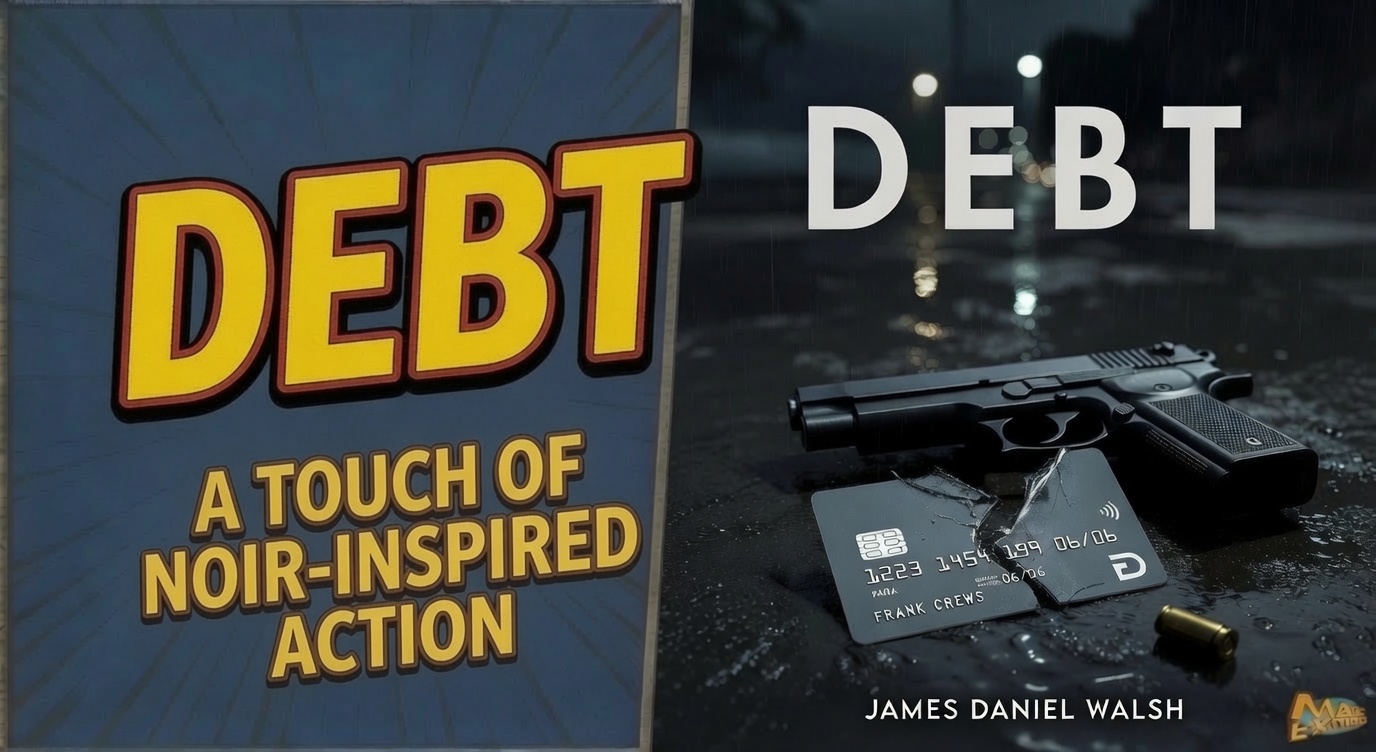
Debt: A Touch of Noir-Inspired Action
August 4, 2026 in James' Corner
I got my first credit card before I even had a high school diploma. I moved out on my own shortly thereafter, living paycheck to paycheck, and that little piece of plastic felt like salvation. I quickly signed up for three more cards, using them for food I couldn’t otherwise afford and small creature comforts in an otherwise squalid life.
Then I missed a payment. The penalties piled up faster than I could ever hope to pay, and the debt collectors began circling.
Debt: A Manic Expression Story is a noir-inspired thriller I first wrote in 2006 and published in the original Manic Expression collection. By then I was just starting to claw my way out of a crippling financial hole following seven long years of harassment.
Anyone who’s ever been on the receiving end knows how vicious collection agents can be. The ones I dealt with called at all hours, whispering and growling threats that all but promised broken legs. It wasn’t just pestering — it was intimidation that boarded on the criminal.
What Debt is about: Frank Crews is a single father struggling to provide for his young son, but a history of bad credit keeps him trapped at the bottom. One day, a ruthless debt collector delivers an ultimatum: murder a stranger or appear in court and watch his creditors destroy what little he has left. Terrified of losing his son, Frank storms a luxury high-rise one rain-soaked afternoon armed with a stolen gun. But when the hit goes sideways, he must decide whether to carry out the assignment… or turn the weapon on the people trying to control his destiny.
The long, strange road to this release: This first wave of Manic Expression stories belongs to Volume 1 – Reflections. You’ll notice a recurring theme: single fathers fighting to do right by their kids. I became a dad at 22. Having struck out on my own as a teenager with no safety net, I made plenty of desperate, rash decisions. By the time my child was born, I wasn’t in a strong position to provide.
Debt is an indictment of a failed system. Young people, barely adults, enter into financial commitments that can haunt the rest of their lives. Credit cards. Student loans. Outrageous interest rates. My generation found the American Dream to be just out of reach. For our children, it’s even further away.
I wrote Debt over the course of a single week, fueling myself with Hitchcock films and classic noir thrillers. I wanted that claustrophobic tension, but infused with the raw desperation I felt every time the phone rang and another threat hissed through the line. This wasn’t the mafia — but their tactics weren’t far off.
Twenty years after I first wrote Debt, the world has only grown harsher for the young and the penniless. Debt has become a modern form of indentured servitude, and the powerful have only grown more creative at keeping people trapped.
Grab your copy today!
I’d love to hear your thoughts — and have you ever had to deal with debt collectors yourself?
Another new story drops next week!
James Daniel Walsh
by James