@james

by James
Director’s Cut: A Hollywood Mystery
November 10, 2026 in James' Corner
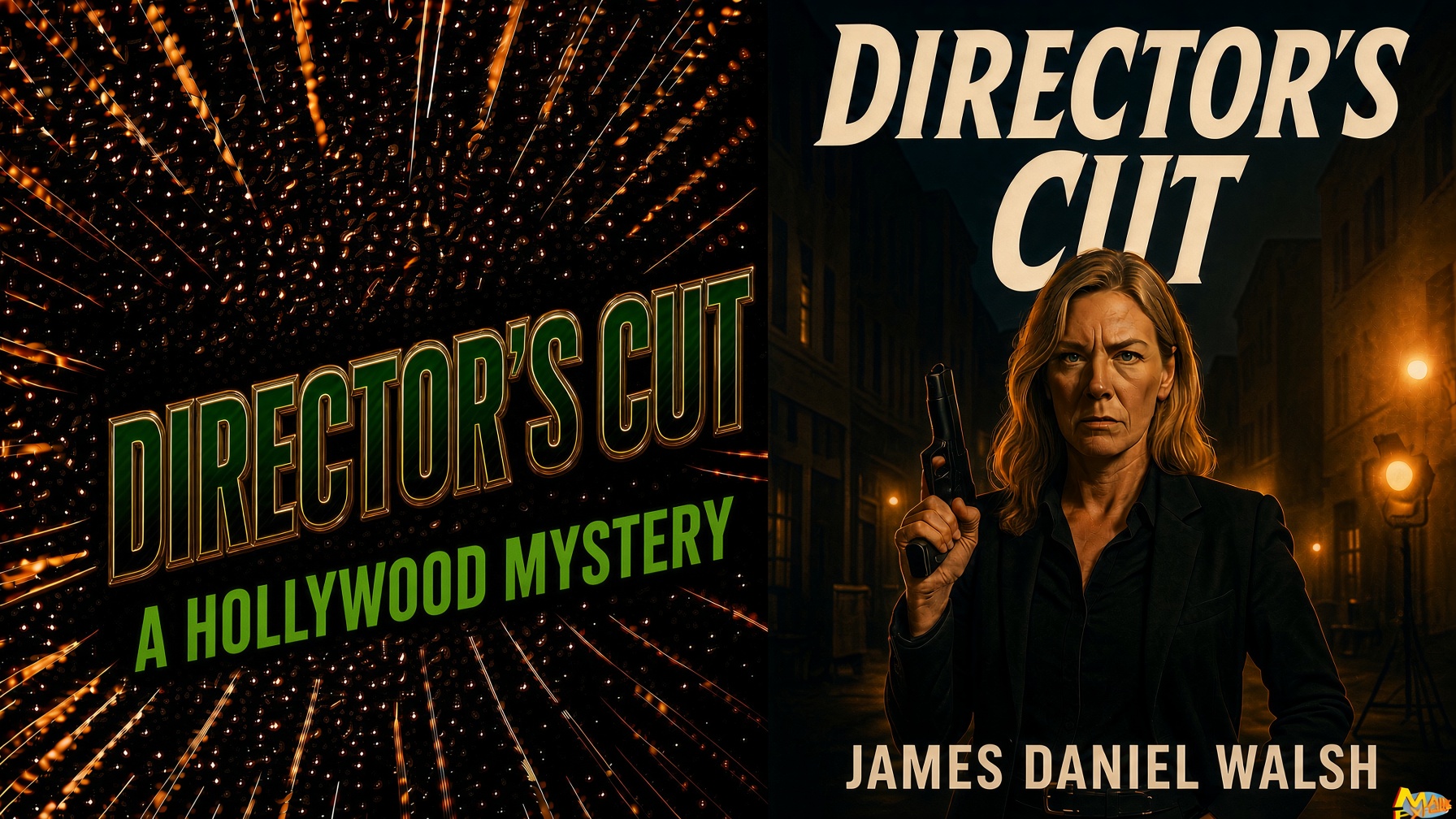
I’ve always loved the classic Hollywood mysteries, especially the ones starring Humphrey Bogart. The Maltese Falcon and The Big Sleep remain two of my all-time favorite films. Bogart’s detectives were sharp, fast-talking, and tough as nails—but they were also deeply human, willing to chase the truth no matter the personal cost.
Director’s Cut: A Manic Expression Story is my love letter to those stories. My version of Sam Spade is Danielle Gibbons—a hard-boiled private detective pulled into a deadly Hollywood murder case packed with Manic Expression regulars.
What Director’s Cut is about: When Hollywood’s hottest young star is found dead, private detective Danielle Gibbons is pulled from the gritty streets of Long Beach into the glittering chaos of a big-budget film set.
Danielle quickly discovers that everyone involved with the troubled production had a reason to want Connie Griffin dead: the resentful director, the ambitious replacement actress, the scorned producer, and a legion of enraged fans. But as she digs deeper, the case spirals into something far more personal—old wounds, buried secrets, and a killer willing to destroy anyone who gets too close.
In a world where illusion is currency and betrayal is business as usual, Danielle must separate Hollywood fantasy from cold-blooded reality… before the next body drops.
The Long, Strange Road to This Release: Danielle Gibbons didn’t start out as a Hollywood detective. I first created her in high school as my answer to Tom Clancy’s Jack Ryan for a political thriller called Anarchy, a half-baked idea I never bothered to pursue.
I still loved the idea of a tough female detective, though, so in 2011 I moved her to Los Angeles and dropped her into the middle of a big-budget film production. To connect the story to the larger Manic Expression universe, I brought in familiar faces: Megan Stevenson (Bloodshot), Matt Stamper (Faded), Victor Silverberg (Unbound), and more.
While it’s not the most original idea to call Hollywood a meat grinder that chews people up and spits them out, I myself had recently gone through the gears. Director’s Cut was my response to the failed attempts to make Bloodshot into a movie. I had dealt with cutthroat producers, all of whom wanted to treat my cast and crew as disposable props they hoped to use and discard. There’s a reason people keep writing scathing inditements of Hollywood.
I loved writing Danielle Gibbons. I’m loath to compare her to the classic Bogart detectives, but I think she holds her own in their male dominated world.
Grab Your Copy Today!
A question for you: What is your favorite murder mystery?
Come back next week for something action-packed!
James Daniel Walsh
by James
by James
The Moldau: An inspiring story of real-world heroism
November 3, 2026 in James' Corner
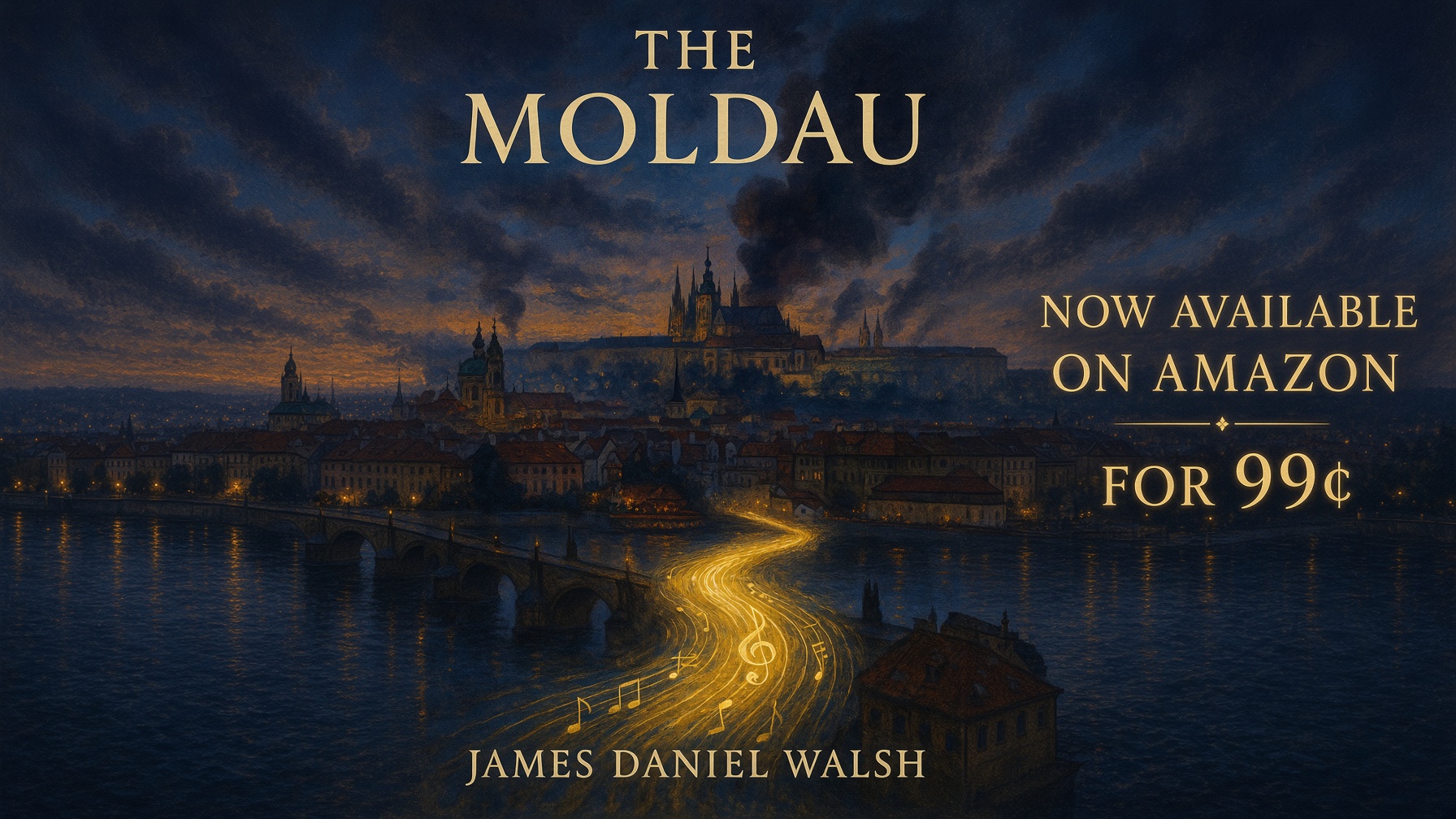
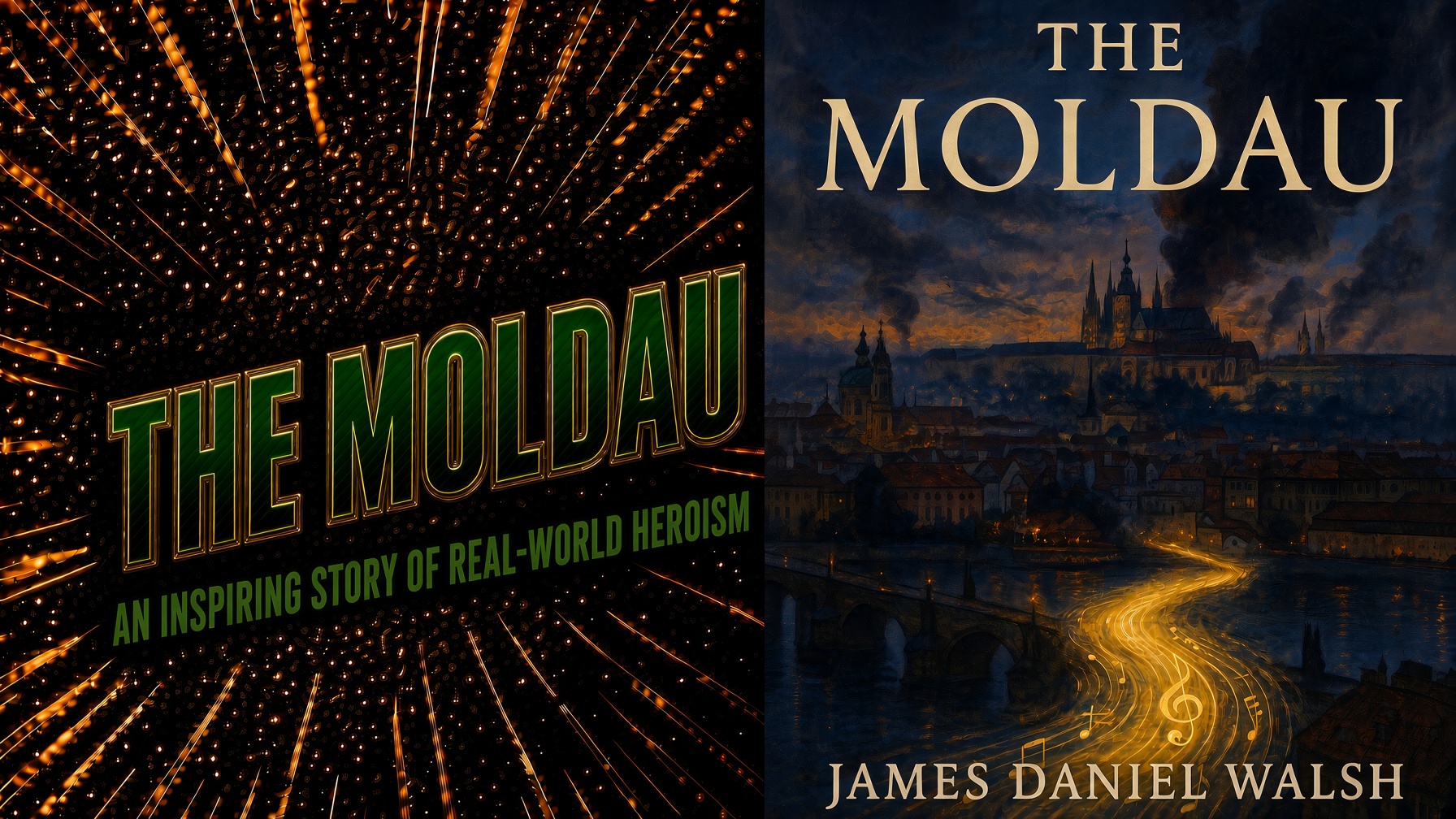
I hate to play favorites with my own work, but if you asked me today which story from Manic Expression: A Collection is my best, I’d have to say The Moldau: A Manic Expression Story.
Written in 2024, this short story blends real historical events with a fictional heroine to explore the power of art, courage, and national spirit. Set during the final days of the Nazi occupation of Prague, it feels more relevant now than ever.
What The Moldau Is About: As the Nazi occupation collapses, twelve-year-old Albina Cejka watches Prague erupt in a desperate fight for freedom. Hidden for years behind a false identity, the young Jewish girl carries a dangerous secret: a forbidden recording of Bedřich Smetana’s The Moldau — the banned symphonic poem that once cost her real father his life.
With gunfire echoing through the streets and Czech patriots battling for their city, Albina makes a daring decision. Clutching the record like a shield, she slips into the chaos and heads straight for the besieged radio station. She will risk everything to honor her father and let the voice of her nation ring out one final time.
The Long Road to This Release: I first heard Smetana’s masterpiece in a college music history class. My professor shared the story of how The Moldau — banned by the Nazis as a symbol of Czech pride — was supposedly played over the P.A. system as the occupiers were driven out. That image stayed with me for twenty-five years.
I originally planned an epic novel built around that moment. But after extensive research, I discovered the event itself appears to be a beautiful legend. What did happen was the heroic Battle for Czech Radio on May 5, 1945. Czech citizens fought to hold the station, broadcasting both desperate calls for help and music the Nazis had silenced for years.
So I created a young Jewish girl, Albina Cejka, and the brave gay man posing as her father. Though fictional, they represent the real heroes who risked or gave their lives that day. The final third of the story is a vivid journey through Smetana’s music itself, as Albina experiences the river’s voyage to Prague in real time.
It may not be the sweeping novel I once envisioned, but I believe The Moldau is my finest piece of writing to date. While working on it, I felt more connected to my Jewish heritage than ever before. I’m deeply proud of this story of resilience, defiance, and the enduring power of music.
I hope you’ll take the time to read it — and to listen to Smetana’s The Moldau afterward. The music and the story belong together.
Grab your copy today!
Substack subscribers, I’d love to hear from you: What did you think of The Moldau? And what is your favorite piece of classical music?
See you next week for a brand-new mystery.
James Daniel Walsh
by James
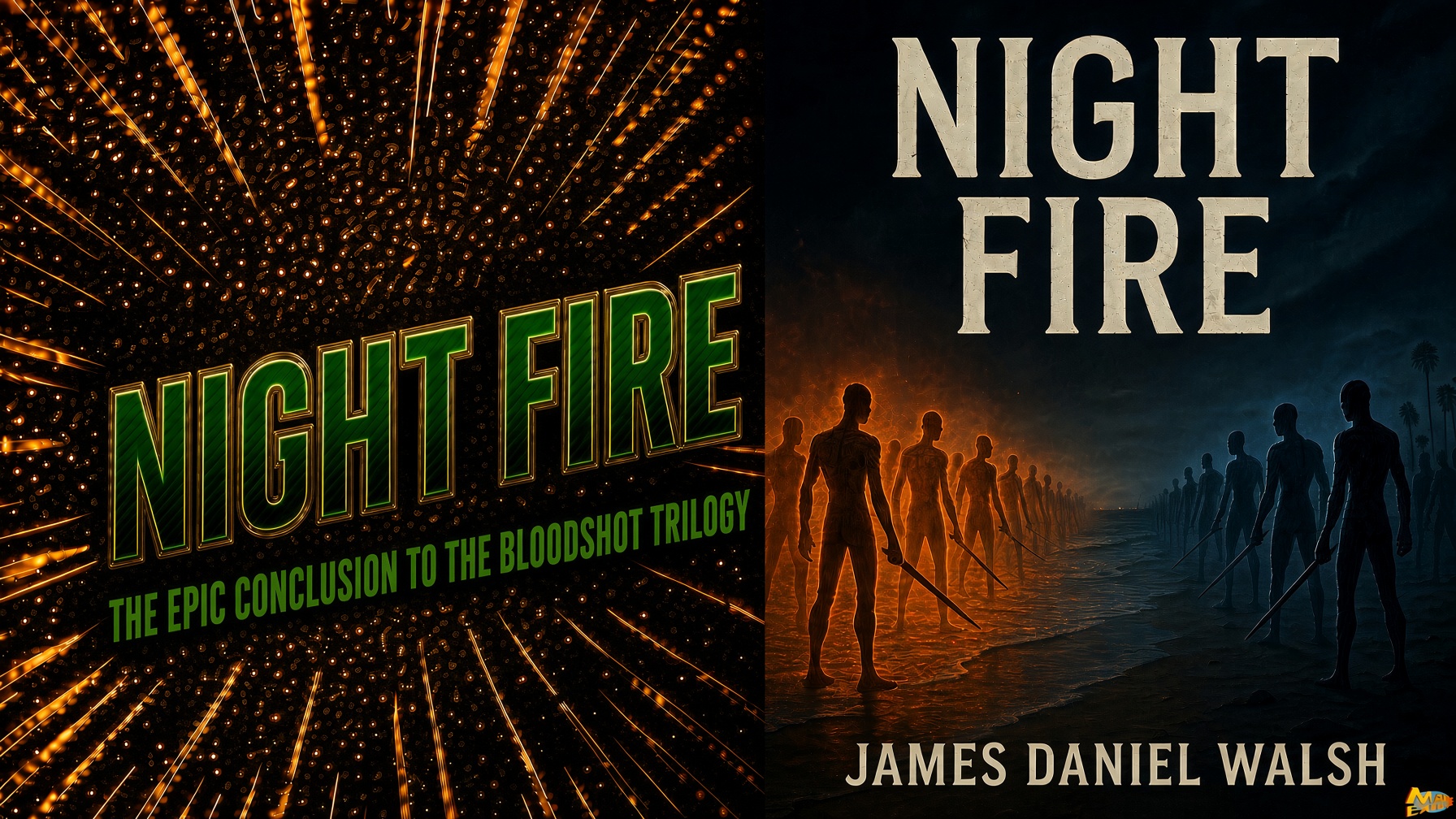
Night Fire: The final installment of the Bloodshot Trilogy
October 27, 2026 in James' Corner
This is a big one, folks.
Bloodshot was a small, intimate portrait of a young family in crisis. Its sequel, Day’s End, was a haunted house story that forced Will and Megan Stevenson to confront their painful pasts. The third and final installment, Night Fire: A Manic Expression Story, is something else entirely: a sprawling, apocalyptic epic with a scale that rivals Lord of the Rings.
Easily the longest story found in Manic Expression: A Collection, Night Fire serves as both the thunderous conclusion to the Bloodshot trilogy and the culmination of the first half of the entire Manic Expression cosmology. Nothing will ever be the same after this story.
SPOILER WARNING GOING FORWARD!
What Night Fire Is About: Picking up immediately after the events of Day’s End, the world has descended into chaos. Riots erupt across the globe as people are consumed by emotions they cannot control. Cities burn. World leaders threaten nuclear annihilation. The end of humanity appears imminent.
Megan Stevenson races home through streets running red with blood, only to discover that her husband, Will, has surrendered to the darkness. Having taken on the mantle of Fear itself, Will now marches with the dark army sweeping over the world. Even worse, the forces of light reveal that the only person who can stop the coming apocalypse is their young daughter, Joy.
The long, strange road to this release: Day’s End and Night Fire were written like one massive story that I split in two. At the time, I was in the middle of a brutal divorce, the sole caregiver for my young child, and it genuinely felt like the world was burning down around me. The U.S. had just invaded Iraq, the country was bitterly divided, and everything felt unstable and unsafe.
Will Stevenson is obviously a version of me. Having him turn to the dark side and become a villain was my way of owning my own complicity in the mess the world had become. It felt like the natural evolution of his character — the anger and rage I carried inside finally given form. Writing his fall from grace helped me come to terms with the part I played in the state of my own world. It’s easy to judge from above; much harder to admit we all help turn the wheel.
Night Fire is the closest thing I’ve ever written to a true epic — grand battles, larger-than-life characters, and world-ending stakes. The Manic Expression universe is forever changed after this story.
Grab your copy today!
I’d love to hear your thoughts — what’s your favorite final chapter in a trilogy?
Join me next week for a look back at a heroic real-world event from World War II.
James Daniel Walsh
by James

by James
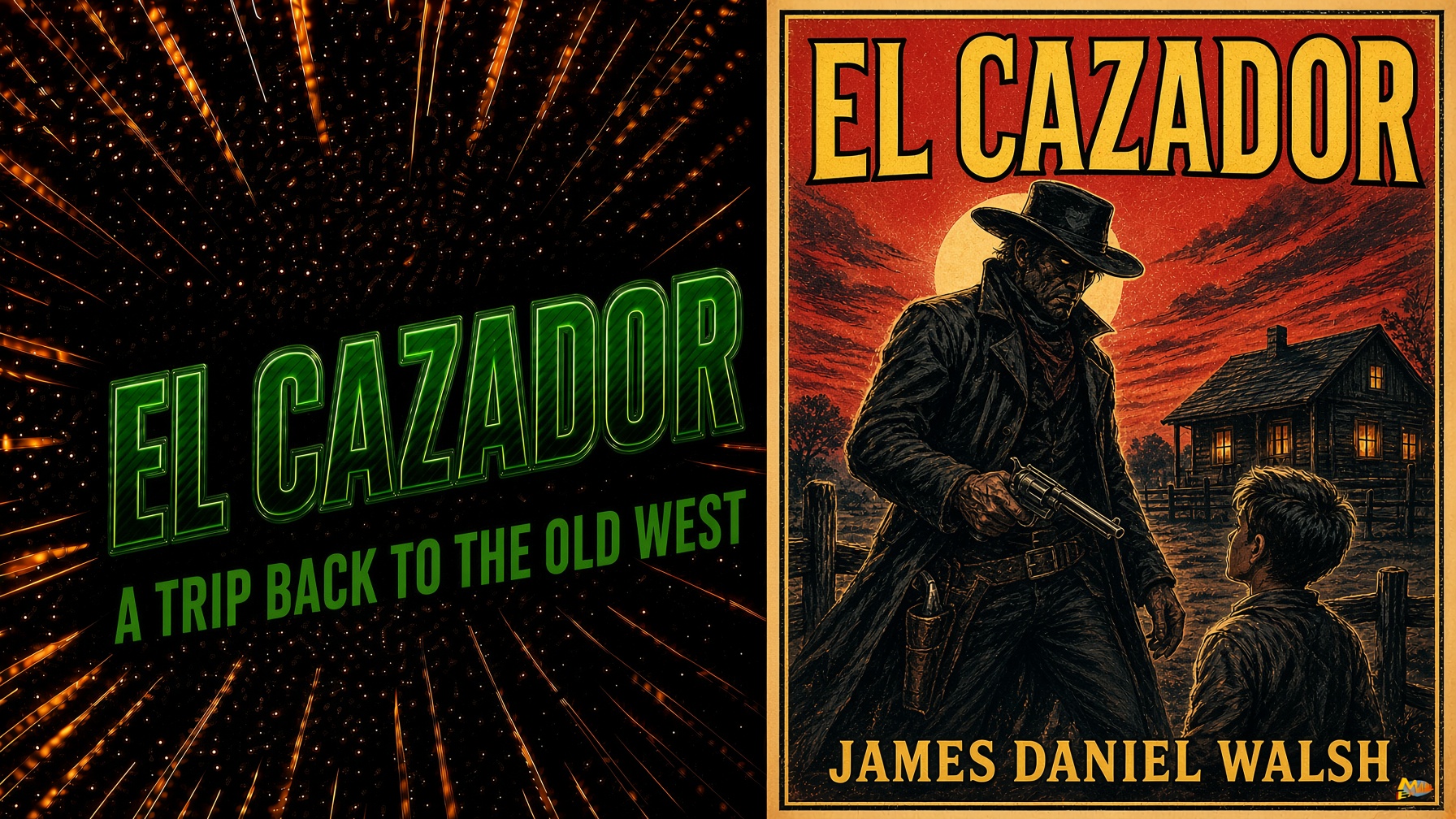
El Cazador: A trip back to the Old West
October 20, 2026 in James' Corner
I grew up with Westerns always playing in the background. My father was a huge John Wayne fan, but as a kid I gravitated toward sci-fi and horror instead. It wasn’t until I was well into adulthood that I finally came to appreciate the genre.
El Cazador: A Manic Expression Story is my only foray into the Western so far. Set at the very end of the Old West in 1897, it strips away over a century of romantic myth-making to reveal the brutality beneath. This one is definitely not for the John Wayne crowd.
What El Cazador is about: A twelve-year-old Mexican boy living on a struggling sheep ranch watches helplessly as their corrupt landlord threatens to drive his family off the land. Disillusioned by his meek father—whom he sees as a coward—the boy convinces his uncle to hire the notorious outlaw El Cazador to solve their problems. But the gruff, violent drunk who shows up is nothing like the hero the boy imagined.
The long, strange road to this release: I first jotted down the concept for El Cazador in high school, in a journal full of random story ideas. Even then I knew I wanted at least one Western in my body of work. The original seed was simple: a town hires a gunslinger for protection. But the core idea—that this “hero” was no noble outlaw, just a hired killer—was always there.
It took another twenty years before I finally wrote El Cazador. While preparing the expanded Manic Expression re-release, I decided it was time. Setting the story in 1897—the year Long Beach officially became a city—felt like the perfect way to root this tale in the world that would later become the backdrop for so much of my other work.
Telling the story through the eyes of a boy who idolizes violent gunslingers and looks down on his quiet, hardworking father was deeply personal. I was once that hot-headed kid who thought problems were solved with a clenched fist. Becoming a father myself taught me that real courage is often quieter, gentler, and far more effective. This story honors those men who choose restraint and responsibility over bullets and bravado.
El Cazador is the first story of Phase Three. While the previous releases led to the collections Reflections and Ghosts, this one kicks off Book Three—Heroes.
Grab your copy today!
Substack subscribers: I’d love to hear what you think of this new story. What’s your favorite Western of all time?
Next week we close out the Bloodshot trilogy. Hope to see you then!
James Daniel Walsh
by James
October 16, 2026 in James' Corner
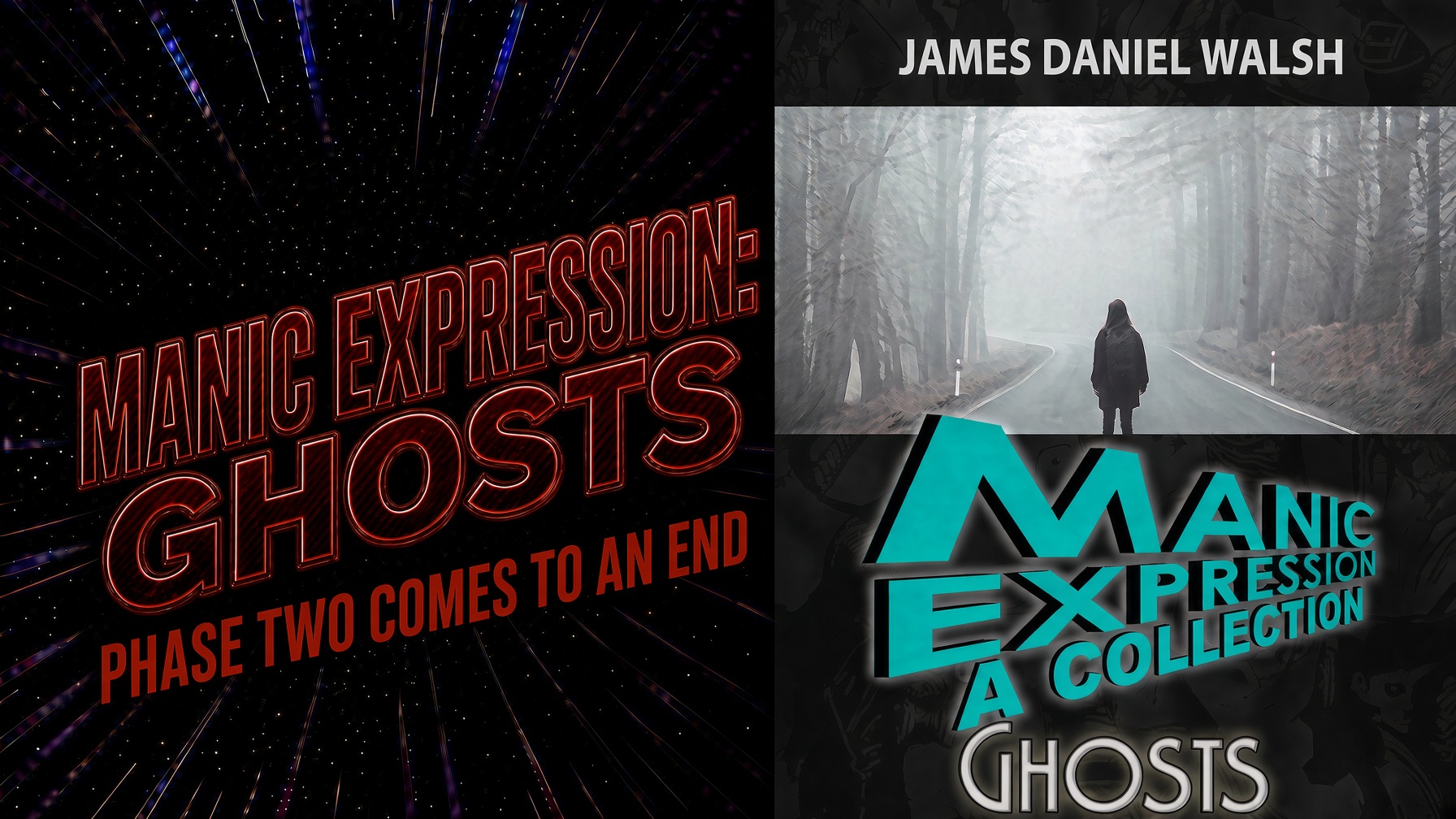
Phase Two of this massive independent release slate is officially complete. Eight interconnected stories, bound together in a single volume—and the larger universe is really beginning to take shape.
Manic Expression: A Collection – Ghosts brings together Nothing, Unbound, The Curious Demise of Mister Poe, Futility, Requiem, Spoiled Meat, Jupiter Sacrifice, and Day’s End. This is the second of six volumes in the expanded anthology.
What Ghosts Is About: At its core, Ghosts is about the things we cannot leave behind. The sins of the past act as anchors, keeping people from finding peace while forces far beyond their understanding weaponize that pain. Some characters will rise above yesterday’s weight. Others will be dragged screaming into a hell of their own making.
The Long, Strange Road to This Release: When Manic Expression: A Collection first appeared in 2008, it was only two volumes. In 2017 I decided to expand the universe to six volumes and weave the characters together far more tightly.
Ghosts was the easiest collection to assemble. I knew Day’s End would serve as the finale, and since it’s the closest I’ve ever come to a haunted-house story, “haunting” became the unifying theme. But in the Manic Expression universe, the real ghosts are rarely supernatural. The characters are haunted by their own pasts.
This 2026 edition also features a brand-new story: The Curious Demise of Mister Poe. It’s the closest I’ve ever come to writing a biographical piece, yet I still tethered it to the larger cosmology by making the mysterious “Reynolds” Poe spoke of in his final hours none other than Quintin Reynolds (better known as Quint from Day’s End).
Though not as autobiographical as the previous collection (Reflections), Ghosts remains deeply personal, diving into regret, trauma, and the weight of memory. And we’ve only scratched the surface of the Manic Expression cosmology—four more volumes are still ahead.
Grab your copy today!
Hit reply and tell me when you start reading—I’d love to hear your thoughts and reactions as you go.
Thank you for riding along on this journey. See you next week as we launch Phase Three.
James Daniel Walsh
by James
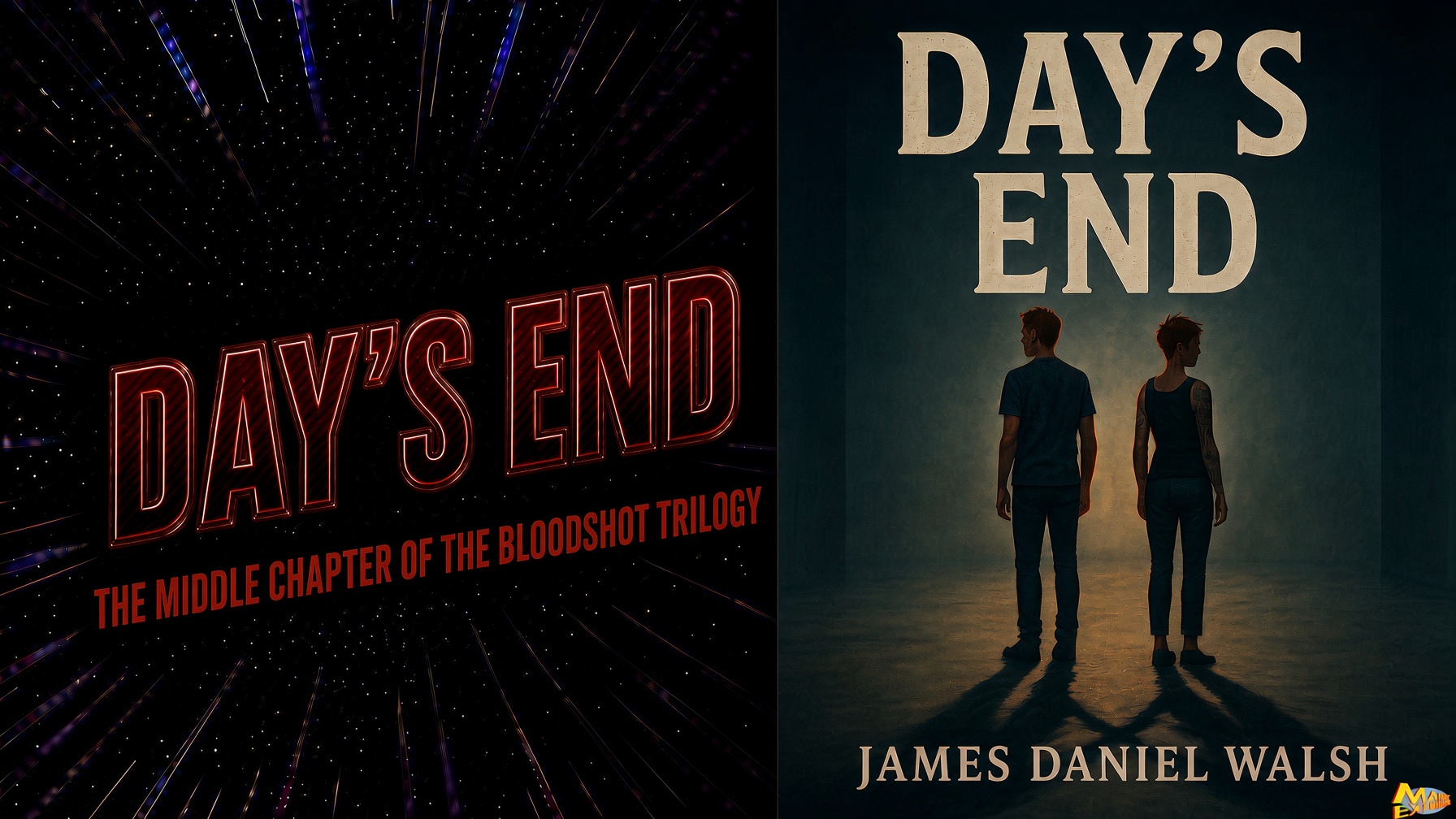
Day’s End: The middle chapter of the Bloodshot Trilogy.
October 13, 2026 in James' Corner
Bloodshot launched the Manic Expression universe, and today we release its sequel: Day’s End: A Manic Expression Story. This is the middle chapter of the trilogy, and like all great middle installments, it’s the darkest.
While I often revisit characters from previous tales in my cosmology, I’ve always tried to keep the stories stand-alone. Not this one. Day’s End is a true sequel, picking up five years after Bloodshot and pulling Will and Megan Stevenson much deeper into the hidden world of the Emotions.
What Day’s End is about: Five years after defeating the living incarnations of Fear and Doubt, Will and Megan have built the life they always dreamed of—success, a beautiful daughter, and hard-won peace. But when tragedy strikes, old wounds reopen. Will’s traumatic past surges back, while Megan confronts scars she thought were buried forever.
Now the Council of Hate is closing in. Rage, Shame, Despair, and worse have returned—stronger, crueler, and far more personal. As their demons take flesh and blood form, the Stevensons must fight not only for their family, but for their very souls. Because this time, the Emotions aren’t just inside their heads.
The long, strange road to this release: I never planned to write a sequel to Bloodshot. That story was meant to stand alone—a happy ending I naively hoped would mirror my own life at the time. Life had other plans. In the middle of a painful divorce, I realized I had oversimplified Will and Megan’s victory. “We’re moving on from our trauma!” sounds great… until real tragedy hits and complacency sets in.
Day’s End is, at its heart, a ghost story. Not the traditional kind—though the Emotions certainly haunt like spirits. These are the ghosts of the past: failures, regrets, and self-inflicted wounds that refuse to stay buried. For Will, they arrive as a powerful cabal trying to recruit him. For Megan, they wear the face of a shame she’s carried for years.
Grab your copy today!
I’d love to hear your thoughts—what’s your favorite “middle chapter” in any trilogy?
Also this week: Look for Manic Expression: A Collection – Ghosts (the complete Phase Two set of eight stories) releasing this Friday!
James Daniel Walsh
by James
by James
by James
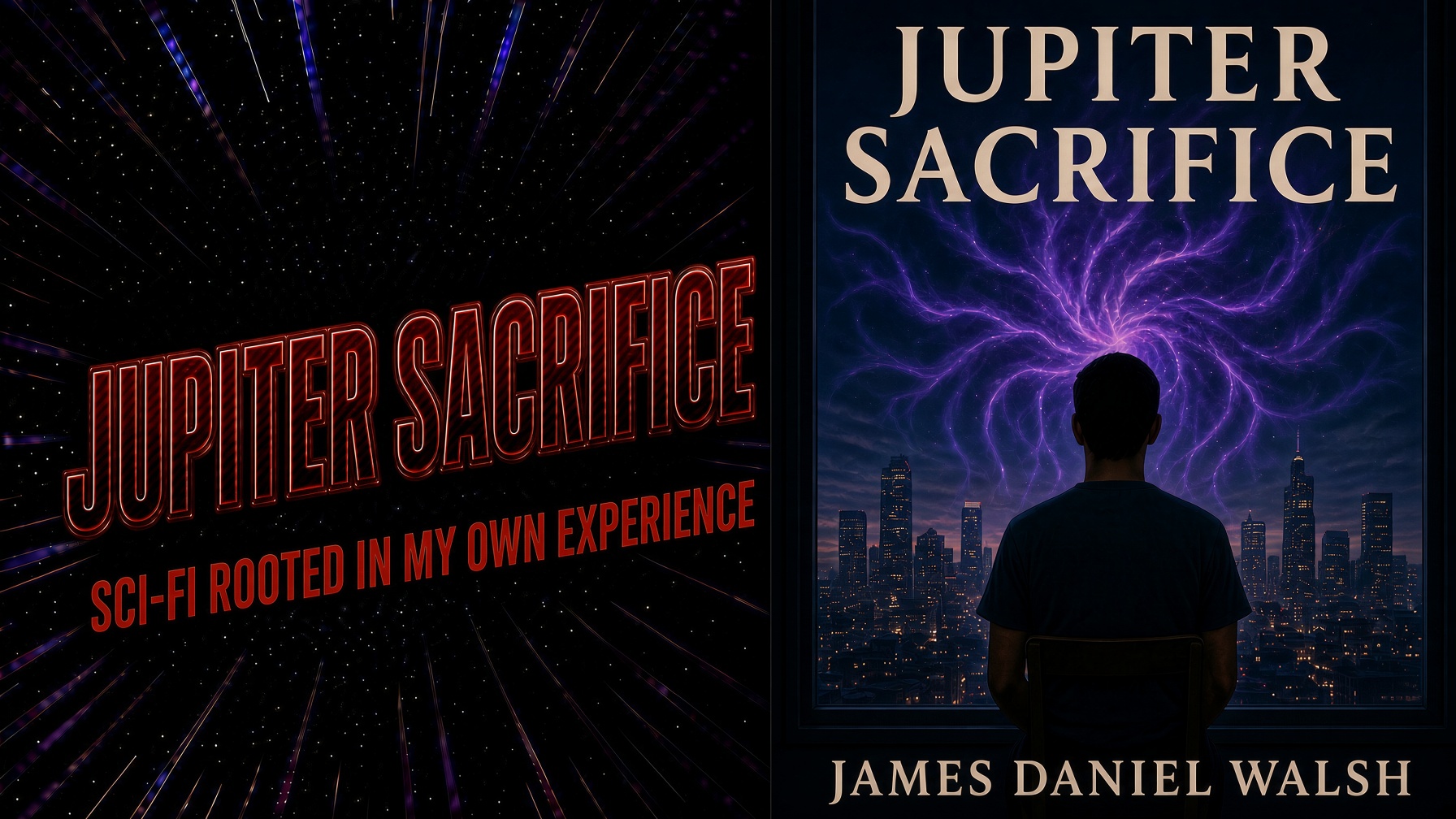
Jupiter Sacrifice: Sci-Fi rooted in my own experience
October 6, 2026 in James' Corner
The beauty of most Manic Expression stories is that, while they all connect, you can read them as stand-alone tales. Together they form a universe, but on their own they become intimate character portraits. Familiar faces appear again and again. Having the greater cosmological context can enrich the experience, but it’s rarely required.
Such is the case with Jupiter Sacrifice: A Manic Expression Story. If you’ve read Lapdog Destiny, you’ll recognize this as its prequel, set two years earlier. Taken on its own, Jupiter Sacrifice is simply the story of a lost, broken teenage boy who may or may not be receiving visits from an otherworldly being.
Charlie Edwards is one of—if not the—most important characters in the Manic Expression universe. Jupiter Sacrifice is his sad origin story. This tells how the most powerful being in existence once had the chance to become our savior… before that chance was ripped away with the best of intentions.
What Jupiter Sacrifice is about: Seventeen-year-old Charlie Edwards finds himself locked away in a psych ward after a failed suicide attempt. Convinced he has no reason to go on, he is soon visited by a strange glowing creature that only he can see. This being from beyond the stars tells him an apocalypse is coming—one only Charlie can stop. Crazy as it sounds, Charlie desperately wants to believe the visitor is real and that his life has meaning.
The long, strange road to this release: Lapdog Destiny was written when I was 18. Much of Charlie’s life mirrored my own, but his institutionalization for suicidal ideation was pure fiction—at least until I committed myself at 19.
My life had fallen apart. I’d suffered my first real heartbreak at the exact moment my home situation became unsustainable. Fearing I might harm myself, I asked my friends to drive me to the hospital, where I surrendered to the care of doctors. With the exception of the alien visitor, Jupiter Sacrifice faithfully recounts my experiences in that Los Angeles facility.
Each of Charlie’s fellow patients is based on someone I shared that ward with. Just as in the story, I found the patients far more helpful than the condescending doctors. I was the youngest in the group, and I think they all felt a quiet responsibility to help me through this ordeal. I no longer remember their names, but I will never forget the lessons they taught me.
I didn’t write Jupiter Sacrifice until 2011, years after the first release of Manic Expression: A Collection. The story became one of the main reasons I felt the need to revise and expand the entire universe. I still count it as one of my very best. On its own, it’s a raw portrait of a young man’s desperate need to feel that he matters. In the wider Manic Expression universe, it is the pivotal moment where Charlie Edwards loses his chance to use his powers for good—giving birth to a dark god instead.
Grab your copy today!
Have you or someone you’ve known ever needed to be hospitalized? I’d love to hear your stories in the comments.
See you next week, when we close out Phase Two with a genuine sequel.
James Daniel Walsh
by James